Hollywood
Chinese domestic movie market sees 35 per cent growth


NEW DELHI: Even as India continues to produce the largest number of films, China has shown a major growth with total box office revenue for the first nine months of the year at RMB16.4 billion (US$2.7 billion), a year-on-year growth of 34.9 per cent.
With a market share of approximately 58 per cent, domestic films continue to rule the market with RMB9.56 billion (US$1.57 billion) in total revenue, a year-on-year growth of 93.8 per cent, according to China’s State Administration of Press, Publication, Radio, Film and Television (SAPPRFT) in the third quarter box office statistics.

Five of the top ten grossing films of the first nine months of the year are domestic films that include Journey to the West: Conquering the Demons (RMB1.24 billion), So Young (RMB 715 million), American Dreams in China (RMB 538 million), Finding Mr. Right (RMB 518 million) and Tiny Times 1 (RMB 488 million).
Opening at the end of September, Young Detective Dee: Rise of the Sea Dragon has already surpassed American Dreams as the third top grossing domestic film of the year. By last week, it had taken RMB 583 million.
Several major releases set for December are expected to further lift domestic films:
Benny Chan’s The White Storm, Feng Xiaogang’s Personal Tailor, Alan Yuen’s Firestorm, and Ding Sheng’s Police Story 2013.
Foreign films made RMB 6.87 billion (US$1.13 billion) in total revenue, a year-on-year decline of 5.2 per cent. This represents somewhat of a recovery over the summer. In the first half of the year, foreign films were recorded as experiencing a year-on-year decline in box office revenue of 21.3 per cent.
The top five grossing foreign films of the first nine months of the years — three of which were in cinemas during the third quarter are: Iron Man 3 (RMB 751 million), Pacific Rim (RMB 694 million), Furious 6 (RMB 412 million), The Croods (RMB 394.8 million) and Man of Steel (RMB 394.6 million).







Hollywood
Paramount eyes $24bn Gulf support to fund Warner Bros Discovery merger: Reports
Sovereign funds line up funding as media giants chase streaming scale
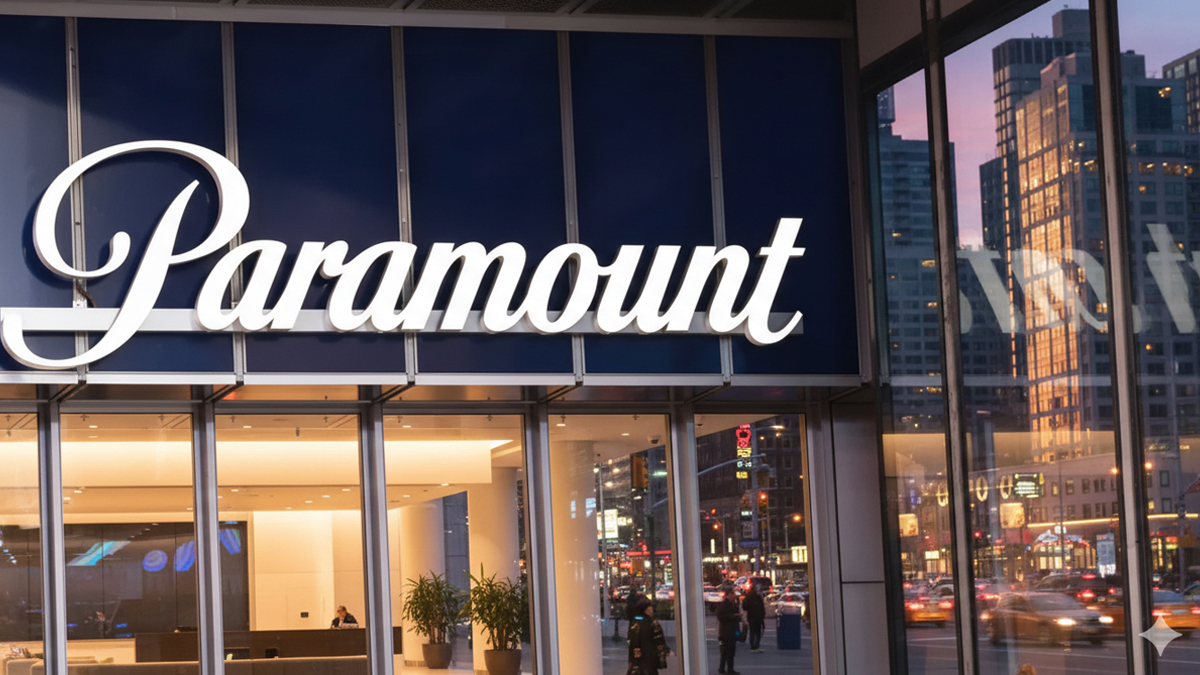
NEW YORK: Paramount Skydance is in talks to secure nearly $24 billion in equity commitments from Gulf sovereign wealth funds to support its planned takeover of Warner Bros. Discovery, according to a WSJ report.
The funding push comes as Paramount Skydance advances its proposed $110 billion deal for Warner Bros. Discovery, which carries an equity valuation of $81 billion and is expected to close in the third quarter of 2026.
At the heart of the financing plan are three major Gulf investors. Saudi Arabia’s Public Investment Fund is expected to contribute roughly $10 billion, while the Qatar Investment Authority and Abu Dhabi-based L’imad Holding are likely to make up the remainder.
Crucially, the proposed investments are structured as non-voting stakes. This means the Gulf backers would not have direct control in the combined entity, a move designed to ease regulatory concerns in the United States. Paramount executives reportedly do not expect the deal to trigger scrutiny from bodies such as the Committee on Foreign Investment in the United States or the Federal Communications Commission.
If completed, the merger would bring together a formidable portfolio of entertainment and news assets, including CNN and CBS. The combined entity aims to better compete in a fast-evolving media landscape where streaming platforms are steadily pulling audiences away from traditional television.
The deal reflects a broader shift in global media, where scale is increasingly seen as essential to survive the streaming wars. By pooling content libraries, technology and distribution, Paramount Skydance and Warner Bros. Discovery are betting on size and synergy to drive future growth.
The involvement of deep-pocketed Gulf investors also underscores the growing role of sovereign wealth in shaping global media consolidation, particularly at a time when high-value deals demand equally large financial backing.
With shareholder votes and regulatory milestones still ahead, the proposed tie-up remains one of the most closely watched media deals of the year. If it clears the final hurdles, it could redraw the competitive map of the global entertainment industry.






