News Broadcasting
China proving a tough nut to crack for Murdoch

MUMBAI: Global media firms are feeling the heat of China’s aversion towards them. News Corp chairman and CEO Rupert Murdoch has admitted that his plans for China are not going as smoothly as had been hoped for. He conceeded that his company had hit a “brick wall in China,” after the government reversed a policy of relaxing controls on international media organisations.
China hasn’t responded to Murdoch’s criticism that the country’s authorities had reversed a policy to open the market to international media companies. Murdoch has accused China’s leaders of being quite paranoid about the kind of news that gets through.
Media reports indicate that Star is authourised in some areas of Guangdong province and some residential compounds and hotels. Efforts to expand have been blocked and the broadcaster is said to be under investigation of allegations that it sold access. Officials in China are investigating News Corp for alleged cooperation with unapproved local cable networks.

Murdoch spoke at a a panel on global media at the Clinton Global Initiative. At the meeting Time Warner chairman and CEO Richard Parsons said in news reporting one cannot compromise. That is because news either has integrity or it doesn’t. It either is accurate, balanced and fair or it isn’t. The Chinese he says are doing whatever they can to manage the message. They are clearly looking to open up at their own time and pace.
At the same time Murdoch noted that there is a limit as to how much the Chinese government can control the entry of foreign content. He gave the example of pirated copies of Hollywood movies that are freely available. Murdoch has also criticised Yahoo!. The internet firm turned over information that led to the imprisonment of a Chinese journalist. The online firm is believed to have done it to get on the good side of the Chinese government. China is said to be a potential Internet usage gold mine. Yahoo co-founder Jerry Yang has said that the company had no choice because the government asked for the documents and backed up its request with a court order. Parsons has decided against distributing AOL in China as the Chinese government wants to monitor messages sent on the service.
He noted that the Chinese government did not differentiate between different parts of a company. The whole company is labelled as being unfavourable because of something going on at the news division. Parsons also praised CNN’s global efforts. Murdoch though not surprisingly feels that nobody watches it because it is so unwatchable and it’s so anti-American.






News Broadcasting
CNN-News18 to host Fury in the Gulf conclave on West Asia crisis
Three-hour summit to unpack geopolitical fallout and impact on India
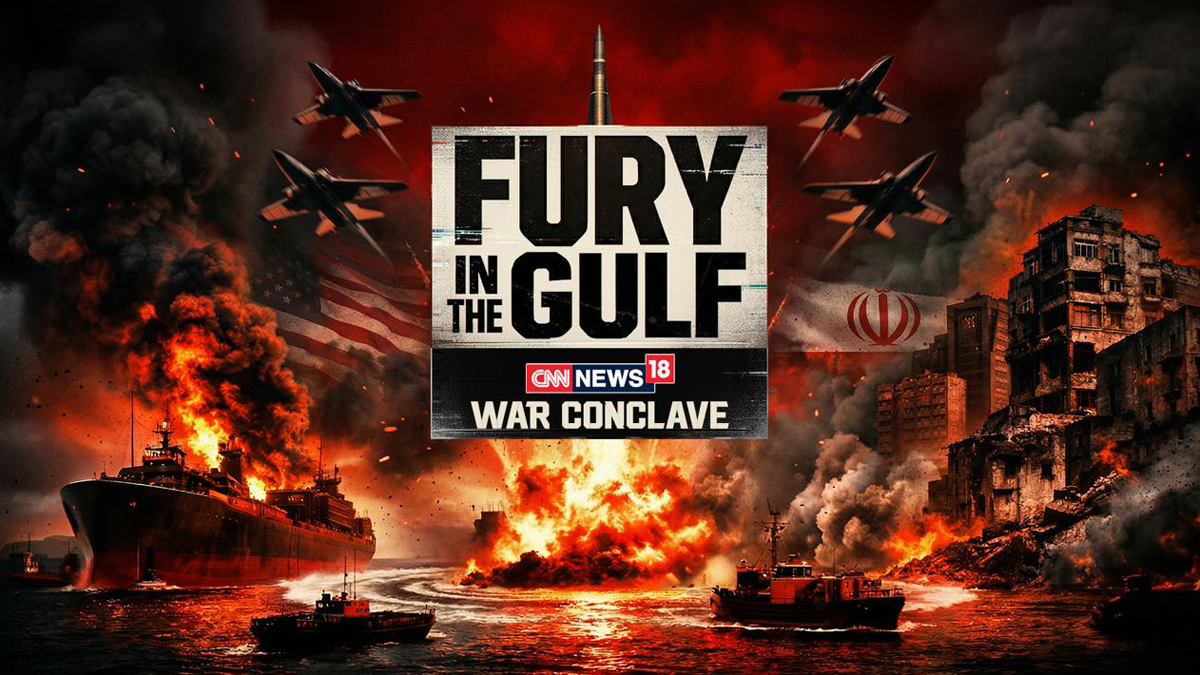
MUMBAI: CNN-News18 is set to host a special three-hour broadcast, Fury in the Gulf – War Conclave, on April 7, aiming to decode the escalating West Asia crisis and its far-reaching implications for India.
Scheduled from 4:00 PM to 7:00 PM, the conclave comes at a time when tensions between Iran and the United States are reshaping global geopolitics and triggering economic uncertainty. With India’s deep energy ties, trade links and large diaspora in the Gulf, the developments carry significant domestic relevance.
Built around the theme ‘Conflict, Consequences, and The Future,’ the programme will feature six curated sessions combining one-on-one interviews and panel discussions. The focus is to cut through the clutter and offer viewers a clearer understanding of the fast-evolving situation.
Key sessions include ‘Diplomacy in Times of War’ featuring Shashi Tharoor, and ‘World After the Iran Conflict’ with voices such as Ram Madhav, Reuven Azar, representatives from the European Union and the Iranian Deputy Envoy. Another session titled ‘Another Dunkirk?’ will bring together K. J. S. Dhillon and Jitin Prasada among others.
CNN-News18 editorial affairs director Rahul Shivshankar said, “In times of war, clarity becomes the most powerful tool. Fury in the Gulf – War Conclave brings together credible voices to address the questions and confusion that arise amid an overwhelming influx of information.”
He added that the initiative is aimed at delivering “facts, perspective, and insight” at a time when misinformation can easily cloud public understanding.
Echoing the sentiment, CNN-News18 CEO– English and business news Smriti Mehra said the conflict marks a defining global moment, with consequences that extend well beyond the region. She noted that the conclave seeks to present the crisis with “depth, nuance and responsibility” so audiences can better grasp its real-world impact.
As geopolitical tensions continue to dominate headlines, the conclave positions itself as an attempt to bring order to the noise, offering viewers a structured, insight-led look at a complex and rapidly shifting global situation.






