News Broadcasting
China all set to make ‘Friends’


BEIJING: The sitcom Friends may be in its last season but Joey and the gang are all set to be introduced to the worlds largest television audience.
The Chinese state broadcaster, China Central Television, will begin broadcasting the popular NBC sitcom next year. A report in the Beijing Star Daily newspaper has stated that in Chinese, the show will be called Laoyouji meaning “Old Friends’ Story.” In India the show airs on Zee English and Star World.
The report adds that the show is already popular in China. Pirates are making a killing of counterfeit DVDs of various Friends seasons. They cost less than $6 and sell well along with fake copies of Hollywood blockbusters.

CCTV has already experienced enormous success with HBO’s war miniseries Band of Brothers. Besides Friends CCTV had reviewed 24 (airs in India on AXN) and The West Wing (airs in India on Zee English). However due to the delicate political environment of those shows the broadcaster is expected to refuse them.
Another report in the Beijing Youth Daily indicates that CCTV reaches over 84 per cent of the total population of China. Importing popular foreign television shows is one of many CCTV strategies to boost ratings among younger audiences.







News Broadcasting
India at 100: self-reliance must power the next leap, says Vineet Jain
Times Group MD calls for strategic depth across AI, energy, defence and data as India eyes developed status by 2047
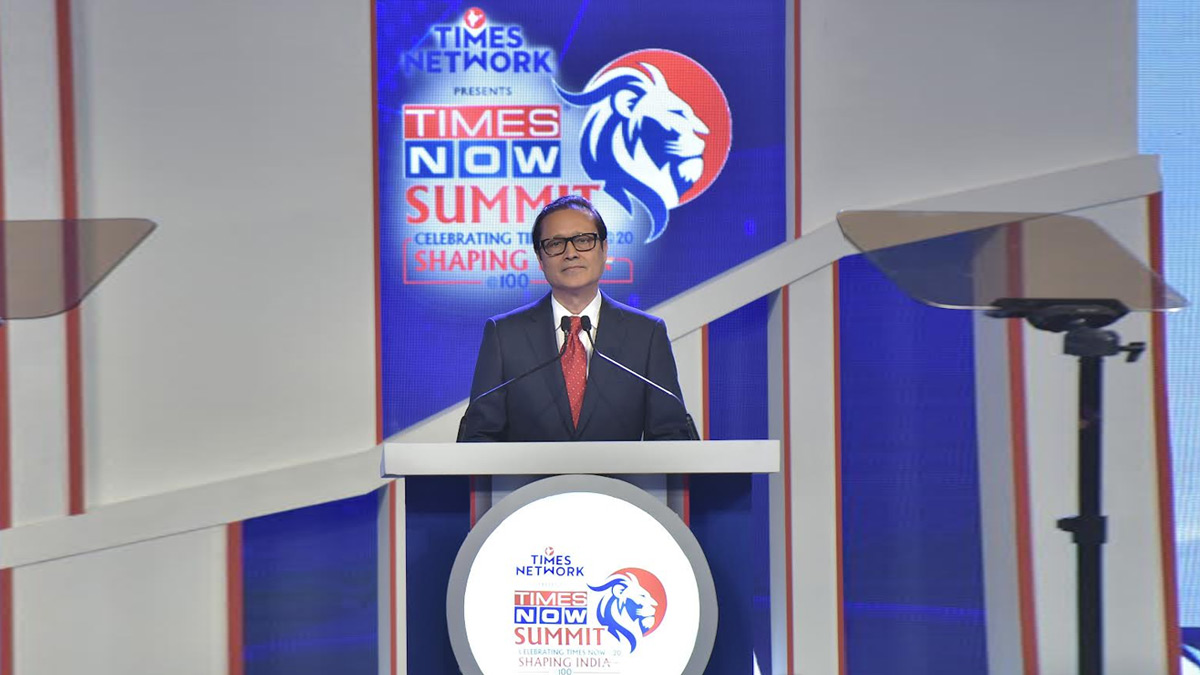
NEW DELHI: India’s next act will not be written by growth alone but by grit, capacity and hard-edged self-reliance, Vineet Jain said, setting the tone at the Times Now Summit as the network marked 20 years and turned its gaze to the republic at 100.
Opening the summit, Jain framed the moment as a rare convergence of economic momentum, demographic heft, digital muscle and geopolitical weight. The question, he argued, is no longer what India has become—but what it must still build to meet its 2047 ambition.
The answer, he said, lies in a broader, sharper doctrine of Aatmanirbhar Bharat—one that rejects isolation but demands strength in the sectors that define sovereignty and competitiveness. Self-reliance must stretch well beyond factories into the commanding heights of the century: artificial intelligence, data governance, education, defence, energy, critical minerals, frontier technologies and digital platforms.
Control over data will shape the architecture of the future, Jain noted, while AI will drive productivity, security and knowledge. Energy dependence, he warned, leaves economies hostage to volatile supply chains; access to critical minerals will decide the winners of the green and tech transitions.
India must also stop “importing capability” and invest deeply in human capital, he said, arguing that strategic autonomy is credible only when backed by indigenous strength across defence and technology.
For decades, India was tagged as a nation of promise. That era must give way to execution—reform, institution-building and sustained national focus. The window is finite. “We must grow rich before we grow old,” Jain said, calling it a civilisational urgency as the country seeks to convert its demographic dividend into jobs, skills and productivity gains.
Hitting developed-nation status by 2047 will demand second-generation reforms, more competitive institutions, faster urbanisation and heavier bets on research and innovation, alongside a public discourse that rewards long-term thinking over short-term reaction.
Jain cast the summit as a platform not just to question power but to elevate national purpose—moving from commentary to solutions in what he described as a shared project spanning government, industry and citizens.
The message was blunt and forward-leaning: anniversaries don’t transform nations—ambition and execution do. India’s century mark is in sight; the harder task is building the muscle to meet it.








