News Headline
Chilaka’s roller coaster ride from engineering to animation


MUMBAI: Who would have thought that the person holding a master’s degree in computer science from a prestigious US University would commit to the lesser known field of animation and return to his homeland? And yet today, Rajiv Chilaka stands redeemed for a choice he made nearly 17 years ago.
India’s most successful animation company was the entrepreneurial venture of this man who runs the show with his elder brother Srinivas. The founder and CEO of Green Gold animation, Chilaka moved over from engineering to studying animation at the Academy of Art University, San Francisco in 2000 after giving three gruelling years to a job as a software engineer.
The inspiration came to him after watching his first animated film – The Jungle Book. It gave rise to a spree of movie and cartoon watching such as Spiderman, Tom and Jerry, etc. Chilaka knew he wasn’t a great artist so he took engineering as a career. The final switch came when, during one of his slow boring days as a librarian, he read Walt Disney’s book where he spoke of the power of entertaining kids and not considering money as a driving force. He decided that if not art, he could at least tell great stories.

While studying his post graduate degree in the US, Chilaka applied to learn animation but without a scholarship, he had to cough up a whopping $20,000 as fees each semester. His brother refused to lend him money and advised him to finish his masters, work for a few years and give wings to his animation career. Chilaka was convinced.
When Chilaka broke the news about setting up Green Gold Animation to his family, he instantly got the maternal support but not surprisingly, his father was adamantly against it. Needing his father’s blessings, Chilaka managed to persuade him with the business plan, which he himself felt was a pathetic one.
He flew back to India and settled in with his parents in their new house, an option his father gave him understanding the difficulty he might face in finding his own accommodation and paying rent initially. With four to five employees, his journey began.
If today India still lacks great animators, imagine the situation back in 2000. Chilaka says that they had to train everyone who joined. Everything was work, even if it was as simple as a business card or brochure. He even purchased a digital camera to look tech savvy. What he ensured was good quality work at a feasible budget leading to a happy client and no complaints.
The company came close to shutting nearly 25 times in the eight years in between. They had worries – expensive orders or unpaid dues and one by one dejected employees started moving out when he couldn’t pay them on time.
The real tipping point came years later in 2008 when Chhota Bheem first got airtime on Pogo. Ten days before it went on air, Chilaka’s new office was gutted by a fire and a big potential investor developed cold feet while the lenders demanded their dues. “It was a brand new building which we built so luckily no one moved into it. We were going to move in three days later,” Chilaka says. Everything was damaged – the interior, centralised AC office and it was not just the loss of money but also of time and efforts. “But a lot of vendors supported and understood that we were in trouble. Turner didn’t panic and supported us instead,” he adds.
Recently, Chilaka added another feather to his cap, with the newly launched service studio-Golden Robot Studio with Samir Jain, Chand, Ritesh and Abhishek. “Right now we have 120 team members and we have planned to add another 70-80 people in the team,” he reveals.
The challenge now was to orient people to the new culture of being self-sufficient and creating original IPs. “It was also difficult for the employees to join a new startup company, but all the employees are happy working here and of course the brand name of Green Gold helped as everyone wanted to work for us,” says a joyful Chilaka.
His latest home-grown IP shows include Kalari Kids, a show that rediscovers Kalaripayattu, a lost martial art form of Kerala. With the purpose to educate through entertainment, the animation studio is making an exclusive series for Amazon Prime. Green Gold also sealed a deal with Netflix to digitally broadcast Mighty Little Bheem—a spinoff of its popular character Chhota Bheem.
The series created by Green Gold Animation are Vikram Betal in 2004, Bongo on DD National (2004–2006), Krishna on Cartoon Network (2006–2007), Krishna & Balram – Cartoon Network (2009), Chhota Bheem – Pogo TV (2008), Chorr Police – Disney XD (India) (2009–2012), Mighty Raju – Pogo TV (2011), Luv Kushh – Disney XD (India) (2012–2014), Discovery Kids (India) (2015-2016), Arjun: The Prince of Bali – Disney Channel India (2014–2016) and Kalari Kids.
In 2018, Green Gold will premiere two theatrical releases – Chhota Bheem Kung Fu Dhamaka and a tentative title for a mythological movie—Mahiravana. Both films are likely to be launched during the summer. Chilaka refused to speak on the other shows which are still in pilot stage.
For the torchbearer of Indian animation, we hope his pot of gold never runs out!
Green Gold, Amazon Prime put Kerala martial art on the map
Green Gold’s golden Mumbai launch






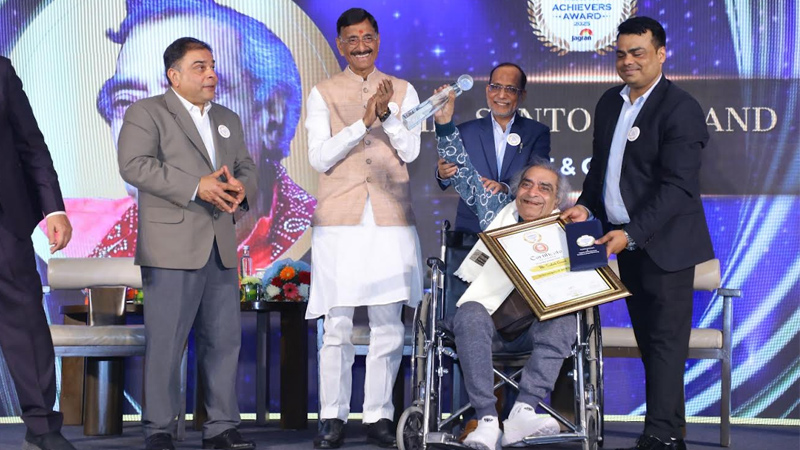
NEW DELHI: Hamdard Laboratories gathered a cross-section of India’s achievers in New Delhi on Friday, handing out the Hakeem Abdul Hameed Excellence Awards to figures who have left their mark across healthcare, education, sport, public service and the arts.
The ceremony, attended by minister of state for defence Sanjay Seth and senior officials from the ministry of Ayush, celebrated individuals whose work blends professional success with a sense of public purpose. It was as much a roll call of achievement as it was a reminder that influence is not measured only in profits or podiums, but in people reached and lives improved.
Among the headline awardees was Alakh Pandey, founder and chief executive of PhysicsWallah, recognised for turning affordable digital learning into a mass movement. On the sporting front, Arjuna Awardee and kabaddi player Sakshi Puniya was honoured for her contribution to the game and for pushing women’s participation onto bigger stages.
The cultural spotlight fell on veteran lyricist and poet Santosh Anand, whose songs have echoed across generations of Hindi cinema. At 97, Anand accepted the honour with characteristic humility, reflecting on a life shaped by perseverance and hope.
Healthcare honours spanned both modern and traditional systems. Manoj N. Nesari was recognised for strengthening Ayurveda’s place in national and global health frameworks. Padma shri Mohammed Abdul Waheed was honoured for his research-backed work in Unani medicine, while padma shri Mohsin Wali received recognition for his long-standing contribution to patient-centred care.
Education and social development also featured prominently. Padma shri Zahir Ishaq Kazi was honoured for decades of work in education, while former Meghalaya superintendent of Police T. C. Chacko was recognised for public service. Goonj founder Anshu Gupta received an award for his dignity-centred rural development initiatives, and the Hunar Shakti Foundation was honoured for empowering women and young girls through skill development.
The Lifetime Achievement Award went to former IAS officer Shailaja Chandra for her long career in public healthcare and governance, particularly in the traditional systems under Ayush.
Speaking at the event, Hamdard chairman Abdul Majeed said the awards were a tribute to those who combine excellence with empathy. “These awardees reflect Hakeem Sahib’s belief that healthcare, education and public service must ultimately serve humanity,” he said.
Minister Seth struck a forward-looking note, saying India’s young population gives the country a unique opportunity to become a global destination for learning, health and wellness by 2047.
The ceremony also featured the trailer launch of Unani Ki Kahaani, an upcoming documentary starring actor Jim Sarbh, set to premiere on Discovery on 11 February.
Instituted in memory of Unani scholar and educationist Hakeem Abdul Hameed, the awards have grown into a national platform that celebrates those building a more inclusive and resilient India. For one evening at least, the spotlight was not just on success, but on service with substance.






