News Broadcasting
Channels to pay DD for Olympics footage

NEW DELHI: When the pubcaster wants, it manages to gets its dues. Private satellite channels like Aaj Tak have said that they would pay for the footage of Olympics used and wherever they have exceeded the guidelines as Doordarshan holds the exclusive rights for the games for India.
According to sources in Prasar Bharati, which manages Doordarshan and All India Radio, networks like Aaj Tak have said they will pay for the (excess) footage at agreed rates, while Zee News has conveyed that it would step up compliance to news access rules in letter and spirit.
However, when indiantelevision.com contacted Zee Telefilms news director Laxmi N. Goel today, he said that Zee News has not flouted any DD guidelines as special instructions had been issued to colleagues in this regard. Asked, why he had written a letter to Prasar Bharati saying compliance would be stepped up, Goel explained that it was out of courtesy to Prasar Bharati CEO KS Sarma’s letter.

Before the Olympics started, DD had made elaborate arrangements to cover the Games by getting exclusive telecast rights and also sending out rates for footage that could be bought by private channels. It had also mandated three agencies, including Centre for Media Studies and TAM, to monitor channels to see if the news access rules were being flouted or adhered to.
As per a small report generated by TAM, in case of NDTV India and NDTV 24×7, there appeared to be general compliance. After getting the TAM report, Prasar Bharati CEO KS Sarma had shot off letters to heads of news networks seeking their cooperation in adhering to the news access rules of Olympic Games.
Aaj Tak had given credit to the rights holder only once in the beginning. It has not given credit during the repeats of the Games footage. The TAM report said that it had ?§more or less adhered to the 120 seconds outer limit. Scroll at the bottom continues during the Olympic footage in violation of the news access rules.
Aaj Tak news director QW Naqvi, however, said that if these allegations were being made, then breaching of the guidelines were not done intentionally.
According to the monitoring agencies, Zee News has not given credit to the rights holder anywhere for 14 August 2004. The 120-second outer limit has also been breached. In one instance, it has used over four and a half minute (279 seconds) footage of opening ceremony in its programme Maidan E Yunan.
On this charge, Goel said, “Even we are internally monitoring the Olypics coverage and I can say it on record that Zee News has strictly followed the guidelines”.
In the beginning, Prasar Bharati had quoted high figures for Olympic footage that could be bought from it, which was later downwardly revised to $ 5,000 for up to five hours of footage during the entire games; $ 4,000 for five hours to 25 hours and $ 3,000 for more than 25 hours.
The News Access Rules set by DD and sent out to all networks in India stipulate the following conditions:”h The duration of Olympic material used in any one programme should not exceed a total of two minutes. The duration of any one particular Olympic event shall not exceed 30 seconds.
*.Olympic material can appear in not more than three programmes per day.
“h Non-rights holders shall not position or promote any programmes as Olympic programmes.
*Each broadcast of Olympic material shall give on-screen credit to the rights holder.
* Non-rights holders shall ensure that no advertising, promotion or other message appears during the usage of Olympic footage, be it in the form of superimposed image, scroll or split screen image.





News Broadcasting
WITT Summit 2026 concludes in New Delhi
Babar Azam’s comical diving attempt goes viral as league introduces anti-dew measures.
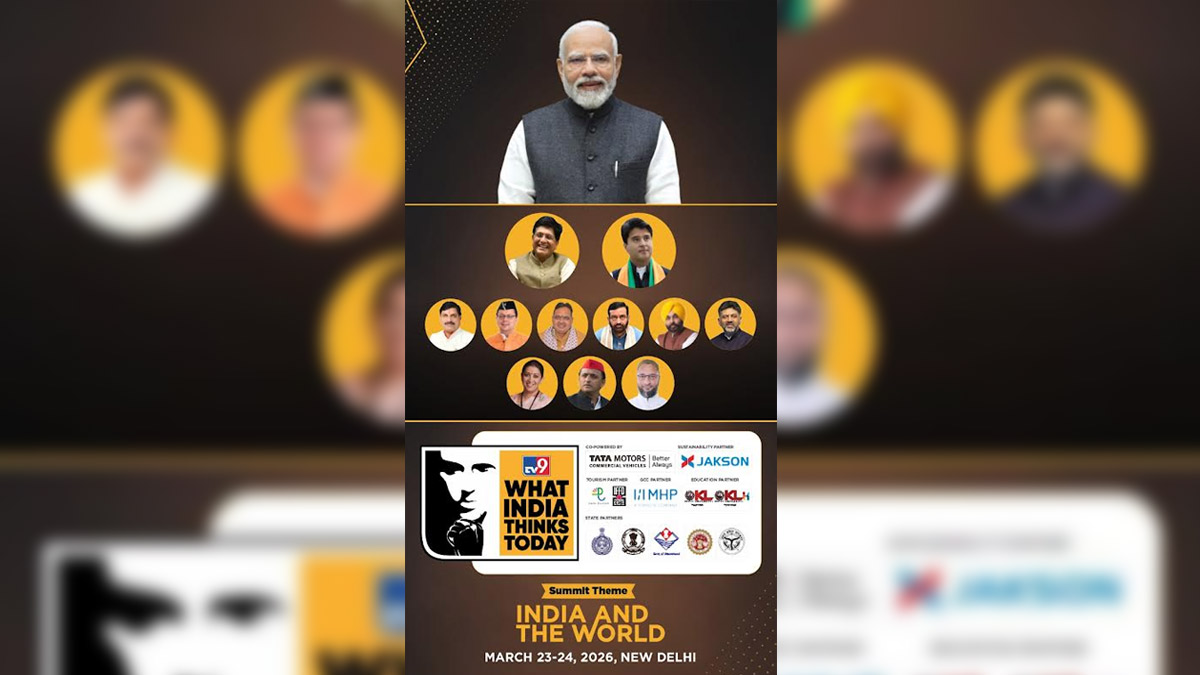
MUMBAI: The WITT Summit just wrapped up with enough big ideas to fill a policy playbook because when India’s leaders, thinkers and icons gather under one roof, even the conversations hit sixes. The eighth edition of TV9 Network’s flagship What India Thinks Today (WITT) Summit 2026 concluded on Saturday after two days of dynamic discussions at its New Delhi venue. India’s largest multi-domain public policy and culture summit brought together political leaders, policymakers, sports icons, artists and technology innovators to examine the forces shaping contemporary India and its global standing.
Prime minister Narendra Modi delivered the keynote address on the theme “India and the World” for the third consecutive year. In a wide-ranging speech, he addressed the ongoing conflict in West Asia, calling for restraint and compassion while highlighting India’s continued development trajectory despite global turmoil.
The summit featured candid conversations with state leaders. Telangana Chief Minister A. Revanth Reddy articulated a people-first governance model and contrasted it with other development approaches. Madhya Pradesh Chief Minister Mohan Yadav declared that Left-wing extremism had been effectively eliminated in his state and highlighted preparations for the upcoming Kumbh Mela. Punjab Chief Minister Bhagwant Mann defended his government’s record, citing the closure of 19 toll plazas and creation of the Sadak Suraksha Force. Karnataka Deputy Chief Minister D.K. Shivakumar expressed confidence in Congress prospects in Assam and addressed recent allegations against him.
On geopolitics and national security, Union Minister Jyotiraditya Scindia outlined India’s ambition to become a builder of trusted digital infrastructure for the world, citing the rapid 5G rollout and village-level 4G connectivity.
Cricket received significant attention. Former India captain Sourav Ganguly praised player freedom and trust as hallmarks of great leadership and named MS Dhoni as the greatest captain due to his World Cup successes. India women’s team bowling coach Aavishkar Salvi credited the BCCI and Women’s Premier League for building a pipeline of world-class talent behind the team’s recent ODI World Cup triumph.
The summit also hosted the inaugural AI² Awards 2026, celebrating the convergence of human creativity and machine intelligence in storytelling and content creation. Poet and kathavachak Kumar Vishwas delivered a nuanced take on India’s concept of Dharma and criticised the recent arrest of an 80-year-old Shankaracharya. Veteran lyricist Sameer Anjaan and storyteller Neelesh Misra reflected on changing music trends and artistic responsibility in the wake of a recent controversy involving Nora Fatehi.
In a country where conversations often run as deep as the Ganges, the WITT Summit proved once again that when leaders, thinkers and storytellers come together, the real winner is public discourse lively, layered and refreshingly unafraid to tackle the big questions shaping India’s tomorrow.








