News Broadcasting
Channels seek clarity, relevance from animation producers


MUMBAI: One of the sessions at Frames focused on what content channels like Cartoon Networks, Disney expect from the production houses and studios.
Walt Disney Television International (South East Asia/Korea) VP, MD Raymund Miranda said, “From an editorial perspective the first thing that goes into our minds is does the product you are pitching fit the Disney brand? The Disney brand is family oriented and trustworthy. We have to be custodians of our brand
“The second tick mark is relevance to kids. For instance for our preschool block we check to see if the social and mechanical skills of the child are being addressed. We follow the principle of the whole child curriculum here. The third criteria are the brand values of the proposition being made by the production house. What is the story like? How is it being told? This includes not just the animation quality but also the dubbing, editing. The product should be able to occupy a special place in the heart of our viewers.”

Turner Entertainment Networks Asia executive director programming and acquisitions Marc Buhaj said, “The product must be relevant to the 4-14 year block. I also urge the production houses to study the channels before pitching their products. That way they will get an idea of the direction the channels are moving in and what the different requirements are. The stories should also spark with positive and creative qualities. We also expect that the producer would have fully fleshed out the story idea in terms of the script, the pilot episodes before making the pitch.”
He elaborated on how Cartoon Network works within different cultural contexts. For in the Philippines the American cultural context is prevalent. Therefore shows that succeeded in the US generally fare well there as well. Taiwan has the Japanese cultural context. “So you have Japanese anime like the Miyaki series. In Australia we get more bold and mischievous. For the Queen’s birthday we had our characters not wearing pants. In India launching Pogo allowed to work on the live action platform like the movie Harry Potter. The name Cartoon Network implies just cartoons and nothing else.”
Miranda said that Disney has had success working with local producers in Hong Kong on the interstitial video production Legends of the King of Fire. Each interstitial lasted for around five minutes. Channel ratings went up by 67 per cent and it is now being adopted by other markets. Buhaj added that choosing shows was not just a matter of whether it had enough legs. Scheduling becomes important. “We identify hot spots like Diwali and plan around them. Also when the kids have exams we do not plan premieres.”
Publishing firm Mallard Media Services’ Margaret Donald said that channels had a social responsibility towards kids. “I am disturbed that a lot of violence is being fed to kids under the action tag. Simplicity and integrity are key ingredients that go towards making a classic brand. There is a need for more wholesome material. We are looking to partner with Indian production companies.”



News Broadcasting
CNN-News18 to host Fury in the Gulf conclave on West Asia crisis
Three-hour summit to unpack geopolitical fallout and impact on India
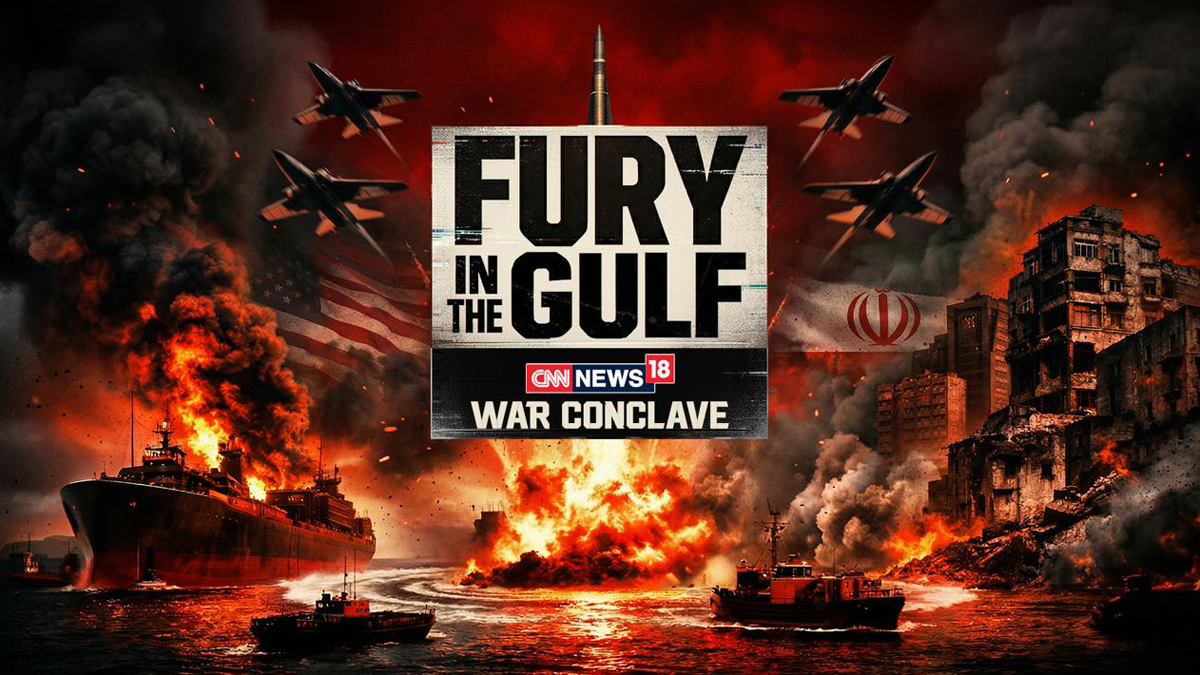
MUMBAI: CNN-News18 is set to host a special three-hour broadcast, Fury in the Gulf – War Conclave, on April 7, aiming to decode the escalating West Asia crisis and its far-reaching implications for India.
Scheduled from 4:00 PM to 7:00 PM, the conclave comes at a time when tensions between Iran and the United States are reshaping global geopolitics and triggering economic uncertainty. With India’s deep energy ties, trade links and large diaspora in the Gulf, the developments carry significant domestic relevance.
Built around the theme ‘Conflict, Consequences, and The Future,’ the programme will feature six curated sessions combining one-on-one interviews and panel discussions. The focus is to cut through the clutter and offer viewers a clearer understanding of the fast-evolving situation.
Key sessions include ‘Diplomacy in Times of War’ featuring Shashi Tharoor, and ‘World After the Iran Conflict’ with voices such as Ram Madhav, Reuven Azar, representatives from the European Union and the Iranian Deputy Envoy. Another session titled ‘Another Dunkirk?’ will bring together K. J. S. Dhillon and Jitin Prasada among others.
CNN-News18 editorial affairs director Rahul Shivshankar said, “In times of war, clarity becomes the most powerful tool. Fury in the Gulf – War Conclave brings together credible voices to address the questions and confusion that arise amid an overwhelming influx of information.”
He added that the initiative is aimed at delivering “facts, perspective, and insight” at a time when misinformation can easily cloud public understanding.
Echoing the sentiment, CNN-News18 CEO– English and business news Smriti Mehra said the conflict marks a defining global moment, with consequences that extend well beyond the region. She noted that the conclave seeks to present the crisis with “depth, nuance and responsibility” so audiences can better grasp its real-world impact.
As geopolitical tensions continue to dominate headlines, the conclave positions itself as an attempt to bring order to the noise, offering viewers a structured, insight-led look at a complex and rapidly shifting global situation.






