Hardware
CES 2026 puts AI centre stage, from robots to smart homes

LAS VEGAS: The future of home technology is arriving faster than expected. At CES 2026, smart homes decisively moved past apps and voice commands, signalling a shift towards systems that anticipate behaviour, act autonomously and blend invisibly into daily life. From mobile robots and adaptive sleep tech to AI-driven wildfire protection, these are not distant concepts. All are slated to reach consumers this year.
Exhibitors made it clear that intelligence, not connectivity alone, is now the defining feature of home tech. Devices are learning routines, adjusting environments in real time and, increasingly, taking decisions without human prompts.
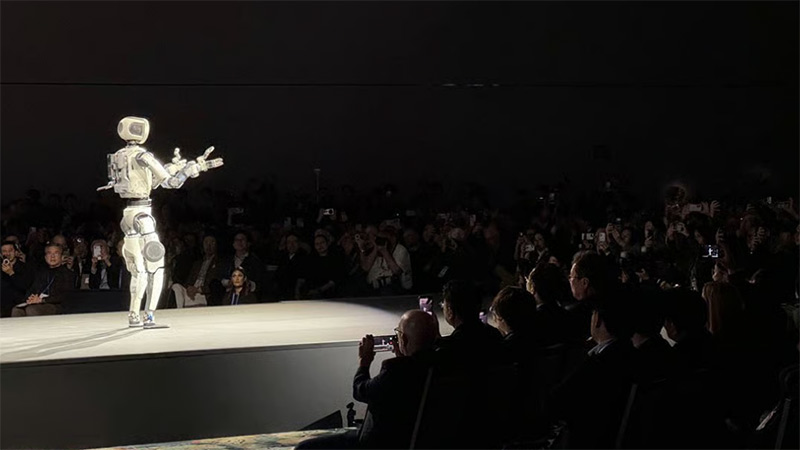
Hyundai motor group used CES 2026 to unveil an AI robotics strategy aimed at making humanoid robots central to industrial work, signalling a shift from automation to what it calls “human-centred” physical AI. Anchored by its partnership with Boston dynamics, the plan spans co-working robots for hazardous and repetitive tasks, an end-to-end robotics value chain, and tie-ups with global AI firms.


The group plans to mass-produce the Atlas humanoid and deploy it across factories from 2028, starting with parts sequencing and scaling to assembly by 2030, positioning humanoids as the fastest-growing segment of the physical AI market.
TCL set the tone on the entertainment front with the X11L SQD-Mini LED 4K TV, which uses super quantum dot technology to deliver brighter whites, deeper blacks and sharper contrast. Unlike conventional RGB panels, the display relies on quantum dots illuminated by pure white light. Available in 75-, 85- and 98-inch variants, the 85-inch model is already up for preorder at $7,999.99.
LG’s AI Home Robot pushed the idea of the smart assistant off the counter and onto wheels. Designed as a mobile hub for the household, the robot navigates autonomously, responds to voice commands, monitors indoor conditions and connects with smart appliances. Crucially, it recognises household routines and adjusts settings based on presence and context, going well beyond today’s static voice assistants.

Sleep technology emerged as a major theme. The Sleepal AI Lamp combines lighting with sleep science, tracking sleep patterns, dynamically adjusting colour temperature through the night and waking users in sync with their sleep cycles. Over time, it learns individual responses rather than relying on fixed schedules, creating a personalised sleep environment.
Ceragem took the concept further with its Youth Bed featuring an AI health concierge. The bed monitors posture, sleep quality and physiological signals, then actively adjusts support and temperature. The integrated system also offers health recommendations, repositioning the bed as an active wellness platform rather than passive furniture.

Home security also received an intelligence upgrade. Lockin’s AI Smart Lock uses behavioural patterns and AI-based recognition to identify residents, flag unusual activity and adapt to daily routines. The aim is frictionless access paired with constant, background vigilance—security that operates quietly rather than reactively.
CES also delivered its share of playful innovation. GameSir’s Swift Drive Racing Gamepad features a compact steering wheel embedded at its centre, connected to a high-precision Hall effect encoder and a direct drive motor for force feedback. Haptic triggers simulate effects such as ABS braking, bringing console-style realism closer to professional racing rigs. Pricing and availability are yet to be announced.

Perhaps the clearest sign of how far smart homes have evolved came from outside the living room. The Home Wildfire Defence System uses sensors, AI monitoring and automated sprinklers to seal vents, dampen surroundings and protect properties from approaching fires. It reframes smart home technology not as a convenience layer, but as a potentially life-saving infrastructure.
Collectively, HP’s CES 2026 line-up spans three HyperX Omen gaming laptops (Omen 15, Omen 16 and Omen Max 16), four gaming monitors ranging from the entry-level Omen 24 G2 IPS to high-refresh QD-Oled panels including the Omen Oled 27q, Oled 27qs and the ultrawide Oled 34, alongside eight HyperX peripherals.

These include four gaming keyboards under the Origins 2 series, three audio products: Cloud Earbuds III, III S and a forthcoming Neurable-powered EEG headset and the Clutch Tachi arcade controller.
Intel’s CES 2026 announcements centred on the new Core Ultra Series 3 platform, spanning mobile and edge processors built on its US-made 18A process. The line-up introduces a new Core Ultra X9 and X7 class with integrated Intel Arc graphics, offering up to 16 CPU cores, 12 Xe-cores and 50 NPU Tops, alongside mainstream Intel Core variants for thinner, lower-cost laptops.

Beyond PCs, Series 3 processors are also certified for embedded and industrial deployments, targeting AI workloads across robotics, smart cities, automation and healthcare, with consumer laptops arriving from late January 2026 and edge systems following in the second quarter.
Lenovo announced a strategic tie-up with Nvidia to help AI cloud providers deploy data centres faster, as the world’s largest PC maker sharpens its push into artificial intelligence.

Alongside the partnership, the company unveiled a new AI platform, showcased multiple concept devices, revealed concept AI glasses, and previewed an AI assistant wearable under “Project Maxwell”. Lenovo also used the show to debut its first foldable smartphone under the Motorola brand, underscoring its ambition to extend AI beyond PCs into wearables, smart devices and cloud infrastructure.







Hardware
India clears Rs 1.6 lakh crore semiconductor projects under Semicon India
Ten projects cleared as production begins and design ecosystem gathers pace
NEW DELHI: India’s push to become a global electronics powerhouse is gaining momentum, with the Semicon India Programme driving the creation of a full-fledged semiconductor ecosystem from design to manufacturing.
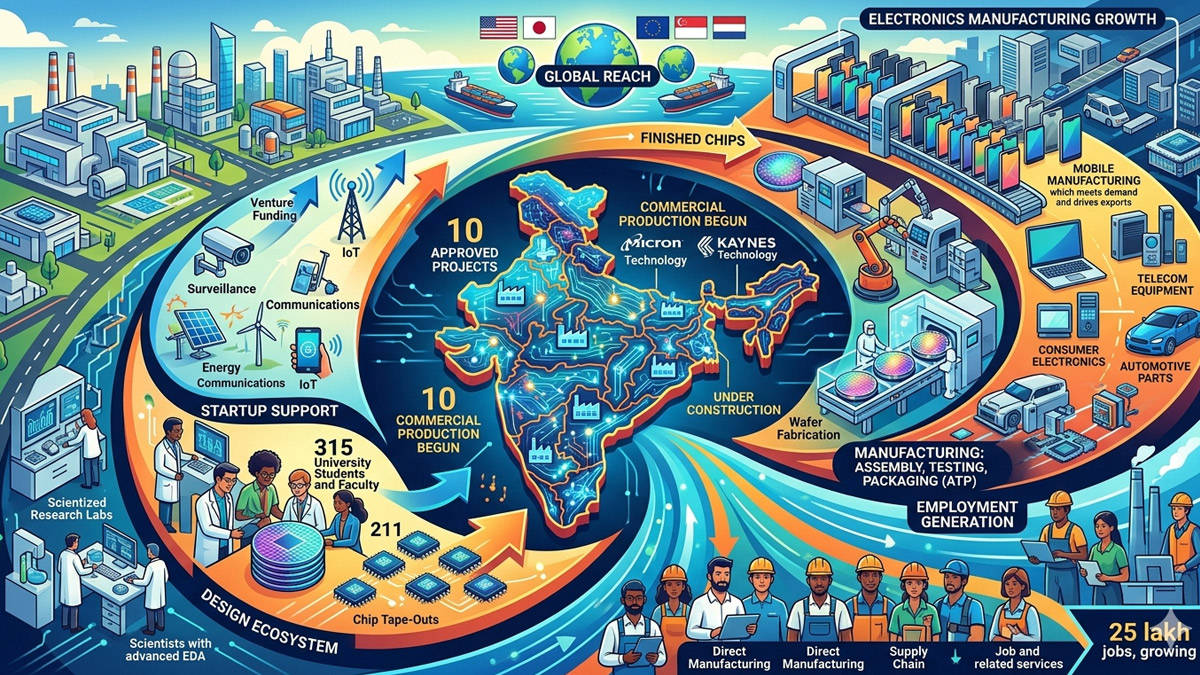
Launched in 2022, the programme aims to build capabilities across the entire value chain, including chip design, fabrication, assembly, testing and packaging. In just four years, the government has approved 10 semiconductor projects with a combined investment commitment of around Rs 1.6 lakh crore.
Two of these facilities have already begun commercial production, including units led by Micron Technology Inc. and Kaynes Technology India Limited. Two more plants are expected to go live later this year, signalling that India’s chip ambitions are moving from blueprint to factory floor.
The broader electronics manufacturing story has also seen sharp growth over the past decade. Production has jumped from roughly Rs 1.9 lakh crore in 2014-15 to about Rs 12 lakh crore in 2024-25, while exports have surged nearly eightfold. Mobile phone manufacturing, once heavily import-dependent, now meets almost all domestic demand and has become a major export driver.
Alongside manufacturing, the government is investing heavily in design capabilities. Through access to advanced chip design tools provided free to 315 universities, students and researchers have clocked over 200 lakh hours of usage. This effort has already resulted in 211 chip tape-outs from 75 institutions.
Support for startups is also picking up pace. Twenty-four chip design projects have been approved, targeting sectors such as surveillance, energy, communications and IoT. Of these, 14 companies have collectively raised over Rs 650 crore in venture funding, while several designs have progressed to fabrication, including at advanced nodes.
To strengthen supply chains, India has also signed semiconductor cooperation agreements with countries including the United States, Japan, the European Union, Singapore and the Netherlands. These partnerships aim to reduce global dependencies while boosting domestic capabilities.
The employment impact is equally significant. The electronics sector now supports an estimated 25 lakh jobs, with mobile manufacturing alone accounting for nearly half. As more semiconductor units come online under the India Semiconductor Mission, indirect job creation across supply chains is expected to rise further.
Sharing these updates in Parliament, Ministry of Electronics and Information Technology minister of state Jitin Prasada underscored the government’s focus on building a resilient, end-to-end semiconductor ecosystem.
With factories taking shape, designs moving to silicon and investments flowing in, India’s semiconductor story is steadily shifting gears from ambition to execution.






