Applications
Centuryply sparks AIgnite to future-proof its business with Generative AI

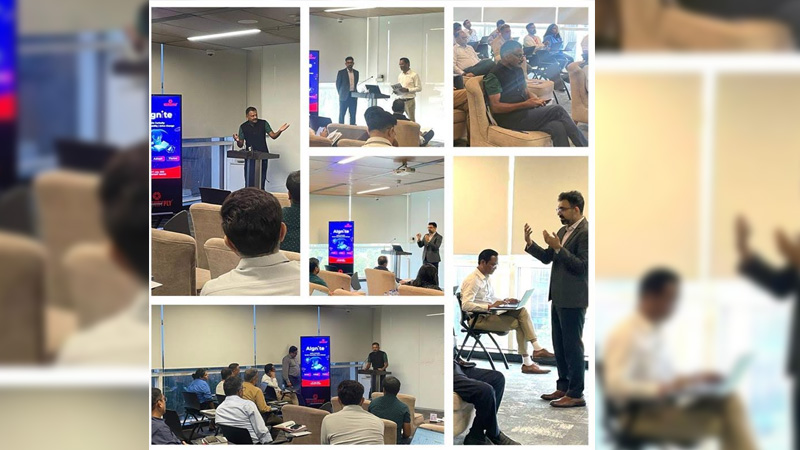
MUMBAI: From plywood to power moves, Century Plyboards (India) Ltd. is setting the stage for a digital transformation that goes beyond building materials. The company has unveiled AIgnite, an organisation-wide initiative designed to weave Generative AI into every corner of its operations from boardroom strategy to shopfloor execution.
Created in collaboration with Timespro, AIgnite isn’t just a tech experiment but a year-long structured programme aimed at reshaping leadership thinking and functional workflows. Its debut session, AI for Leadership, saw spirited participation from chairman Padma Shri Sajjan Bhajanka, managing director Sanjay Agarwal, the promoter board, and senior executives. The focus: how AI can sharpen decision-making, fast-track innovation, and turbocharge operational intelligence.
The AIgnite roadmap spans sales, marketing, finance, HR, procurement, IT and SCM, with domain-specific learning tracks rooted in TimesPro’s AI in action framework. Structured into three tiers CXO & leadership strategy sessions, function-centric hands-on labs, and refresher & deep dive modules the programme blends simulations with real-world outcomes, from creating sharper sales pitches and hyper-personalised marketing campaigns to automating finance reporting and optimising procurement.

Timespro president & CFO for enterprise solutions Arun Kabra underlined the intent: “True transformation is not about learning tools, it’s about rewiring thinking. Our collaboration with Centuryply is proof that when leadership pairs intent with innovation, AI shifts from the periphery to the core.”
Centuryply’s HR team has already plugged AI into recruitment, sentiment tracking, and employee engagement, signalling how the cultural shift is as crucial as the technical one. “AIgnite is not about adopting a tool, it’s about evolving a mindset,” said Century Plyboards CHRO Rakesh Tiga. “This is how we build a future-ready Centuryply with technology in our hands and purpose in our hearts.”
The initiative, steered by the learning & development team under Kapil Anand, is designed to maximise relevance and engagement across teams. Beyond upskilling, it sets the foundation for a people-led transformation agenda that positions Centuryply among India’s most forward-looking companies in the AI revolution.
With AIgnite, Centuryply isn’t just adapting to the future, it’s building it, one algorithm at a time.




Applications
With 57 per cent single new users, Ashley Madison rebrands as discreet dating platform
Platform says majority of new members now identify as single

INDIA: Ashley Madison is shedding the “married-dating” label that defined it for two decades, repositioning itself as a platform for discreet dating in what it calls the post-social media age.
The rebrand, unveiled in India on 27 February, 2026, marks a structural shift in business model and identity. Once synonymous with married dating, the company now describes itself as the “premier destination for discreet dating” under a new tagline: Where Desire Meets Discretion.
The pivot is data-driven. Internal figures show that 57 per cent of global sign-ups between 1 January and 31 December, 2025 identified as single: a notable departure from the platform’s married core. The company argues that its community has already evolved beyond its original positioning.
“In an age where our lives have been constantly put on public display, privacy has become the new luxury,” said Ashley Madison chief strategy officer Paul Keable. He framed the platform’s offering as “ethical discretion” for singles, separated, divorced and non-monogamous users seeking private connections.
The shift also taps into wider digital fatigue. A global survey conducted by YouGov for Ashley Madison, covering 13,071 adults across Australia, Brazil, Canada, Germany, India, Italy, Mexico, Spain, Switzerland, the UK and the US, found mounting discomfort with hyper-public online lives.
Among dating app users, 30 per cent cited constant swiping and messaging as a source of fatigue, while 24 per cent pointed to pressure to curate public-facing profiles and early personal disclosure. Some 27 per cent said fears of screenshots or information being shared contributed to exhaustion; an equal share cited unwanted attention.
The retreat from oversharing appears broader. According to the survey, 46 per cent of adults actively try to keep most aspects of their life private online. Only 8 per cent feel comfortable sharing most aspects publicly, while 35 per cent say they are becoming more selective about what they disclose.
Ashley Madison is betting that this cultural recalibration towards controlled visibility can be monetised. By doubling down on privacy infrastructure and reframing itself around discretion rather than infidelity, the company is attempting to convert reputational baggage into a premium proposition.






