News Broadcasting
Celebrate Onam in MMTV colours!


Mumbai: As we kickstart Kerala’s festive season with the vibrant celebration of Onam, MMTV is set to captivate audiences with a stellar lineup across its three iconic brands: Mazhavil Manorama, manoramaMAX, and Manorama News.
Mazhavil Manorama is leading the festive charge with the prestigious ‘Mazhavil Entertainment Awards 2024’, an evening of sheer grandeur and entertainment. The star-studded onground event, featuring the iconic stars of Malayalam cinema is a guaranteed spectacle. Expect show-stopping performances, heartfelt moments, and a dazzling showcase of talent that will leave audiences spellbound.
For movie lovers, Mazhavil Manorama presents a dazzling array of World Television Premieres, including “Jai Ganesh,” “Mandakini,” “Pavi Care Taker,” Nadanna Sambhavam”, and more! Complementing these premieres is the Onam special mega cookery show, “Atham Pathu Ruchi”. Hosted by the celebrity singer Sithara Krishnakumar, Atham Pathu Ruchi is an onground cookery show in which celebrities travel across Kerala to capture the spirits of Onam cusines. Our beloved shows “Oru Chiri Iru Chiri Bumper Chiri” and “Udan Panam” will also have the festival special episodes. To further enrich the lineup, three new fiction series are set to launch, promising compelling storytelling that will delight our audiences.

On manoramaMAX, the excitement continues with an impressive selection of movies, featuring the premieres of “Mandakini,” “Nadanna Sambhavam,” and “Pavi Care Taker.” These movies cater to the diverse tastes and preferences of Malayalee audiences. Furthermore, a new web series with a stellar cast is also coming to keep viewers engaged with its gripping narrative.
Manorama News celebrates Onam with a unique blend of events and initiatives. ‘Onam Vipani’ is a special news program that delves into the vibrant Onam market, providing insights into everyday commodities and goods. Our ‘Pentharam’ initiative honours women entrepreneurs from humble backgrounds, spotlighting their inspiring journeys and contributions. Adding to the grandeur, the
‘Conclave 2024’, South India’s largest news conclave, will be a significant on-ground event fostering innovative discussions on a multitude of topics, enriching the festive celebrations with insightful conversations.
Join MMTV as we bring Onam celebrations to life across TV, digital platforms, and live events. Connect with us to maximize your brand’s exposure and reach a wide audience during this festive season!





News Broadcasting
Network18 channels lead YouTube news viewership in March 2026
CNN-News18, News18 India and CNBC channels top categories with record views
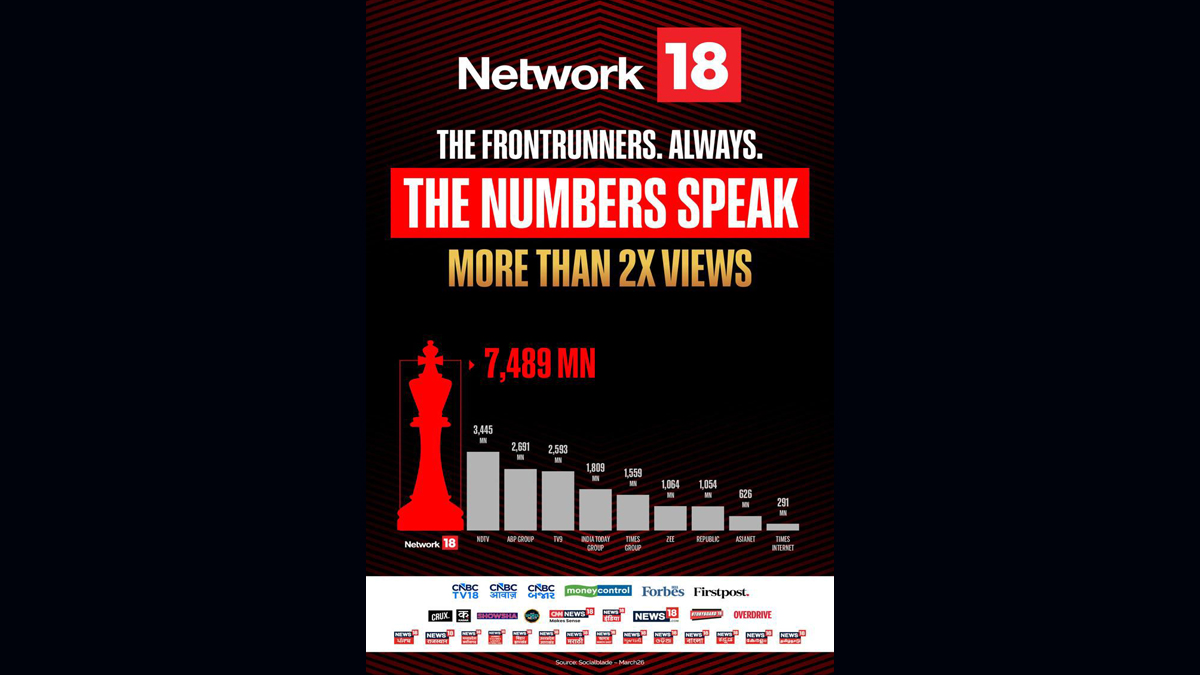
MUMBAI: When the world hit refresh on breaking news, Network18’s channels were already streaming ahead. As geopolitical tensions and war-driven headlines fuelled a surge in global news consumption, the network’s digital playbook delivered big clocking record Youtube viewership across English, Hindi and business news categories in March 2026.
At the forefront was CNN-News18, which emerged as the clear leader in the English news segment with 130 million live and video-on-demand views. The channel edged past competitors such as Times of India (126.5 million), Times Now (101.1 million), India Today (88.2 million) and NDTV (77.5 million), according to Databeings data for March.
In the Hindi news arena, News18 India delivered a commanding performance, racking up a staggering 3,297 million views on YouTube. The channel comfortably outpaced NDTV India, which recorded 3,119 million views, underlining its deep reach and consistent engagement with mass audiences, as per Playboard data.
The network’s dominance wasn’t confined to general news. In the Hindi business segment, CNBC Awaaz topped the charts with 92 million views, narrowly ahead of Zee Business (90 million) and well ahead of ET Now Swadesh (57 million). Meanwhile, its English counterpart CNBC-TV18 posted a strong 58 million views, reinforcing the network’s cross-category strength.
The spike in viewership reflects a broader shift in audience behaviour, with viewers increasingly turning to digital platforms particularly Youtube for real-time updates and in-depth coverage during high-intensity news cycles. For Network18, the numbers signal more than just scale; they underline the effectiveness of a multi-platform strategy that blends speed, credibility and continuous coverage.
In a month where the news never paused, it seems viewers chose to stay tuned where the stream never stopped.






