News Broadcasting
CEC’s whines on ‘India Shining’ ineffectual?

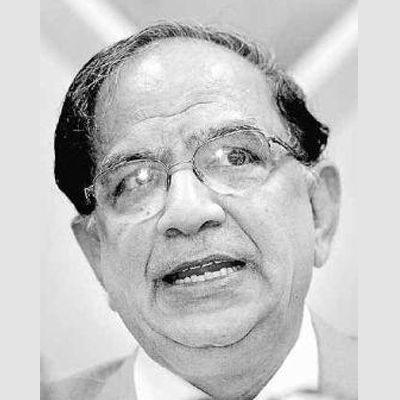
NEW DELHI: How much validity do chief election commissioner (CEC) TS Krishnamurthy’s utterances on the ‘India Shining’ ad campaign have? For all practical purposes, nothing.
A government official explained that as a bureaucrat, which the CEC’s post is, Krishnamurthy does not have any control over things that are beyond the Election Commission’s jurisdiction.
“If the CEC is so upset about the government spending public money on self-publicity, then the EC should come out with a directive telling the government to stop doing so, instead of making public posturing,” a senior government official said.

On Sunday, after taking over, Krishnamurthy told journalists that it was his ‘personal’ opinion that the government should not misuse public money on publicising itself through campaigns like ‘India Shining,’ which has already cost approximately Rs 800 million and such campaigns would be ramped up as the general election dates draw nearer.
If the CEC is appealing to the moral conscience of politicians, then it’s a different story, but political observers point out that a serving bureaucrat ought not to air personal views, especially if the person concerned holds such an important post as that of a CEC, which has been in the news for activism since the time the organisation had T N Seshan as the CEC in the mid-1990s.
The EC-framed model code of conduct, to be followed by political parties, including the government, only comes into effect about six weeks before the actual polling date(s). During this period, no important policy decisions can be taken as also no activity can be undertaken that can be construed as amounting to publicity for the government or any political party.
After the moral code of conduct comes into effect, the EC can take action against political parties and politicians or issue directives. However, the Press Trust of India quoted Prime Minister A B Vajpayee yesterday as saying, “That the government money is being misused is wrong. It is part of the government’s duty that it should put its achievements before the people. The final decision is with the people.”
The PM also added that what Krishnamurthy is saying is ‘correct’ from his viewpoint and what the government is doing is correct from its point of view.



News Broadcasting
DNPA names Puneet Gupt chairperson; Anant Goenka steps in as vice chairperson
Leadership reset comes as digital news grapples with AI-led disruption and policy battles

NEW DELHI: India’s digital news lobby has a new pilot at the helm just as the industry stares down its next big disruption. The Digital News Publishers Association (DNPA) has named Puneet Gupt, chief operating officer at Times Internet, as chairperson, succeeding Mariam Mammen Mathew at the end of her two-year term.
Gupt, who previously served as vice chairperson, steps into the top role with deep familiarity of the body’s agenda, ensuring a smooth transition at a time when publishers are recalibrating for an AI-shaped future. Anant Goenka, executive director at The Indian Express Group, has been appointed vice chairperson, while Dhruba Mukherjee continues as treasurer.
“Digital news publishers are navigating one of the most consequential shifts the industry has ever seen, from how content is discovered to how it is valued in an AI-driven world. DNPA’s role as a unified industry voice has never mattered more. My focus will be on ensuring that our members are not just responding to these changes, but actively contributing to the policy and industry frameworks around them,” said Puneet Gupt.
Goenka underscored the need for collective action as the sector evolves. “This is an important moment for DNPA and for the digital news publishing industry in India. There is real value in publishers coming together, sharing perspectives, and building a common understanding of the opportunities and challenges ahead. I look forward to contributing to that effort with DNPA members,” he said.
Outgoing chairperson Mariam Mammen Mathew called it a timely transition. “It has been a privilege to lead DNPA at such a pivotal time for the industry. I am confident that under Puneet’s leadership, DNPA will continue to grow in influence and impact. I wish the new team every success,” she said.
Sujata Gupta, secretary general and chief executive officer at DNPA, framed the shift as a springboard for the next phase. “This transition marks an exciting new chapter for DNPA. We have spent the last few years building the credibility, relationships, and frameworks that allow us to engage meaningfully on the issues that matter most to our members. With Puneet and Anant at the helm, we are well-positioned to translate that foundation into tangible outcomes, on policy, on fair commercial frameworks, and on ensuring that digital news publishing remains a sustainable and vital part of India’s information ecosystem,” she said.
The leadership rejig lands at a moment when digital publishers are battling shifting discovery patterns, platform power and the economics of AI. For DNPA, the message is clear: the next phase will be less about reacting and more about shaping the rules of the game.








