GECs
Casbaa turns up the heat on Thai pirates


One of the recurring themes in the just-concluded Enter Media 2001 conference organised by the Confederation of Indian Industries (CII) in Mumbai was the issue of piracy.
That the problem is a pan-Asian one was elucidated by Zee Networks group broadcasting CEO Sandeep Goyal, who referred to the easy availability of the latest Indian films on cable even in a developed market like Japan.
At a regional level, the Cable & Satellite Broadcasting Association of Asia (Casbaa) has taken up the issue of intellectual property rights (IPR) protection in Thailand to domestic regulators the public relations department of the Prime Minister’s Office (PRO) and the Mass Communications Organisation of Thailand (MCOT).

Senior Casbaa officials met with the directors-general of the PRD and MCOT at the conclusion of a Casbaa Roundtable on Pay TV Piracy in Asia on 3 August in Bangkok and requested that the PRD and MCOT play a more active role in combating pay TV piracy in the Thai market.
Both MCOT and the PRD, as well as the Royal Thai Police, expressed a clear willingness to tackle the problem during the roundtable.
“We believe there may be as many as 150,000 pay TV households in Thailand that are not paying the rights owners for the channels they are viewing. Of course, this also damages the viability of the legitimate operators,” said Simon Twiston Davies, the executive director of Casbaa.”
According to Twiston Davies, one remedy on the pay TV front could be as simple as adding a clause to annual licensing conditions insisting that local cable operators provide proof that they hold legally binding contracts to distribute individual channels. If a cable operator were unable to demonstrate a contractual relationship with rights owners, it would not have its license renewed.
Twiston Davies noted that creative industries in markets as diverse as Hong Kong and India have been almost devastated by IPR piracy in recent years and Thailand could also be under threat. He added that Thailand remains on the US Trade Representative’s 301 Watch List for piracy activities and that upcoming World Trade Organisation negotiations are expected to increasingly focus on IPR matters.
The Casbaa Roundtable on Pay-TV Piracy covered case studies from regional pay-TV operators, technology specialists and rights holders who outlined their views on the scale of the problem in Asia and potential action points.
Among those exchanging views during the day-long roundtable were representatives from AOL Time Warner, Star Group, Discovery Channel, Turner Broadcasting, Hong Kong Cable, UBC, Astro, Irdeto Access, NDS and the Motion Picture Association.
In recent months pay-TV piracy has been forced up the Casbaa agenda as the problem has escalated in the jurisdictions of Hong Kong, the Philippines, Taiwan and Thailand.
In the coming months Casbaa will be taking its concerns on these issues to governments at several levels as well as, on occasion, representing the interests of the industry in legal actions.






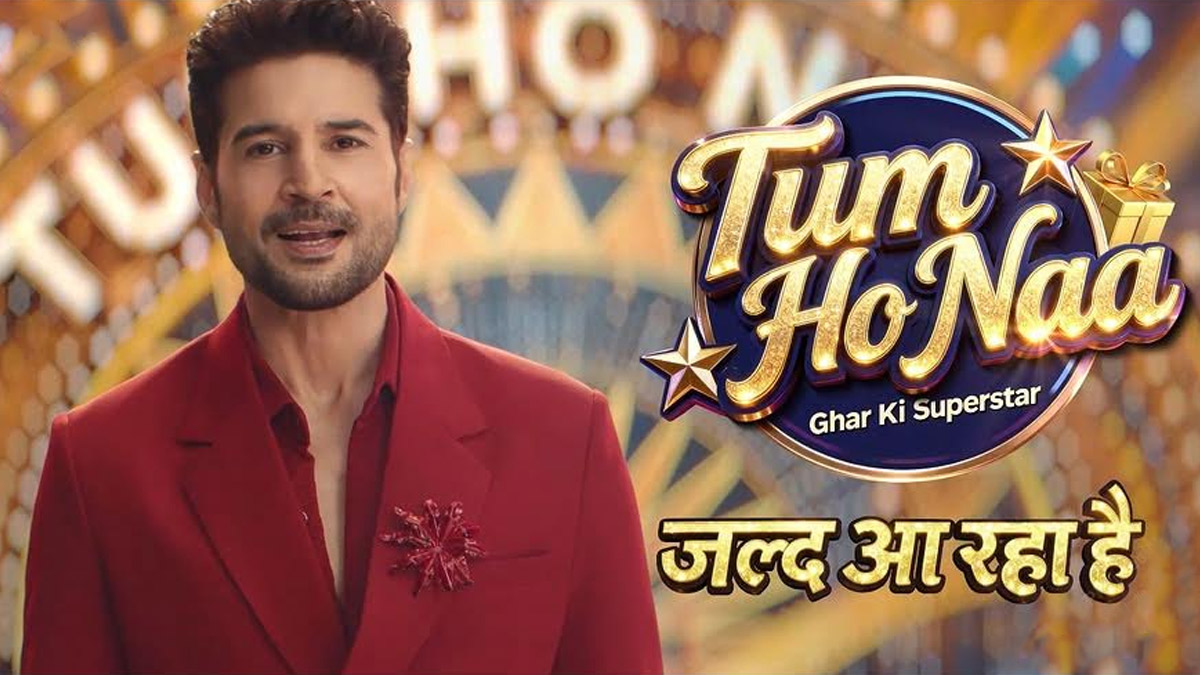
MUMBAI: Lights, camera… connection because this time, the game isn’t just about winning, it’s about who’s with you. Sony Pictures Networks India is gearing up to launch a new reality game show, Tum Ho Naa, expanding its unscripted slate with a format that promises both emotion and engagement.
The show will premiere soon on Sony Entertainment Television and stream on Sony LIV, with Rajeev Khandelwal stepping in as host. Known for his measured screen presence and selective choices, Khandelwal’s return to television adds a layer of familiarity and credibility to the upcoming format.
While specific details of the gameplay remain under wraps, the positioning suggests a reality format that leans as much on emotional resonance as it does on competition, an increasingly popular blend in Indian television, where audiences are gravitating towards content that offers both stakes and storytelling.
Khandelwal, reflecting on his return, noted that his choices have often been guided by instinct rather than convention, describing Tum Ho Naa as a project that feels “close to the heart”. His association also signals Sony’s continued focus on anchoring new formats with recognisable faces who bring both relatability and depth.
The launch comes at a time when broadcasters are doubling down on original non-fiction formats to drive appointment viewing, even as digital platforms expand parallel reach. By placing the show across both linear television and OTT, Sony appears to be aiming for a dual-audience strategy capturing traditional viewers while engaging digital-first consumers.
As the countdown to premiere begins, Tum Ho Naa positions itself not just as another game show, but as a reminder that sometimes, the biggest prize on screen isn’t the jackpot, it’s the journey shared along the way.






