News Broadcasting
Casbaa focus on curbing piracy; Chandra expects full CAS rollout to take six years

MUMBAI: The Cable & Satellite Broadcasting Association of Asia’s (Casbaa 2002) conference ended on 5 December in Singapore’s splendid Esplanade Theatres on Bay complex on a singular note: it has to work on reducing piracy in Asia, and launching country specific chapters.
The two-day conference and exhibition had a lower though focused exhibitor and visitor attendance. And all through what showed through was the Singapore government’s determination to make Singapore a media hub for Asia. The Singapore Broadcasting Authority chairman minced no words when he shared the Media 21 plan.
The keynotes on the first day were by MTV Networks boss Bill Roedy and Zee TV chairman Subhash Chandra, who had chosen to address the Casbaa gathering for the first time. Roedy spoke about how MTV has localised and done well globally while maintaining the local cultural ethos and also giving back to the society in these markets through its programming efforts. His focus was on playing up the message that MTV is not American brand wanting to work as an imperialist invader of Asian minds.

Chandra bullish on cable TV growth in India
Chandra came on and spoke about the growth gallop of cable TV in India and its promise, which has been unrealized to the extent it should have been.
“We will exceed by 20 per cent any potential growth figures which have been estimated by PriceWaterhouseCoopers,” he highlighted.
He emphasized that despite there being a lot of debate around DTH it was opened up in 2000. “There are restrictions and entry barriers in place, we hope these will be lifted by end this year,” he said.
He reiterated that he was looking for that one programming property a la Who wants to be a millionaire? which would help the Zee TV Network bounce back. “Greed we know works everywhere. Sex, nudity, too might work in India. I haven’t found a single format show which will work in India,” he pointed out helplessly.
Chandra expressed optimism that conditional access systems would spread across India over the next one to two years and be completed within five to six years. “I also expect terrestrial TV to be opened up in the same time frame,” he said.
Casbaa 2002 had sessions covering various issues right from producing local content to the viewership monitoring systems to regulation to media buying and planning to marketing to the next technology wave to the lure of the Chinese market to satellite services to convergence to packaging to funding and financing.
Among the interesting ones were the ones on ratings, funding and investment, the satellite segment.
An interesting aspect of the conference was the presence of CNBC and BBC anchors as moderators for some the interactive sessions and also the use of polling meters at the end of each session to poll on issues relevant in Asia and the discussions on the results immediately.
What was disappointing was the lack of a special focus and panel on India, which most speakers and attendees agreed is the most promising market in Asia after China. The China Calling session at least had a few media professionals who had done business with it sharing its view. India’s representation was on the first day when ESPN Software president Manu Sawhney was interviewed while everyone was munching away at their lunch.
On the whole, Casbaa’s Singapore conference appeared to have been relatively successful this year.





News Broadcasting
CNN-News18 to host Fury in the Gulf conclave on West Asia crisis
Three-hour summit to unpack geopolitical fallout and impact on India
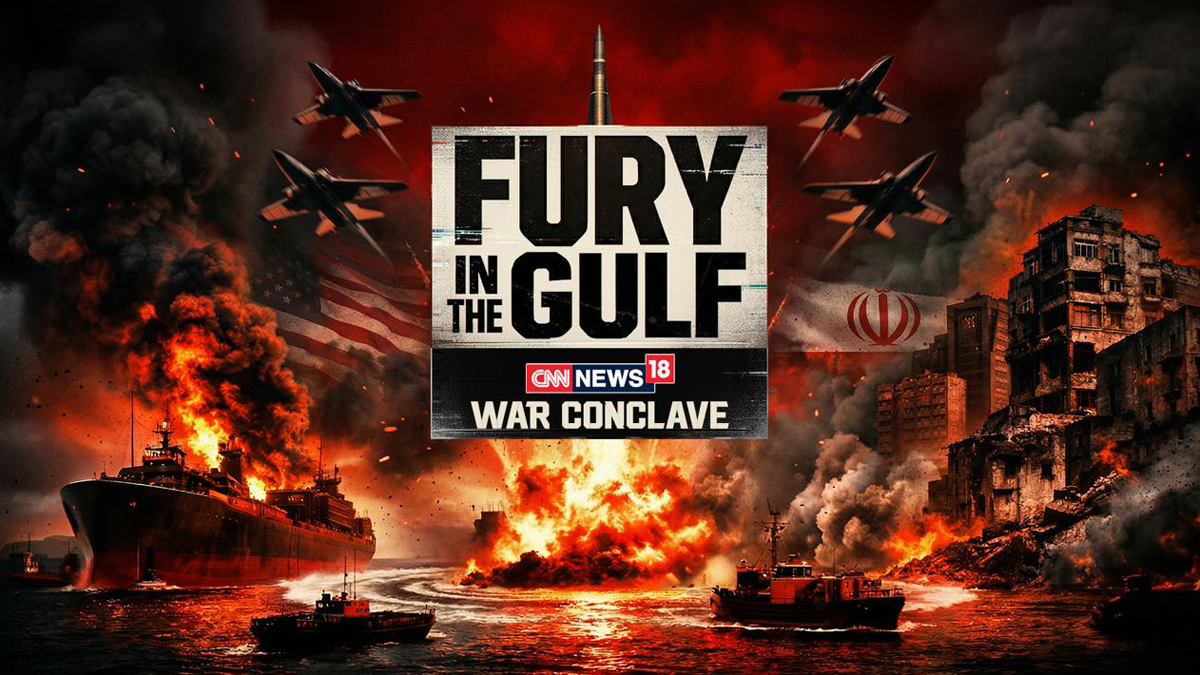
MUMBAI: CNN-News18 is set to host a special three-hour broadcast, Fury in the Gulf – War Conclave, on April 7, aiming to decode the escalating West Asia crisis and its far-reaching implications for India.
Scheduled from 4:00 PM to 7:00 PM, the conclave comes at a time when tensions between Iran and the United States are reshaping global geopolitics and triggering economic uncertainty. With India’s deep energy ties, trade links and large diaspora in the Gulf, the developments carry significant domestic relevance.
Built around the theme ‘Conflict, Consequences, and The Future,’ the programme will feature six curated sessions combining one-on-one interviews and panel discussions. The focus is to cut through the clutter and offer viewers a clearer understanding of the fast-evolving situation.
Key sessions include ‘Diplomacy in Times of War’ featuring Shashi Tharoor, and ‘World After the Iran Conflict’ with voices such as Ram Madhav, Reuven Azar, representatives from the European Union and the Iranian Deputy Envoy. Another session titled ‘Another Dunkirk?’ will bring together K. J. S. Dhillon and Jitin Prasada among others.
CNN-News18 editorial affairs director Rahul Shivshankar said, “In times of war, clarity becomes the most powerful tool. Fury in the Gulf – War Conclave brings together credible voices to address the questions and confusion that arise amid an overwhelming influx of information.”
He added that the initiative is aimed at delivering “facts, perspective, and insight” at a time when misinformation can easily cloud public understanding.
Echoing the sentiment, CNN-News18 CEO– English and business news Smriti Mehra said the conflict marks a defining global moment, with consequences that extend well beyond the region. She noted that the conclave seeks to present the crisis with “depth, nuance and responsibility” so audiences can better grasp its real-world impact.
As geopolitical tensions continue to dominate headlines, the conclave positions itself as an attempt to bring order to the noise, offering viewers a structured, insight-led look at a complex and rapidly shifting global situation.






