News Broadcasting
CASBAA announces India chapter; Shourie first chairman


MUMBAI: The Cable and Satellite Broadcasting Association of Asia (CASBAA) today announced the launch of an India chapter in what it said was a part of their overall regional strategy.
The Indian chapter will be chaired by Discovery India managing director Deepak Shourie and will comprise all the members of the association that currently have representation in the Indian market.
Star India CEO Peter Mukerjea will hold the position of vice chairman of the CASBAA India chapter and the key steering group will comprise Sony Entertainment Television India CEO Kunal Dasgupta, Disney India managing director Rajat Jain and ESPN managing director RC Venkateish.

“Our objective is to highlight the real value of the multi-channel television industry in India. As an industry sector we need to better articulate our central role within the broad communications market. More than this, it is time for India to take its rightful place in the international community and showcase its achievements to the world,” said CASBAA chairman Marcel Fenez.
“By some estimates the pay-TV industry in India is worth up to $5 billion today, providing employment to thousands of highly skilled workers. To fully benefit from this platform we need to ensure that the next stage of our development includes a robust regulatory environment and advanced technologies,” said Shourie.
“Meanwhile, we also believe it is essential that the pay-TV industry in India has a clear voice. We hope that the CASBAA India Chapter will be joined by many other organisations with our common goals of developing a robust and advanced pay-TV market,” he added.
In response to a query posed by Indiantelevision.com, as to why there was no representation of any Indian media companies like the Zee Network on the India chapter of CASBAA; Dasgupta said, “The mandate will be to get everyone in the pay TV supply chain on to CASBAA so that we can monetise the entire supply chain to the maximum efficiency.”
Beyond dealing with day-to-day issues, the CASBAA India chapter will also promote initiatives such as the launch of a pay-TV sales and marketing training scheme in India by the CASBAA Media College and a series of CASBAA seminars on new technologies supporting the pay-TV industry. CASBAA will establish a full-time office in India in the coming months.
“We need to actively recruit new companies to join CASBAA within India so that we reflect the existing profile of the Association in other parts of the region,” said CASBAA Board director responsible for India Issues and CNBC Asia Pacific CEO and president Alexander Brown.
“CASBAA is about more than broadcasters. It represents the interests of a wide range sectors, including the MSOs, the satellite operators, the hardware providers and the original creators of our content. This will be the strength of the CASBAA India Chapter,” Brown added.
The two immediate issues on CASBAA India’s agenda will be, first, to bring the CASBAA conference to India, which is held in Hong Kong every year. Secondly, Dasgupta said that the CASBAA India chapter will be tackling the issue of hotels and pubs that are accessing pay TV and are not adequately compensating the pay channels for it. This is one issue that CASBAA has taken up proactively in Hong Kong.







News Broadcasting
CNN-News18 to host Fury in the Gulf conclave on West Asia crisis
Three-hour summit to unpack geopolitical fallout and impact on India
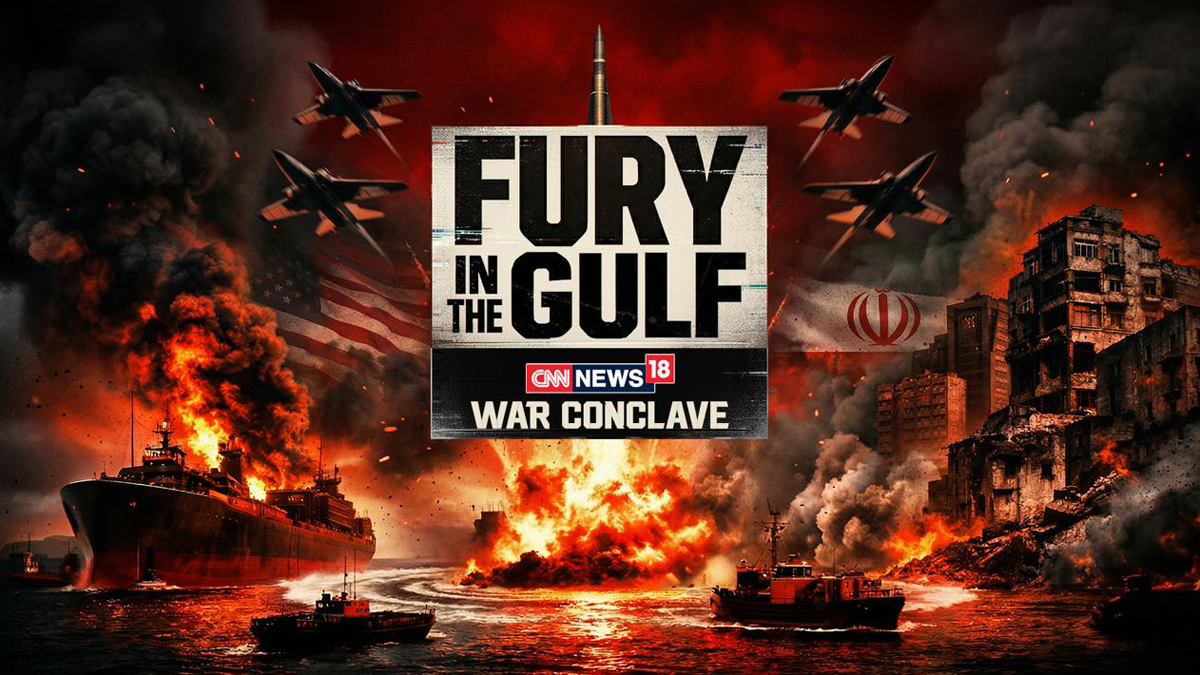
MUMBAI: CNN-News18 is set to host a special three-hour broadcast, Fury in the Gulf – War Conclave, on April 7, aiming to decode the escalating West Asia crisis and its far-reaching implications for India.
Scheduled from 4:00 PM to 7:00 PM, the conclave comes at a time when tensions between Iran and the United States are reshaping global geopolitics and triggering economic uncertainty. With India’s deep energy ties, trade links and large diaspora in the Gulf, the developments carry significant domestic relevance.
Built around the theme ‘Conflict, Consequences, and The Future,’ the programme will feature six curated sessions combining one-on-one interviews and panel discussions. The focus is to cut through the clutter and offer viewers a clearer understanding of the fast-evolving situation.
Key sessions include ‘Diplomacy in Times of War’ featuring Shashi Tharoor, and ‘World After the Iran Conflict’ with voices such as Ram Madhav, Reuven Azar, representatives from the European Union and the Iranian Deputy Envoy. Another session titled ‘Another Dunkirk?’ will bring together K. J. S. Dhillon and Jitin Prasada among others.
CNN-News18 editorial affairs director Rahul Shivshankar said, “In times of war, clarity becomes the most powerful tool. Fury in the Gulf – War Conclave brings together credible voices to address the questions and confusion that arise amid an overwhelming influx of information.”
He added that the initiative is aimed at delivering “facts, perspective, and insight” at a time when misinformation can easily cloud public understanding.
Echoing the sentiment, CNN-News18 CEO– English and business news Smriti Mehra said the conflict marks a defining global moment, with consequences that extend well beyond the region. She noted that the conclave seeks to present the crisis with “depth, nuance and responsibility” so audiences can better grasp its real-world impact.
As geopolitical tensions continue to dominate headlines, the conclave positions itself as an attempt to bring order to the noise, offering viewers a structured, insight-led look at a complex and rapidly shifting global situation.






