Cable TV
CAS rollout: MSOs look to channel package tiers


MUMBAI: Multi-system operators (MSOs) have initiated talks with some broadcasters for providing their bouquet of pay channels at special rates in the conditional access system (CAS) regime. This would enable cable networks to tier various channel packages for consumers.
The Telecom regulatory Authority of India (Trai) has fixed the a la carte pricing of pay chanels at a maximum of Rs 5 under CAS. The MSOs want broadcasters to price their bouquets below the average of Rs 5 per channel.
“We are in a very nascent stage of discussions. Some of the broadcasters have moved the courts and are, in fact, waiting for the verdict. We expect to have more definite proposals within a fortnight,” says Hathway Cable & Datacom managing director and CEO K Jayaraman.

The MSOs will tier different packages to make it price friendly for consumers. “We will be working out packages based on a combination of genres. This will be in addition to the a la carte pricing which, with a cap at Rs 5, is expected to be quite popular,” says Jayaraman.
Adds IndusInd Media and Communications Ltd (IMCL) director-in charge Ravi Mansukhani: “Once the broadcasters give us their bouquet pricing, we can work out our own bundling which will offer choice to consumers and make it more attractive than the a la carte pricing.”
The stumbling block to such negotiations at this stage, however, is a number of court cases filed by broadcasters questioning the Rs 5 cap fixed by the sector regulator. Broadcasters feel the regulated pricing is unfair and will hurt their subscription incomes.
Hathway and IMCL, meanwhile, will soon kick-off CAS awareness campaigns jointly. The estimated spend: Rs 10 million. Hathway plans to spend an additional Rs 5 million in the first phase, says Jayaraman. Hathway has already started marketing its digital drive in bus shelters, radio and other mass media platforms.
“We are also planning to invest independently through various marketing initiatives. This will be in addition to the joint campaigns where the spend could be Rs 10 million,” says Mansukhani.
The MSOs have started offering digital set-top boxes (STBs) and cable at an advance deposit of Rs 250 in the CAS notified regions of south Mumbai, Delhi and Kolkata. Consumers will have to pay a rent of Rs 45 per month only after 1 January, the scheduled date for implementation of CAS. If they are not happy, they can discontinue the service.
“We have started seeding 1,000 STBs a day since 1 November. We expect this to further pick up,” says Jayaraman. Hathway is aggressively pushing for digital cable in both Mumbai and Delhi.
IMCL has been slow to push the STBs to its consumers. “Once the marketing campaign gathers momentum next week, we hope to seed 1,000 STBs a day. The offtake should further speed up as we go forward,” says Mansukhani.






Cable TV
Hathway Cable appoints Gurjeev Singh Kapoor as CEO
Leadership change comes as cable TV faces shrinking subscriber base and modest earnings pressure
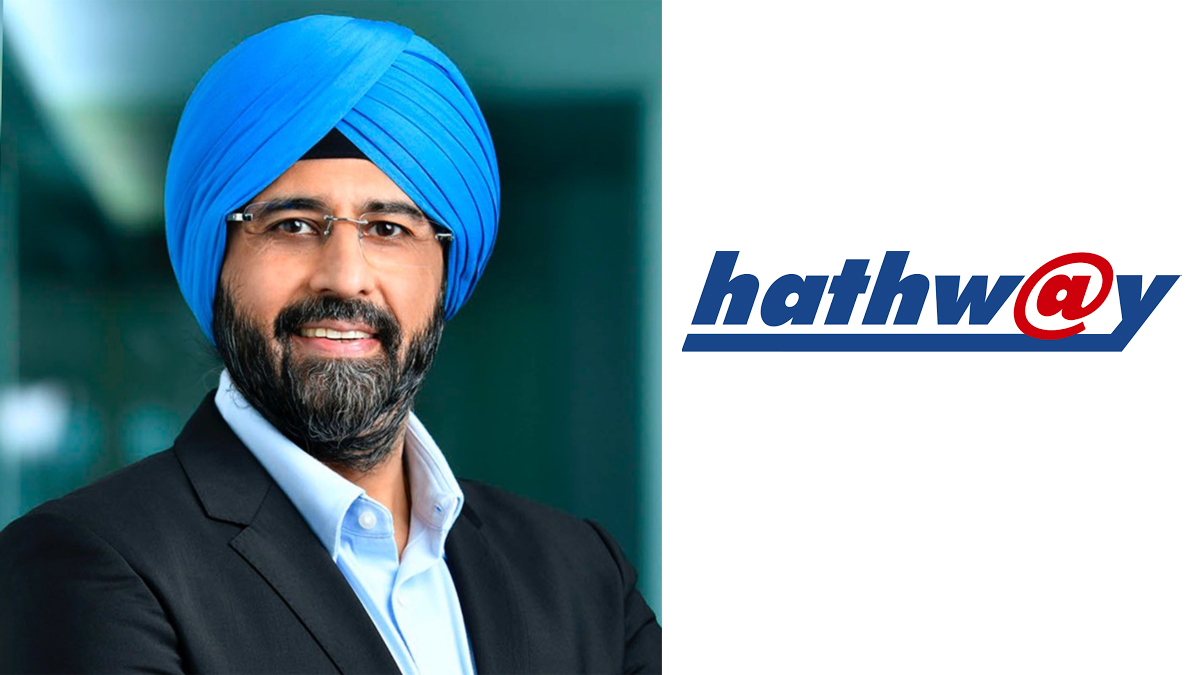
MUMBAI: Hathway Cable and Datacom has tapped industry veteran Gurjeev Singh Kapoor as chief executive officer, marking a leadership pivot at a time when India’s cable television business is under mounting strain.
Kapoor will take over from Tavinderjit Singh Panesar, who is set to retire in August after a long innings with the company. Panesar, chief executive since 2023, has held multiple leadership roles at Hathway, including his latest stint beginning in 2022.
Kapoor brings more than three decades of experience in media and entertainment. He most recently led distribution at The Walt Disney Company’s Star India business, now part of JioStar. His career spans television distribution and affiliate partnerships, with stints at Sony Pictures Networks India, Discovery Communications and Zee Entertainment.
Panesar, with over three decades in the industry, has worked across strategic planning, distribution and business development in media, broadcasting and manufacturing. His past associations include ESPN Star Sports, Star India, Apollo Tyres and JK Industries.
The transition lands as the cable sector grapples with structural disruption. Traditional operators are losing ground to streaming platforms, while telecom and broadband players tighten the squeeze with bundled offerings.
An EY report estimates India’s pay-TV base could shrink by a further 30 to 40 million households by 2030, taking the total down to 71 to 81 million. The slide follows a loss of nearly 40 million homes between 2018 and 2024, a contraction that has already wiped out more than 37,000 jobs in the local cable operator ecosystem.
Hathway’s numbers reflect the strain. The company reported a consolidated net profit of Rs 93 crore for FY25, down from Rs 99 crore a year earlier. Revenue inched up to Rs 2,040 crore from Rs 1,981 crore. As of December 2025, it had about 4.7 million cable TV subscribers and roughly 1.02 million broadband users.
Kapoor steps in with a familiar brief but a shrinking playbook. In a market where viewers are cutting cords faster than companies can reinvent them, the new chief executive inherits a business fighting to stay plugged in.







