News Broadcasting
CAS rate freeze worries Star India


NEW DELHI: Star India, part of Rupert Murdoch’s pan-Asian venture, is going in for a flanking strategy to couch its bottomline – healthy though it looks – from being affected by regulatory impediments.
Though openly it’s not being admitted, the freezing of cable subscription prices by the Telecom Regulatory Authority of India (Trai) in January is worrying broadcasters, including Star India.
“This freeze on prices cannot go on forever. The regulator has to come up with some recommendation on the issue soon,” Star India CEO Peter Mukerjea told indiantelevision.com.

In a bid to neutralise the effect of price freeze partially, Star India has hit upon a plan of signing long-term deals with multi-system operators (MSOs) and cable operators.
Pointing out that the actual plan hasn’t yet taken off, Mukerjea said, “The CAS imbroglio has forced us to think of other initiatives. We are looking at an idea whether signing three-year deals with the cable guys would make more sense. This can then also address the issue of the almost daily problems that crop up between us as a broadcaster and the cable guys.”
Of course, if Star India signs long-term deals with the players in the cable industry, then an annual increase in subscription rates would be factored in, which can be in the region of five per cent.
Would Star India take legal recourse if Trai continues to dither on the CAS issue and the price freeze continues? Though Mukerjea could not be tempted to get drawn into this part of the controversial CAS issue, after speaking to industry people indiantelevision.com gets a feeling that an opinion is building up towards putting some pressure on Trai on pricing. It has to be seen whether such a step, if taken, is done individually or collectively.
Though Mukerjea did not comment on whether this price freeze of cable rates has effected the mop up of subscription revenue by Star India, experts feel that several months of the Trai-mandated freeze would effect the numbers as Star Group heads towards a financial year end on 30 June.
“Without releasing India-specific estimates, Hong Kong-based Media Partners Asia (MPA) estimates show that for the first half of (Star’s) FY 2004, distribution gains were impressive year-on-year. But since the Trai rate freeze in January, I think distribution revenue gains have been impacted,” said media analyst Vivek Couto of the MPA.
According to MPA, which tracks performances of media companies across Asia, Star Group’s consolidated (excluding ESPN STAR Sports) income included about $75 million in subscription revenue in India for FY 2003.
Meanwhile, Star India is also planning to increase its growth rate by broadbasing its strategy to mop up advertising revenue.
The idea, as Mukerjea pointed out, is to work towards a system where over 50 per cent of the ad inventory could be sold towards the beginning of the year so as to ensure not only a steady income but also insulate the business from any mid-term upheavals that the industry or the economy may witness.
Easier said than done because for such a model to work here in India, as it does in other developed western markets, Star India needs to have many others things also lined up in advance, including acquisition of movies and finalising new programmes.






News Broadcasting
News18 India launches Command Centre war explainer with Arya
New show shifts from debates to decoding global conflicts and impacts
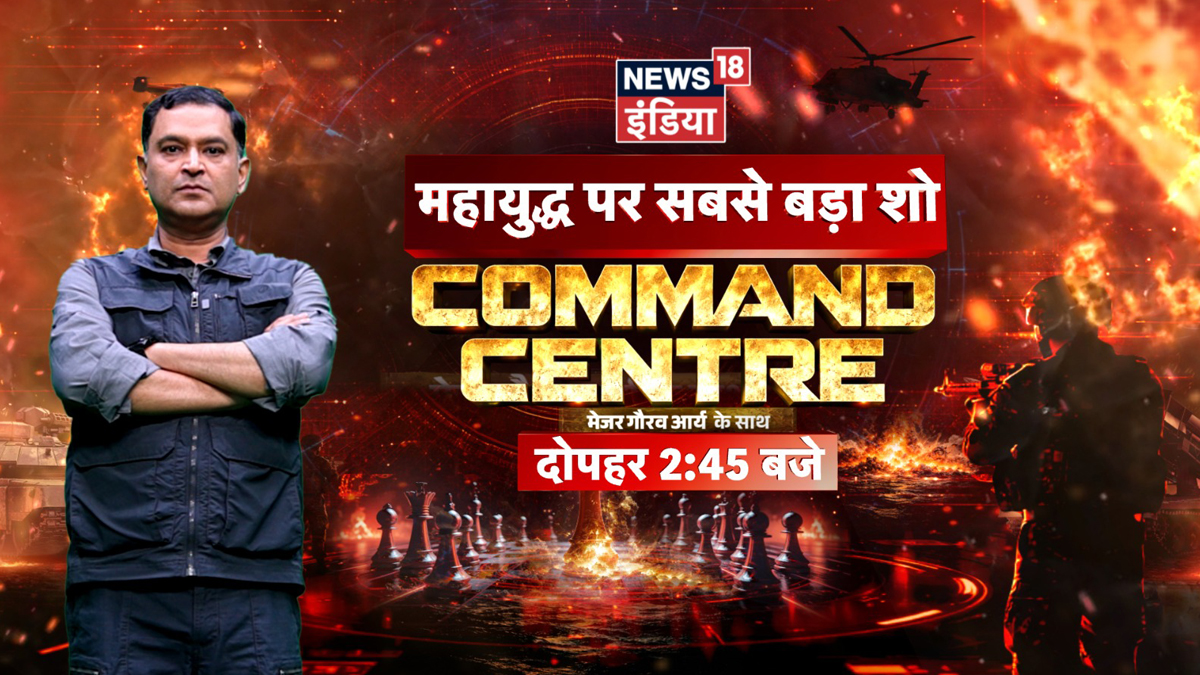
MUMBAI: News18 India has rolled out a new war-focused programme, Command Centre, featuring Gaurav Arya, as it looks to offer viewers a sharper, more grounded take on global conflicts amid rising tensions in West Asia.
Positioned as an “insider war room”, the show moves away from conventional panel debates and instead focuses on explaining military developments, decoding strategy and connecting global events to their everyday impact, from fuel prices to economic shifts.
The format leans heavily on visuals and data. The studio has been designed like a command hub, complete with large LED war maps, real-time graphics and an alert system to track developments as they unfold.
At the centre of it all is Arya, who brings his military background to simplify complex war strategies for viewers. His signature line, “Seedhi baat samjhiye”, anchors the show’s promise of clarity over noise.
News18 India managing editor Jyoti Kamal said, “Command Centre, featuring Major Gaurav Arya is designed to deliver accurate insights and a clear perspective on how evolving conflicts impact everyday life, from household budgets to national security. With expert voices analysing every development in real time, the show goes beyond headlines to decode what’s happening now, what it means, and what could come next.”
Echoing the intent, Gaurav Arya added, “In times of war, confusion is the biggest threat. With News18 India’s Command Centre, we are bringing viewers inside the war room, decoding strategies, tracking every escalation, and explaining, in the simplest terms, what it means for India and for every household. Seedhi baat samjhiye, this is where you understand not just what is happening, but what happens next.”
The weekday show will air in the afternoon slot and will also feature Gaurav Shukla, adding to its editorial depth.
With its mix of analysis, visuals and a clear focus on impact, the show reflects a broader shift in news consumption. Viewers are no longer just watching events unfold, they are looking to understand what those events mean for them.







