Cable TV
CAS: MSOs propose a rollout plan to govt.


NEW DELHI: The CAS story limps along with an early solution not in sight, as industry stakeholders are yet to find a common ground. This was evident in today’s meting on the issue called by the government.
Though the MSOs did make a proposal on sequence of CAS implementation and one particular MSO provided some additional data relating to the Chennai market where CAS has been implemented, lack of data from others, notably the broadcasters and local cable operators, didn’t help matters much.
The government, which is also under pressure due to a Delhi court direction on CAS rollout by the first week of April, could use the data provided by the MSOs to force the pace, a government official said, adding this could include mandating individual prices of TV channels.

The official did admit that at the two meetings on CAS held till now, there has been a sense of “resistance” from the pay broadcasters to come out with a la carte pricing of channels, which is “complicating the matters a bit.”
According to information available with Indiantelevision.com, some of the MSOs have proposed a plan, which envisages a phased preparation for CAS with a blackout of TV channels — not going through a set-top box — after 5 July.
The MSOs today said that for CAS rollout, 5 April should be taken as the zero hour. The preparatory phase should last till 20 May. The time between 21 May and 21 June should be treated as transition phase, while the final implementation of CAS should start from 5 July onward when all TV channels would have to go through boxes on a mandatory basis or face the threat of a blackout.
The MSOs also suggested that the government should mandate the maximum retail price (MRP) for individual channels as also bouquets — a proposal that did not go down very well with broadcasters — if a consensus is not arrived on this.
While the MRP issue is being pushed by consumer bodies too, the MSO said that if a consensus on this is elusive, then the sector regulator (Telecom Regulatory Authority of India) could be asked to address the issue.
What is making matters difficult for the government is that some pay broadcasters have raised valid doubts on piracy of signals and the technology that would be used for conditional access. Country’s biggest broadcaster in terms of revenue has raised 16 issues that should be addressed before CAS is rolled out.
According to some people who attended today’s meeting, a suggestion relating to revenue share for subscription money in the ratio of 50:25:25 (broadcasters: local cable operators: CAS operators and independent ops) was also made.
A demand that all commercial contracts amongst broadcasters and MSOs and MSOs and cable ops be standardized was echoed today again.
In the wake of divergent views on CAS still persisting, the information and broadcasting ministry made it clear to industry stakeholders that
ambiguities would only lead to more confusion and wastage of time.
With today’s meeting ending relatively inconclusive, the government has scheduled another one on Monday (3 April) to get down to serious sequencing of CAS rollout







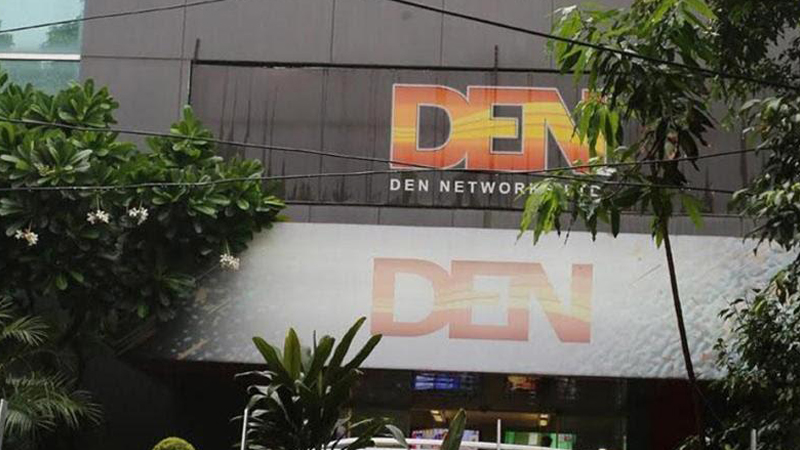
MUMBAI: When margins wobble, liquidity talks and in Q3 FY25-26, cash did most of the talking. Den Networks Limited closed the December quarter with consolidated revenue of Rs.251 crore, marginally higher than the previous quarter but down 4 per cent year-on-year, even as profitability stayed resilient on the back of strong cash reserves and disciplined cost control.
Subscription income softened to Rs.98 crore, slipping 3 per cent sequentially and 14 per cent from last year, while placement and marketing income offered some cheer, rising 15 per cent quarter-on-quarter to Rs.148 crore. Total costs climbed faster than revenue, up 7 per cent QoQ to Rs.238 crore, driven largely by higher content costs and operating expenses. As a result, EBITDA dropped sharply to Rs.13 crore from Rs.19 crore in Q2 and Rs.28 crore a year ago, pulling margins down to 5 per cent.
Yet, the bottom line refused to blink. Profit after tax stood at Rs.40 crore, up 15 per cent sequentially and only marginally lower than last year’s Rs.42 crore. A healthy Rs.57 crore in other income helped cushion operating pressure, keeping profit before tax at Rs.48 crore, broadly stable quarter-on-quarter despite the tougher cost environment.
The real headline-grabber, however, sits on the balance sheet. The company remains debt-free, with cash and cash equivalents swelling to Rs.3,279 crore as of December 31, 2025. Net worth rose to Rs.3,748 crore, while online collections accounted for 97 per cent of total receipts, underscoring strong cash discipline across operations, including subsidiaries.
In short, while Q3 showed signs of operating strain, the financial backbone remains solid. With zero gross debt, steady profits and a formidable cash war chest, the company enters the next quarter with flexibility firmly on its side proving that in uncertain markets, balance sheet strength can be the best growth strategy.







