News Broadcasting
CAS: MSOs at odds over carriage, basic tier fee sharing


NEW DELHI: MSOs are divided on the issue whether carriage fee is retained by them and the basic tier fee of cable channels by local cable operators.
While the Hinduja-owned IndusInd Media and Communications and Siti Cable (now renamed WWIL) opposed MSOs retaining carriage fee and LCOs keeping the basic tier fee, Rajan Raheja-controlled Hathway Datacom has supported such a model.
In their submission to the Telecom Regulatory Authority of India (Trai), both Siti Cable and IndusInd have said MSOs should also get a share of the basic tier fee, which is collected by LCOs.
Adding spice to the whole affair, the Cable Operators’ Federation of India (COFI) has suggested all round sharing of basic tier fee and carriage fee between MSOs and LCOs.

All the three MSOs, responding to Trai’s call for feedback on interconnect regulations, have said that distribution of signals to subscribers should only be through digital set-top boxes as analogue boxes lack credentials.
Trai had invited feedback from industry stakeholders on the proposed standard forms of interconnect agreements for CAS areas, draft regulation to mandate these standard forms and revenue sharing arrangements.
The specific issues that were raised were the following:
Should there be a uniform revenue share percentage between all broadcasters and MSOs and between MSOs and LCOs.
Should the revenue share percentages for different broadcasters prevailing in Chennai be adopted in other CAS notified areas?
Is there any other alternative method of arriving at the revenue share percentages amongst industry stakeholders.
Upholding the rights of cable operators that it represents, COFI has suggested that franchisees of MSOs could be given a commission ranging between 5-10 per cent for selling set-top-boxes and other equipment to subscribers.
The complete gist of comments of Hathway, Siti Cable, IndusInd and COFI on interconnect agreement is available on the regulator’s website at ww.trai.gov.in.




News Broadcasting
CNN-News18 to host Fury in the Gulf conclave on West Asia crisis
Three-hour summit to unpack geopolitical fallout and impact on India
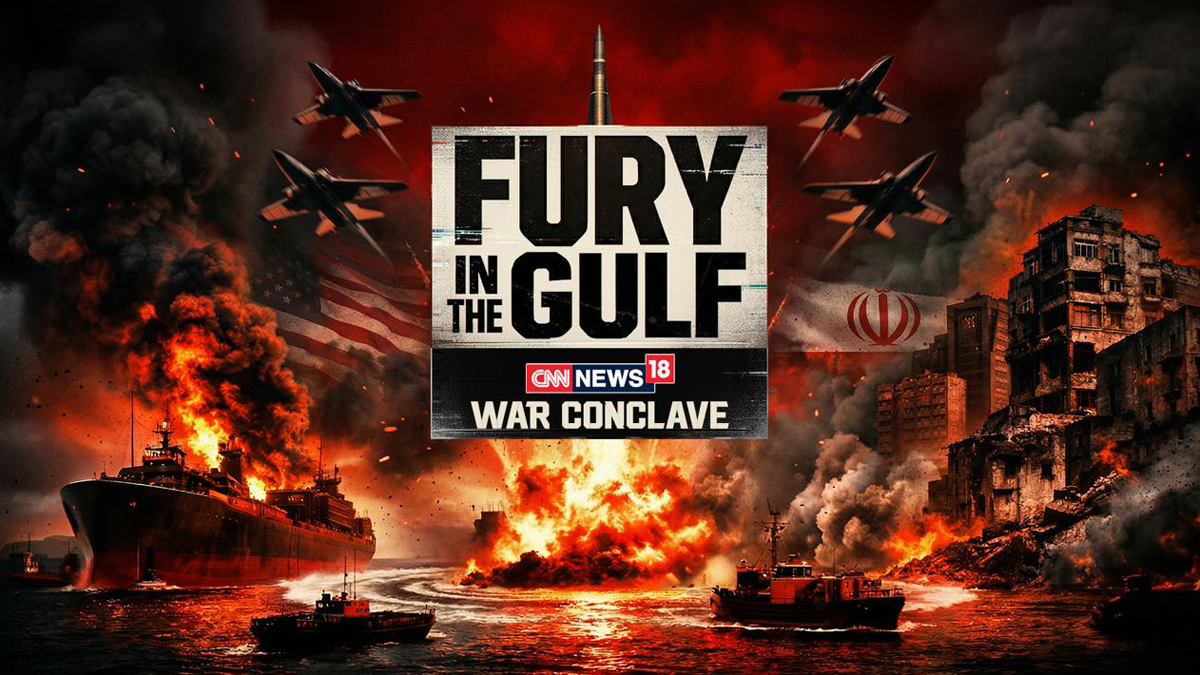
MUMBAI: CNN-News18 is set to host a special three-hour broadcast, Fury in the Gulf – War Conclave, on April 7, aiming to decode the escalating West Asia crisis and its far-reaching implications for India.
Scheduled from 4:00 PM to 7:00 PM, the conclave comes at a time when tensions between Iran and the United States are reshaping global geopolitics and triggering economic uncertainty. With India’s deep energy ties, trade links and large diaspora in the Gulf, the developments carry significant domestic relevance.
Built around the theme ‘Conflict, Consequences, and The Future,’ the programme will feature six curated sessions combining one-on-one interviews and panel discussions. The focus is to cut through the clutter and offer viewers a clearer understanding of the fast-evolving situation.
Key sessions include ‘Diplomacy in Times of War’ featuring Shashi Tharoor, and ‘World After the Iran Conflict’ with voices such as Ram Madhav, Reuven Azar, representatives from the European Union and the Iranian Deputy Envoy. Another session titled ‘Another Dunkirk?’ will bring together K. J. S. Dhillon and Jitin Prasada among others.
CNN-News18 editorial affairs director Rahul Shivshankar said, “In times of war, clarity becomes the most powerful tool. Fury in the Gulf – War Conclave brings together credible voices to address the questions and confusion that arise amid an overwhelming influx of information.”
He added that the initiative is aimed at delivering “facts, perspective, and insight” at a time when misinformation can easily cloud public understanding.
Echoing the sentiment, CNN-News18 CEO– English and business news Smriti Mehra said the conflict marks a defining global moment, with consequences that extend well beyond the region. She noted that the conclave seeks to present the crisis with “depth, nuance and responsibility” so audiences can better grasp its real-world impact.
As geopolitical tensions continue to dominate headlines, the conclave positions itself as an attempt to bring order to the noise, offering viewers a structured, insight-led look at a complex and rapidly shifting global situation.






