News Broadcasting
“CAS is the only solution to resolve the subscription problems that cable TV ops and broadcasters are facing”


Shamim Shaikh is managing director and spokesperson of one of the most proactive cable TV network coalitions in India – the Seven Star Cable Network which controls around 20 per cent of Mumbai’s cable TV viewing populace. Seven Star – an agglomeration of nine once-independent cable TV systems – was the first Indian CATV networks to install an addressable system in subscribers’ homes way back in 1999.
The network relays more than 90 channels – five of which are premium channels not visible on most other systems nationally and delivered to a select well-heeled subscriber base. 7-Star is also among the few Indian CATV systems delivering Internet access via cable successfully. The wailing of broadcasters despite, Shaikh is among those cable TV operators in country who have welcomed the move towards CAS. Indiantelevision.com spoke to Shaikh to get a handle on the professional Indian cable TV operators perspective on CAS. Excerpts from a monologuish interview. Read on for some Shaikhspeak:
It was a long awaited decision regarding the Conditional Access System (CAS) from the government. We wholeheartedly welcome it. This is one decision that will be beneficial to all – broadcasters, cable operators as well as viewers. Broadcasters have been complaining about the subscriber underdeclaration problem and low revenue collection from cable TV operators – we believe that this issue can only be resolved through the implementation of the CAS. And we also believe that it is the only way to stop the arm-twisting tactics of broadcasters.
In my opinion the government should make CAS mandatory otherwise sheer inertia will not allow it to progress. It is only the government, which can make it happen. Also, a body is needed to regulate the market as well as to avoid fights between channels and operators.

Some people are misleading the media about the stand of the cable operator. They have painted such a picture that operators are against the CAS as they don’t want transparency which is not at all the case. They have tarnished our image and our business. They call us chor (thief).
But I tell you that we at 7-Star started CAS in our network three years ago. We have already supplied three thousand set-top boxes. But at that time no broadcaster supported us. If they wanted transparency why they did not support us in the first place.
Who says that cable TV operators cannot afford technology upgradation and costs which are involved in the migration towards CAS? From what I know the good cable TV operators – and there are many of these in India – will not have to upgrade the technology as far as CAS goes. We may have to invest in modulators, IRDs and we can definitely afford the cost.
My estimate is that the cost per channel will be Rs 50,000 maximum. Any cable operator will not go for all the channels. Taking close to 15 to 20 most sought out channels in that respective area, the maximum investment will be maximum Rs 1,000,000. And for the Set Top box I have got a quotation from a manufacturer for pricing of close to Rs 3000 per box. We will also do long term deals with box makers, committing to buy a certain number of boxes over a time. This will give us tremendous economic benefits – both to us and to consumers.
“Some people are misleading the media about the stand of Cable operator. They have painted such a picture that operators are against the CAS as they don’t want transparency which is not at all the case. They have tarnished our image and our business. They call us chor (thief).
Will all cable TV operators invest in CAS? I cannot tell you. It will have to be a business decision that each of the takes in their individual capacities. When channels started getting encrypted, we had to invest. When we went from 150 MHz to 550 and to 750 MHz was there any hesitancy on our side to invest? No. We all pumped in money into our networks to be able to deliver the quality of services that consumers were demanding along with a large quantity of channels.
Let every cable operator understand this: cable TV is a business like any other: to earn money one has to invest money.
In the case of CAS, cable TV operators should think the same way. If the government is keen on CAS, then I am quite definite and sure that it will become a reality.
Until it happens, it gives us time to prepare. It is better if we keep ourselves ready for it. The investment can also be in a phased manner as not all viewers in each network will take up the boxes at the same time. We at 7-Star are going to first buy some boxes, distribute them. We aim to get part payment for the same. Once that comes in we will invest in getting more boxes and distributing them to newer subscribers.
Remember in all this transition towards addressability you will always have the basic package for which no boxes will be needed. So we will always have income which will not have to be shared with pay TV and encrypted channels.
Small operators will have to find their place in all this chaos and churn in the marketplace. It is essential that they draw up a survival strategy. In metros the small ops will continue assisting main operators and will get their share.
As far as the interiors and smaller towns go, it is quite likely that conditional access will spark off another wave of mergers and alliances amongst operators in these areas. They would be wise to set up their own common shared headends. Even in our case nine of us came together and started this head end. So this fear that smaller operators will be wiped out is quite baseless.
Even in the metros some operators are under the impression that CAS will harm them, but in my opinion, if they plan their strategy right they will not be finished. They will face some problems initially but once CAS happens it will be a win-win situation for all: broadcasters will have no underdeclaration, we will not be armtwisted by them for more pay revenue before crucial events and the viewers will not have to pay for channels they don’t want to watch, they will be able to watch only what they want and choose out of what they don’t. Even cable TV operators will have legal support to fight broadcasters in a court of law.
CAS is quite like the chicken and egg situation. What should come first: CAS and uggradation or the set top boxes? Neither of these will. In my opinion the government should make CAS mandatory otherwise sheer inertia will not allow it to progress. It is only the government, which can make it happen. There are various examples like CNCG being made compulsory for vehicles, which was initially opposed, but happened over a period of time, after it was made mandatory.
Once CAS happens it will be a win-win situation for all: broadcasters will have no underdeclaration, we will not be armtwisted by them for more pay revenue before crucial events and the viewers will not have to pay for channels they don’t want to watch. Cable TV operators will have legal support to fight broadcasters in a court of law.
The government has a very important role in the progress of CAS: a body is needed to regulate the market as well as to avoid fights between channels and operators.
Cable TV viewing will not fall because of the free basic tier making it possible for even lower classes to buy the service. But overall there will be increase in total outgo per month per household. Viewers will have difficulty in buying set top boxes but we can work out a marketing strategy with some kind of subsidy, offering installment pay back facility, and giving free sampling of the channels at no cost.
Broadcasters on their part will have take a call on whether they should go for greater reach and higher ad revenues or higher subscription revenues and comparatively low ad revenue and reach if they go pay.


News Broadcasting
WITT Summit 2026 concludes in New Delhi
Babar Azam’s comical diving attempt goes viral as league introduces anti-dew measures.
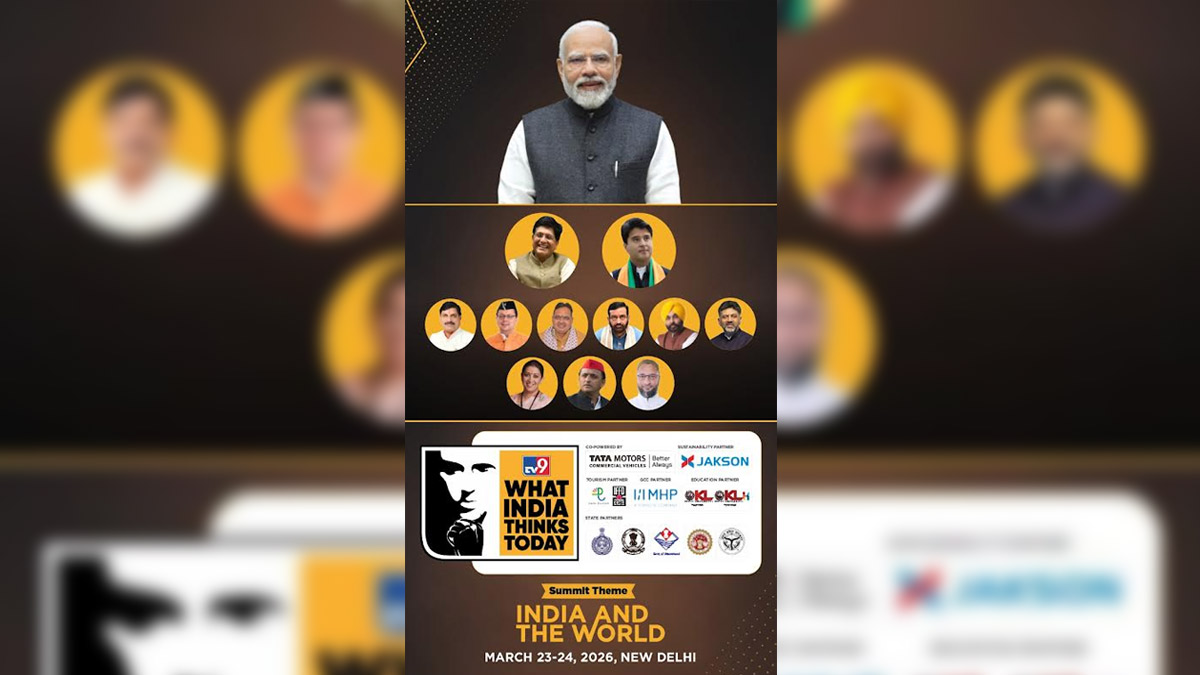
MUMBAI: The WITT Summit just wrapped up with enough big ideas to fill a policy playbook because when India’s leaders, thinkers and icons gather under one roof, even the conversations hit sixes. The eighth edition of TV9 Network’s flagship What India Thinks Today (WITT) Summit 2026 concluded on Saturday after two days of dynamic discussions at its New Delhi venue. India’s largest multi-domain public policy and culture summit brought together political leaders, policymakers, sports icons, artists and technology innovators to examine the forces shaping contemporary India and its global standing.
Prime minister Narendra Modi delivered the keynote address on the theme “India and the World” for the third consecutive year. In a wide-ranging speech, he addressed the ongoing conflict in West Asia, calling for restraint and compassion while highlighting India’s continued development trajectory despite global turmoil.
The summit featured candid conversations with state leaders. Telangana Chief Minister A. Revanth Reddy articulated a people-first governance model and contrasted it with other development approaches. Madhya Pradesh Chief Minister Mohan Yadav declared that Left-wing extremism had been effectively eliminated in his state and highlighted preparations for the upcoming Kumbh Mela. Punjab Chief Minister Bhagwant Mann defended his government’s record, citing the closure of 19 toll plazas and creation of the Sadak Suraksha Force. Karnataka Deputy Chief Minister D.K. Shivakumar expressed confidence in Congress prospects in Assam and addressed recent allegations against him.
On geopolitics and national security, Union Minister Jyotiraditya Scindia outlined India’s ambition to become a builder of trusted digital infrastructure for the world, citing the rapid 5G rollout and village-level 4G connectivity.
Cricket received significant attention. Former India captain Sourav Ganguly praised player freedom and trust as hallmarks of great leadership and named MS Dhoni as the greatest captain due to his World Cup successes. India women’s team bowling coach Aavishkar Salvi credited the BCCI and Women’s Premier League for building a pipeline of world-class talent behind the team’s recent ODI World Cup triumph.
The summit also hosted the inaugural AI² Awards 2026, celebrating the convergence of human creativity and machine intelligence in storytelling and content creation. Poet and kathavachak Kumar Vishwas delivered a nuanced take on India’s concept of Dharma and criticised the recent arrest of an 80-year-old Shankaracharya. Veteran lyricist Sameer Anjaan and storyteller Neelesh Misra reflected on changing music trends and artistic responsibility in the wake of a recent controversy involving Nora Fatehi.
In a country where conversations often run as deep as the Ganges, the WITT Summit proved once again that when leaders, thinkers and storytellers come together, the real winner is public discourse lively, layered and refreshingly unafraid to tackle the big questions shaping India’s tomorrow.








