Hardware
Canadian video-tech firm Nextologies eyes India’s growth opportunities

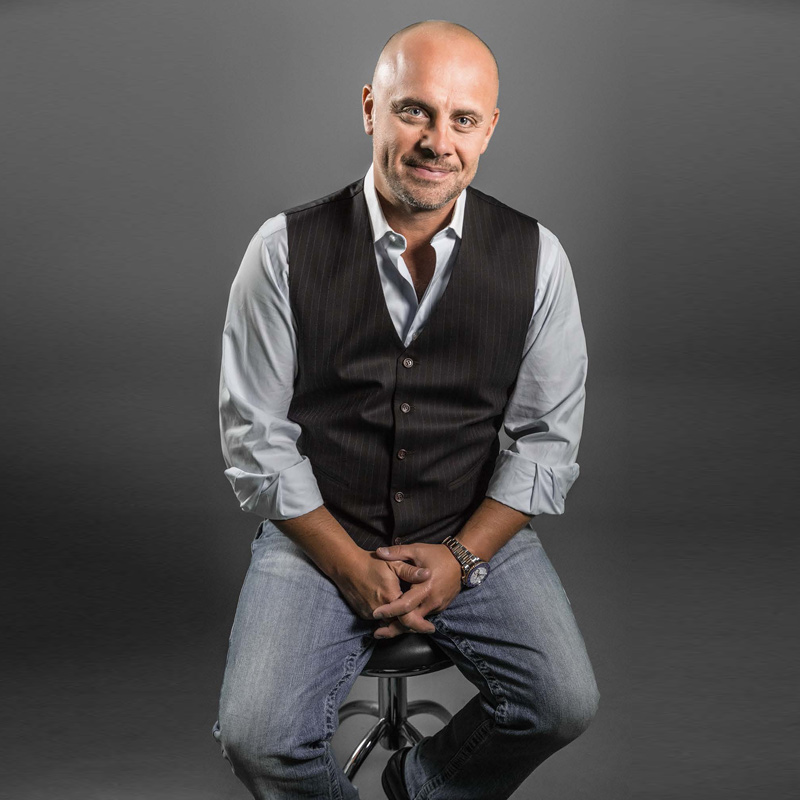
MUMBAI: Slava Levin is a familiar name for many distribution heads amongst Indian broadcasters. The Ukraine-born, Canada-bred entrepreneur has built a distribution of niche, country-specific channels into Canada of transport of video globally into a highly profitable group – called the Ethnic Channels Group which also includes a tech company called Nextologies.
“Change is the only constant and as an entrepreneur, I believe we need to keep reinventing ourselves regularly,” says Levin.
He is currently focused on building his India base of 40 staff as well offering the Nextology tech solution to an increasing number of India companies – not just in media, but in other sectors as well.

“India has a lot of headroom for growth,” points out Levin. “The media vertical is doing extremely well but the company wants to expand our video transport and other solutions to other sectors like hospitality, medicine and transportation. We want to broaden our services and the sectors to become a tech company in general.”
“The game plan in India is simple. We want to build a development hub in India. We want to grow our team here from 40 to 100, to 200 to 300 and be that development hub for the world. We want to build Indian businesses, want to help Indian companies here. We plan to take products that we build here and deliver them to rest of the world,” Levin adds.
While the company has already invested quite a bit in India, it wants to ramp up its investments by putting in a minimum of $10 million over the next two-five years.
“Our technology team is cutting edge and they found ways to help to cut cost for distributing the various channel video feeds over the years. Our 100+ partners who we were distributing for started to knock at our door asking us how are we able to deliver solutions at the prices we were? Some of them asked us to help them use it to reduce their transport costs in other regions. And that’s how we started our Nextologies business. Amongst the first Indian broadcasters to do so was Zee TV,” says Levin, talking about the early days of the company.
He explains that Zee TV uses the technology to deliver to locations that don’t have huge South Asian population for example in the Caribbean which is a lot cheaper than delivering it via expensive satellite transponders or fibre.
Today, Nextologies manufactures SD/HD encoders, decoders for cable TV and satellite TV services which help deliver video over the public internet using its da Vinci and TXR technologies, an STB solution for digital signages, hotels, hospitals, restaurants/bars, foyers, offices and waiting rooms and professional grade compliant audio/video professional broadcast-grade compliant HD/SD video and audio transmitters/receivers. Nextologies also offers customisable turn-key IPTV and OTT solutions that enable media companies and service providers to rapidly serve new platforms. Amongst the clients for whom it has developed apps and OTT solutions include SBS Plus’ Arirang TV.
Levin says he will be visiting India a lot more often, though he has left its management to Hari Srinivas, who has been responsible for building the number of Indian channels that are customers of Ethnic Channels and Nextologies businesses.



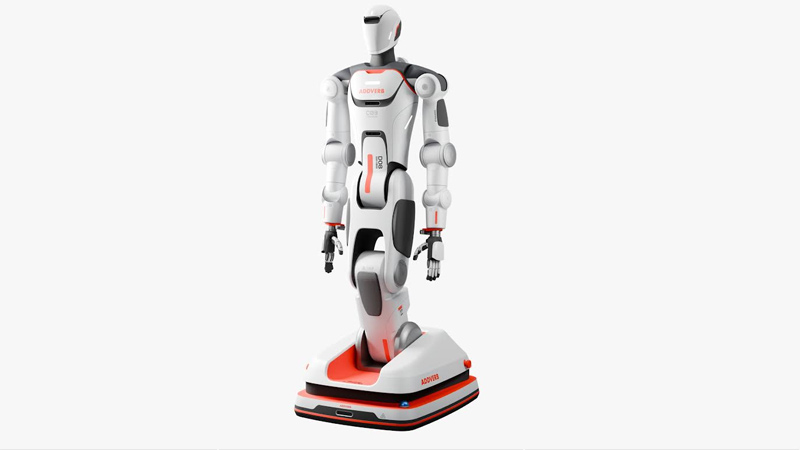
MUMBAI: Addverb has taken a decisive turn on the road to humanoid automation, unveiling its first wheeled humanoid robot, Elixis-W, at LogiMAT India 2026 in Mumbai. Built and manufactured in India, the robot signals the company’s push to make so-called physical AI a practical presence on the factory floor rather than a futuristic concept.
Unlike traditional fixed automation, Elixis-W is designed to move, think and work alongside people in dynamic industrial settings. The robot combines adaptive wheeled mobility with dual arms, each fitted with five-fingered dexterous hands, allowing it to handle tasks that demand precision as well as flexibility.
At its core sits a Physical AI-ready architecture, supported by dual Nvidia Jetson Orin and Thor computing units. This setup is intended to give the robot the ability to perceive, plan and adapt to changing environments, rather than simply follow pre-programmed routines.
According to Addverb CEO and co-founder Sangeet Kumar, the humanoid reflects the company’s long-standing belief in human-robot collaboration. He said the robot is designed to take on repetitive, risky or physically demanding tasks, freeing human workers to focus on higher-value decision-making roles.
Alongside the humanoid, Addverb also showcased two new intralogistics solutions. The Cruiser 360, a four-way pallet shuttle, is aimed at high-density storage environments where space and speed matter. The FlowT, an autonomous forklift, is designed to move materials safely in busy warehouses and factory spaces.
Visitors also saw Trakr, the company’s quadruped robot, navigating the exhibition floor, offering a glimpse of how legged machines could assist in future warehouse and industrial operations.
Addverb, which began as a warehouse automation specialist, has steadily expanded its global footprint across the United States, Europe, Australia and Asia. Its client list includes Reliance, HUL, PepsiCo, Maersk, Mondial Relay and DHL.
With the launch of Elixis-W, the company is steering towards a future where robots are not just bolted to the floor, but rolling, reasoning and working shoulder to shoulder with people on the shopfloor.







