News Broadcasting
CableLabs introduces advanced set-top software


Cable Television Laboratories has announced that it has finalised the OpenCable Application Platform (OCAP) software specification.
Called OCAP 1.0, the specification enhances the ability of consumer electronics manufacturers to build and market set-top boxes or integrated television receivers directly to consumers, a company release states. These devices can receive the services available on set tops provided by the cable operator. The specification enables cable to create an interactive television delivery mechanism to provide enhanced services to cable customers, the release says.
The OCAP specification is largely based on the European Multimedia Home Platform (MHP) middleware specification created by the Digital Video Broadcasting (DVB) organization. Thus, there is an opportunity for worldwide interoperability of interactive applications and content. The MHP and OCAP specifications also have been submitted to the International Telecommunications Union (ITU) as a contribution to an international standard.

The release of the OCAP 1.0 specification supports an EE environment (based on Java technology), and will serve as the core for a family of future OCAP products. For example, OCAP 2.0, which will be released shortly, provides the addition of the Presentation Engine (PE) and a “bridge” that allows both to work together. The PE, similar to a Web browser, will provide support for creating and using the Web’s standardised markup and scripting languages, Hypertext Markup Language (HTML) andECMAScript. Manufacturers may choose to develop immediately to OCAP 1.0, or move directly to an OCAP 2.0 development, giving them flexibility to target different customer needs.
OCAP 2.0 will be fully backward compatible with OCAP 1.0. Further, OCAP 1.0 and 2.0 have been designed such that interactive television applications that have already been deployed by cable companies will continue to work when customers upgrade to an OCAP-compliant device.



News Broadcasting
CNN-News18 to host Fury in the Gulf conclave on West Asia crisis
Three-hour summit to unpack geopolitical fallout and impact on India
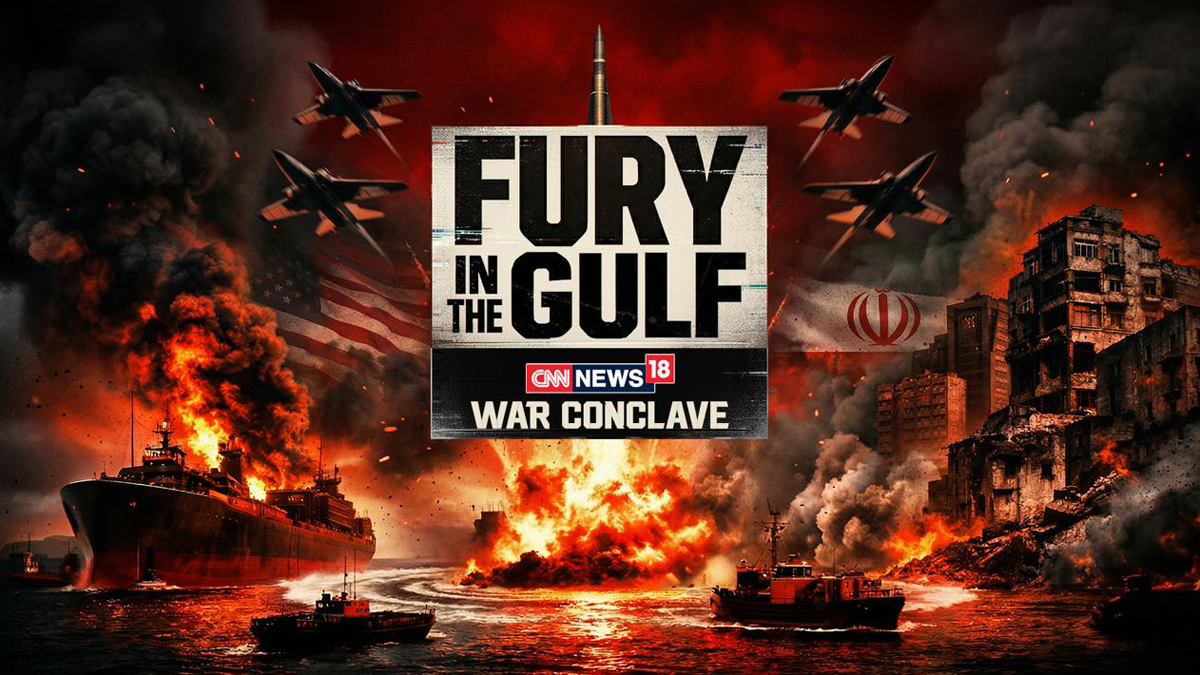
MUMBAI: CNN-News18 is set to host a special three-hour broadcast, Fury in the Gulf – War Conclave, on April 7, aiming to decode the escalating West Asia crisis and its far-reaching implications for India.
Scheduled from 4:00 PM to 7:00 PM, the conclave comes at a time when tensions between Iran and the United States are reshaping global geopolitics and triggering economic uncertainty. With India’s deep energy ties, trade links and large diaspora in the Gulf, the developments carry significant domestic relevance.
Built around the theme ‘Conflict, Consequences, and The Future,’ the programme will feature six curated sessions combining one-on-one interviews and panel discussions. The focus is to cut through the clutter and offer viewers a clearer understanding of the fast-evolving situation.
Key sessions include ‘Diplomacy in Times of War’ featuring Shashi Tharoor, and ‘World After the Iran Conflict’ with voices such as Ram Madhav, Reuven Azar, representatives from the European Union and the Iranian Deputy Envoy. Another session titled ‘Another Dunkirk?’ will bring together K. J. S. Dhillon and Jitin Prasada among others.
CNN-News18 editorial affairs director Rahul Shivshankar said, “In times of war, clarity becomes the most powerful tool. Fury in the Gulf – War Conclave brings together credible voices to address the questions and confusion that arise amid an overwhelming influx of information.”
He added that the initiative is aimed at delivering “facts, perspective, and insight” at a time when misinformation can easily cloud public understanding.
Echoing the sentiment, CNN-News18 CEO– English and business news Smriti Mehra said the conflict marks a defining global moment, with consequences that extend well beyond the region. She noted that the conclave seeks to present the crisis with “depth, nuance and responsibility” so audiences can better grasp its real-world impact.
As geopolitical tensions continue to dominate headlines, the conclave positions itself as an attempt to bring order to the noise, offering viewers a structured, insight-led look at a complex and rapidly shifting global situation.






