Cable TV
Cable TV can be regulated only by competition: Baijal

MUMBAI: The Telecom Regulatory Authority of India (Trai) chairman Pradip Baijal is keen to have competition in the cable TV sector. And he feels it is direct-to-home (DTH) and IPTV operators who can set the field for that.
“The cable TV sector is a very difficult area. The only way to regulate it is to bring in competition. Only DTH and IPTV when they come in, can make it happen,” he said on the sidelines of a telecom and broadband summit.
Unified licensing is a step forward but there is no agreement among all the stakeholders. Unlike telecom companies, companies, cable operators do not support unified licensing. “But it is a kind of converged licence that can lead to explosive growth. Unless DTH and IPTV come in aggressively, the entire game will not change. Cable TV will continue as it is,” Baijal said. He was delivering the valedictory adddress today at the Telecom and Broadband Summit 2005, organised by Confederation of Indian Industry (CII).

India is the only country in the world where there are more cable TV than fixed line subscribers. Cable TV, in fact, has 1.5 times more connections. “There is a wide market out there which is yet to be explored. Competition can only drive this,” he said.
Broadband is growing at a snail’s pace in India. There are almost 47 million last mile copper lines of which 30-35 million are broadband capable. Though the government has set an aggressive target of three million broadband connections this year, we have just achieved .2 million with the incumbent and .3 million with the carriers. By the end of the year, we will have .7 million, way below the plan. “Broadband and rural telephony are not growing. Unless a critical mass comes in, broadband can’t grow,” he said.
Though prices have fallen, the broadband users haven’t grown. The reason for this, Baijal says, is lack of competition. It is important that fibre is priced properly. But the main incumbent – VSNL- is not prepared to share that fibre, thinking it is a goldmine. The incumbent has 70 per cent of the broadband market.
There is an explosive growth in the urban telecom sector but the challenge is to speed up teledensity in the rural areas. Rural broadband has succeeded with projects like e-Chaupal. “If that connection can be given to telephony and IPTV, there is huge growth potential for the telecom and broadband sector,” Baijal said.
Teledensity in the rural area was less than two per cent, which could go up to three per cent next year, while it was 32 per cent in the urban areas. Though teledensity is still low at 10-11 per cent in this, it is growing fast in urban areas. “In Mumbai it is 55 per cent while teledensity in Delhi is 45 per cent. The rural area, which is guided by the government sector, is the problem,” he said.
The answer is to install mobile towers and facilitate quick entry into mobile telephony in the rural areas. This would require an investment of Rs 90 billion from the government. Otherwise, the fund requirement would be Rs 300-400 billion to achieve four per cent teledensity in rural areas by 2010.
“The mobile tower has not reached the rural areas. That is why there is no growth. If this policy continues, this will bring disaster to the telecom sector,” Baijal said.
Rural India needs mobile telephony rather than pushing fixed lines through subsidies which can’t be sustainable. “Mobile coverage in India is just 20 per cent. There is an instrument available to increase teledensity both in the urban and rural areas,” Baijal said.




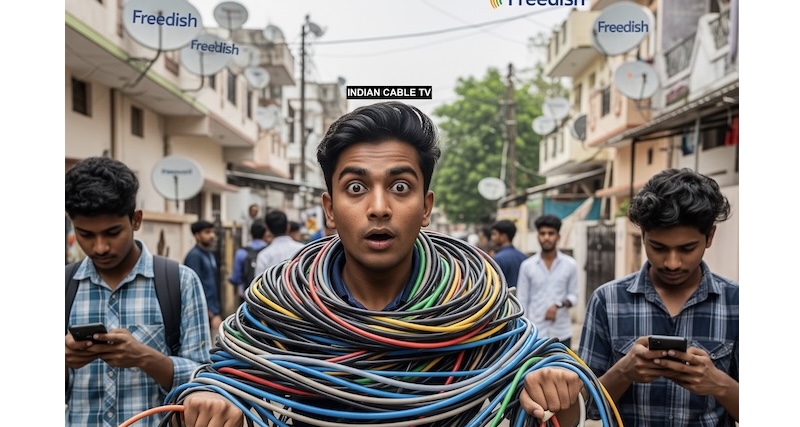
MUMBAI: When margins wobble, liquidity talks and in Q3 FY25-26, cash did most of the talking. Den Networks Limited closed the December quarter with consolidated revenue of Rs.251 crore, marginally higher than the previous quarter but down 4 per cent year-on-year, even as profitability stayed resilient on the back of strong cash reserves and disciplined cost control.
Subscription income softened to Rs.98 crore, slipping 3 per cent sequentially and 14 per cent from last year, while placement and marketing income offered some cheer, rising 15 per cent quarter-on-quarter to Rs.148 crore. Total costs climbed faster than revenue, up 7 per cent QoQ to Rs.238 crore, driven largely by higher content costs and operating expenses. As a result, EBITDA dropped sharply to Rs.13 crore from Rs.19 crore in Q2 and Rs.28 crore a year ago, pulling margins down to 5 per cent.
Yet, the bottom line refused to blink. Profit after tax stood at Rs.40 crore, up 15 per cent sequentially and only marginally lower than last year’s Rs.42 crore. A healthy Rs.57 crore in other income helped cushion operating pressure, keeping profit before tax at Rs.48 crore, broadly stable quarter-on-quarter despite the tougher cost environment.
The real headline-grabber, however, sits on the balance sheet. The company remains debt-free, with cash and cash equivalents swelling to Rs.3,279 crore as of December 31, 2025. Net worth rose to Rs.3,748 crore, while online collections accounted for 97 per cent of total receipts, underscoring strong cash discipline across operations, including subsidiaries.
In short, while Q3 showed signs of operating strain, the financial backbone remains solid. With zero gross debt, steady profits and a formidable cash war chest, the company enters the next quarter with flexibility firmly on its side proving that in uncertain markets, balance sheet strength can be the best growth strategy.






