Cable TV
Cable TV act incorporating CAS introduced in Parliament today


The Cable TV Networks (Regulation) Amendment Bill, 2002, incorporating mandatory conditional access for cable TV systems was introduced in the lower house (Lok Sabha) of parliament today by information and broadcasting minister Sushma Swaraj. It marked a major victory for Swaraj who has been at the forefront of pushing through the legislation which has been perceived as a bugbear of some broadcasters but has on the whole been welcomed by cable TV operators.
The Bill is to be discussed in the Lok Sabha tomorrow, and if passed it will be introduced in the Upper House the day after, just before Parliament closes.
The CAS ammendment will result in the introduction of set top boxes in consumer homes, government control over the free to air bouquet with similar control for pay channels being in the hands of cable TV operators.

Its announcement resulted in a schism in the broadcasters’ ranks with Zee TV openly favouring it, ditto with Sahara. Sony has been sitting on the fence, while Star India and ESPN Star Sports have been opposing it.







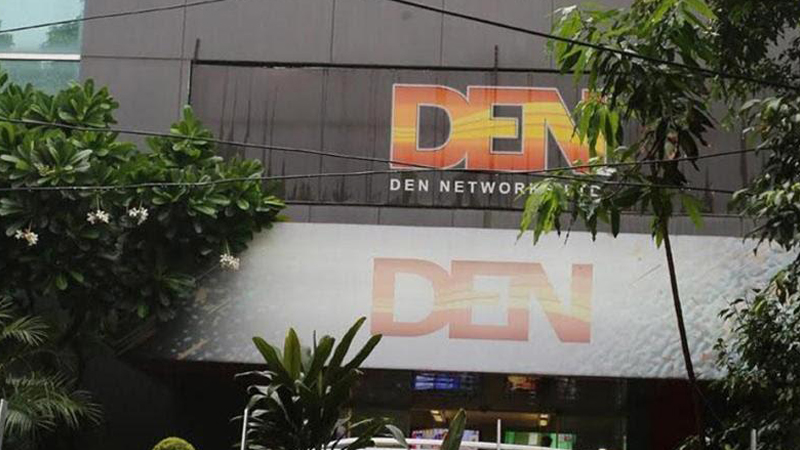
MUMBAI: When margins wobble, liquidity talks and in Q3 FY25-26, cash did most of the talking. Den Networks Limited closed the December quarter with consolidated revenue of Rs.251 crore, marginally higher than the previous quarter but down 4 per cent year-on-year, even as profitability stayed resilient on the back of strong cash reserves and disciplined cost control.
Subscription income softened to Rs.98 crore, slipping 3 per cent sequentially and 14 per cent from last year, while placement and marketing income offered some cheer, rising 15 per cent quarter-on-quarter to Rs.148 crore. Total costs climbed faster than revenue, up 7 per cent QoQ to Rs.238 crore, driven largely by higher content costs and operating expenses. As a result, EBITDA dropped sharply to Rs.13 crore from Rs.19 crore in Q2 and Rs.28 crore a year ago, pulling margins down to 5 per cent.
Yet, the bottom line refused to blink. Profit after tax stood at Rs.40 crore, up 15 per cent sequentially and only marginally lower than last year’s Rs.42 crore. A healthy Rs.57 crore in other income helped cushion operating pressure, keeping profit before tax at Rs.48 crore, broadly stable quarter-on-quarter despite the tougher cost environment.
The real headline-grabber, however, sits on the balance sheet. The company remains debt-free, with cash and cash equivalents swelling to Rs.3,279 crore as of December 31, 2025. Net worth rose to Rs.3,748 crore, while online collections accounted for 97 per cent of total receipts, underscoring strong cash discipline across operations, including subsidiaries.
In short, while Q3 showed signs of operating strain, the financial backbone remains solid. With zero gross debt, steady profits and a formidable cash war chest, the company enters the next quarter with flexibility firmly on its side proving that in uncertain markets, balance sheet strength can be the best growth strategy.






