Cable TV
Cable subscribers switching to DTH platforms amid new tariff order implementation


KOLKATA: While the Telecom Regulatory Authority of India (TRAI) continues to reiterate that its new tariff order will benefit all stakeholders of the cable and broadcasting industry, implementation of the new norms has witnessed a mixed response on the ground. As the ecosystem adapts to this radical change, local cable operators (LCOs) in Kolkata have started bleeding as cable subscribers are migrating to DTH platforms.
Many consumers in the city have complained that they are experiencing channel blackouts despite shifting to new packages ahead of the deadline. In addition to that, they also contended that the operators are forcing them to opt for packages and not providing any options of a-la-carte channels. As a result, several consumers have switched over to DTH platforms in order to avoid this hassle.
One of the major local cable operators in south Kolkata said they have experienced 10-15 per cent churn rate post the new tariff order implementation. On the other hand, another operator in north Kolkata has claimed that his company experienced a 20-25 per cent churn rate. Both of them have opined that the churned out subscribers are not choosing other cable operator but DTH operators only.

Both the local cable operators blamed MSOs for not having a proper system in place to make the migration smoother. According to them, the websites of MSOs are crashing due to the traffic spikes. In turn, this is hampering the process of new package selection, with the a-la-carte channel activation getting delayed.
They also pointed out that web portals of some national MSOs are malfunctioning for last two months. They added that subscribers, being unaware of the problems, are pinning the blame squarely on LCOs.
Last week the West Bengal government held a meeting with some of the stakeholders of the Indian broadcast and cable industry to understand the tariff issue and challenges in its implementation.
State government sources told Indiantelevision.com that the meeting, attended by a minister too, was called to explore what the stakeholders could do for local LCOs who have been having a trying time to convince and educate consumers, especially in rural areas of the state.
It is learnt that those who attended the meeting included senior representatives from Star India, MSO Hathway and Zee group. One of the requests made by the state government, according to official sources, was whether companies like Star and Hathway could also fund educational TVCs relating to the TRAI tariff order in the Bengali language that could be aired by the LCOs on their networks to make consumers better understand the issues relating to channel selection and their prices. Industry stakeholders, it is learnt, remained mostly non-committal on this particular matter of TVCs in Bengali.
Maharashtra Cable Operators Foundation (MCOF) committee member Asif Sayed, an LCO based out in Mumbai, too voiced a similar opinion, saying a-la-carte channel activations are getting delayed as MSO web portals aren’t equipped to manage the load.
According to him, the churn rate is actually 5-10 per cent and another 10-15 per cent may be switching off because of ongoing examinations. Hence, after one month, there would be clarity on the actual churn.
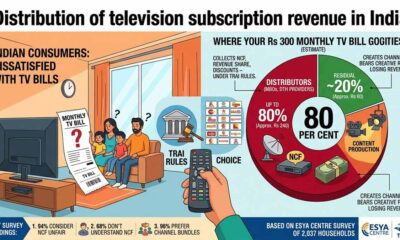
Since the beginning of tariff order rollout, many LCOs across the country have expressed their reservations about the new regulations. The 80-20 revenue share between broadcasters and DPOs has been a bone of contention, as they maintain there should be revenue cap separately for LCOs.
“NTO has come at a time industry had settled down after DAS. Obviously it's a major shift and hence causing confusion across the board. Negative propaganda does happen when any change takes place. For example when DAS was declared similar propaganda was there that MSOs are not equipped to provide channels, boxes, and that consumers are migrating to DTH. Some people strategically float these propaganda. DPOs offer packages that satisfy most consumers. If a particular MSO fails to implement that there could be migration to other DPOs which can be to DTH or to other MSOs,” KCCL CEO Shaji Mathews, a veteran in the industry, commented.
Mathews also added that the major MSOs are equipped to provide high-quality service to their consumers.
According to him, MSOs are in a better position to implement the order as cable operators are doing channel activations on ground. He added that in any case, there will be some amount of consumers who will keep jumping on both sides. He does not hold the view that there is any massive migration on either side, neither to cable nor to DTH.
“Whatever migration is taking place is driven by non-compliance of some stakeholders. While the SC has commented on the need to regulate bouquet rates in relation to a-la-carte rates, the broadcasters have taken liberty to overstep the basic objective of NTO and declare disproportionate rates. With the most important part of the NTO thrown to the wind it's as good as no NTO and is the fundamental cause of confusion. Secondly, I have come across a DTH operator in blatant violation of basic DAS itself and transmitting unencrypted channels including pay channels,” he further added.
Earlier TRAI said that in case of MSOs and LCOs, the biggest problem was discriminatory treatment by the broadcasters. As a result, it was almost impossible for smaller MSOs to get the content at an appropriate price from the broadcasters because the agreements were not transparent.
The new tariff order, however, was meant to change that and benefit both the MSOs and LCOs. While a part of cable industry continues to believe the same, a large number of LCOs, at least in Kolkata, are quite disappointed with what implementation of the new tariff order has resulted in.





MUMBAI: When margins wobble, liquidity talks and in Q3 FY25-26, cash did most of the talking. Den Networks Limited closed the December quarter with consolidated revenue of Rs.251 crore, marginally higher than the previous quarter but down 4 per cent year-on-year, even as profitability stayed resilient on the back of strong cash reserves and disciplined cost control.
Subscription income softened to Rs.98 crore, slipping 3 per cent sequentially and 14 per cent from last year, while placement and marketing income offered some cheer, rising 15 per cent quarter-on-quarter to Rs.148 crore. Total costs climbed faster than revenue, up 7 per cent QoQ to Rs.238 crore, driven largely by higher content costs and operating expenses. As a result, EBITDA dropped sharply to Rs.13 crore from Rs.19 crore in Q2 and Rs.28 crore a year ago, pulling margins down to 5 per cent.
Yet, the bottom line refused to blink. Profit after tax stood at Rs.40 crore, up 15 per cent sequentially and only marginally lower than last year’s Rs.42 crore. A healthy Rs.57 crore in other income helped cushion operating pressure, keeping profit before tax at Rs.48 crore, broadly stable quarter-on-quarter despite the tougher cost environment.
The real headline-grabber, however, sits on the balance sheet. The company remains debt-free, with cash and cash equivalents swelling to Rs.3,279 crore as of December 31, 2025. Net worth rose to Rs.3,748 crore, while online collections accounted for 97 per cent of total receipts, underscoring strong cash discipline across operations, including subsidiaries.
In short, while Q3 showed signs of operating strain, the financial backbone remains solid. With zero gross debt, steady profits and a formidable cash war chest, the company enters the next quarter with flexibility firmly on its side proving that in uncertain markets, balance sheet strength can be the best growth strategy.