News Broadcasting
Cable ops restrained from enforcing more blackouts

MUMBAI: The war between cable operators and consumers has taken an interesting twist with the Consumer Action Network (CAN), a city based consumer group filing a public interest petition in the Mumbai High Court today.
The PIL challenges the validity of the arbitrary hike in the subscription fees made by the cable operators and has asked for a freeze in the rates charged by them.
It is the contention of CAN that after the introduction of CAS, the consumer will get to choose whether he wishes to view a pay channel or not. Also, consumers will be free to confine themselves to the basic tier of free to air channels and will be liable to pay the rates as decided by the central government.

Following the petition, the Mumbai High Court has issued a notice to the central and state governments and directed the cable operators not to disconnect any cable connection in the meantime, a release issued by CAN claims.
The petition came for hearing before division bench comprising chief justice CL Thakkar and Dr Dhananjay Chandrachud.
The petition came for hearing along with another writ petition filed by Cable Operators Association against the arbitrary action on the part of the State Government for recovery of entertainment tax on the connections, which they claim that do not have.
During the course of the hearing, the court came down heavily on the cable operators for the black out conducted by them recently, the release says. The cable operators were called to explain their act which amounted to black mail of the citizens at a time when the World Cup is going on. The court observed that denial of information to the citizens by disconnecting the cable was tantamount to denial of fundamental right guaranteed by the Constitution of India.
AM Saragi, advocate appeared for the cable operators and government’s advocate including Advocate General of Maharashtra Ghulam Vahanvati was present during the hearing .
As per orders passed now, these petitions will come for hearing after two weeks.




News Broadcasting
CNN-News18 to host Fury in the Gulf conclave on West Asia crisis
Three-hour summit to unpack geopolitical fallout and impact on India
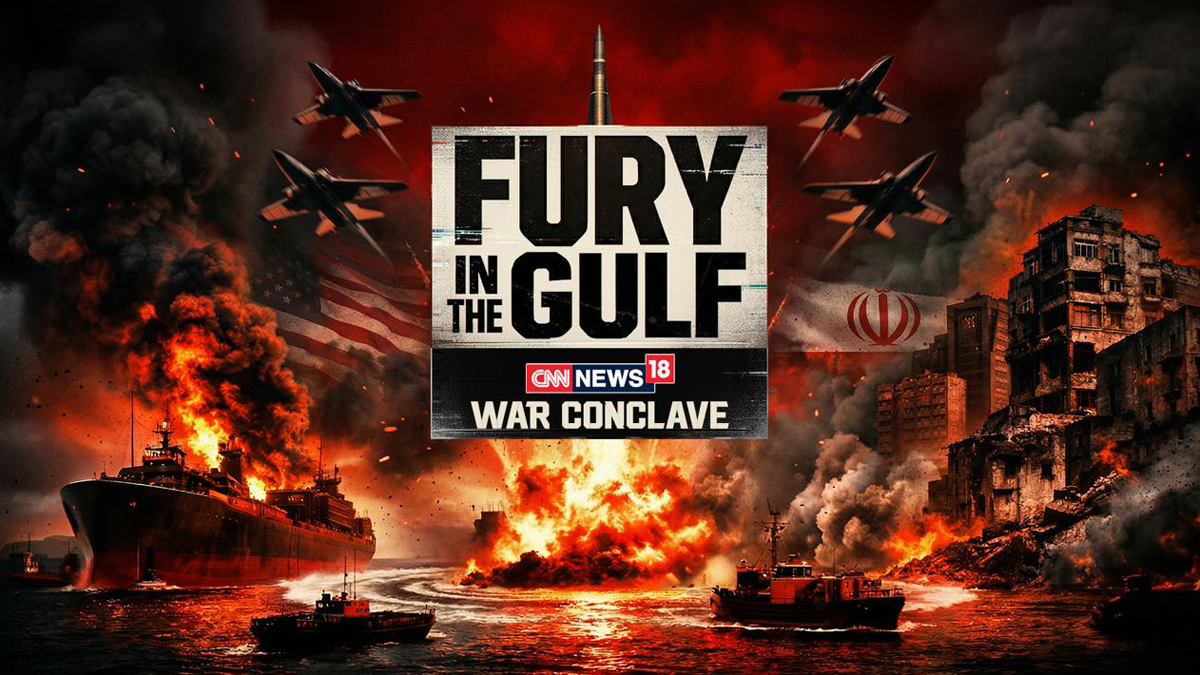
MUMBAI: CNN-News18 is set to host a special three-hour broadcast, Fury in the Gulf – War Conclave, on April 7, aiming to decode the escalating West Asia crisis and its far-reaching implications for India.
Scheduled from 4:00 PM to 7:00 PM, the conclave comes at a time when tensions between Iran and the United States are reshaping global geopolitics and triggering economic uncertainty. With India’s deep energy ties, trade links and large diaspora in the Gulf, the developments carry significant domestic relevance.
Built around the theme ‘Conflict, Consequences, and The Future,’ the programme will feature six curated sessions combining one-on-one interviews and panel discussions. The focus is to cut through the clutter and offer viewers a clearer understanding of the fast-evolving situation.
Key sessions include ‘Diplomacy in Times of War’ featuring Shashi Tharoor, and ‘World After the Iran Conflict’ with voices such as Ram Madhav, Reuven Azar, representatives from the European Union and the Iranian Deputy Envoy. Another session titled ‘Another Dunkirk?’ will bring together K. J. S. Dhillon and Jitin Prasada among others.
CNN-News18 editorial affairs director Rahul Shivshankar said, “In times of war, clarity becomes the most powerful tool. Fury in the Gulf – War Conclave brings together credible voices to address the questions and confusion that arise amid an overwhelming influx of information.”
He added that the initiative is aimed at delivering “facts, perspective, and insight” at a time when misinformation can easily cloud public understanding.
Echoing the sentiment, CNN-News18 CEO– English and business news Smriti Mehra said the conflict marks a defining global moment, with consequences that extend well beyond the region. She noted that the conclave seeks to present the crisis with “depth, nuance and responsibility” so audiences can better grasp its real-world impact.
As geopolitical tensions continue to dominate headlines, the conclave positions itself as an attempt to bring order to the noise, offering viewers a structured, insight-led look at a complex and rapidly shifting global situation.






