Cable TV
Cable ops plan to contest Lok Sabha polls


NEW DELHI: It was inevitable. Call it over-confidence or a comedy serial or a smart move, but cable operators attempting to turn politicians had to happen.Fazed by, what they call, total indifference of the outgoing Bharatiya Janata Party-led coalition government towards the needs of the cable industry, cable operators are now contemplating contesting elections with the aim of becoming a part of the policy making process.
“Every industry has some sort of representation Parliament and state legislative assemblies, except the cable industry. With the (outgoing) government handing us totally step-motherly treatment, we are now thinking of allying ourselves with non-BJP parties to contest elections,” Roop Sharma, head of the Cable Operators Federation of India (COFI), said today.
Sharma’s political dreams for the cable operators stems from the fact that since operators are already active in politics at the local level, it’s time for them to emerge at the national level too.

As per tentative plans, the cable operators plan to contest five parliamentary seats. One of the seats that the cable fraternity is angling for is Machchlipatnam in Andhra Pradesh where cable operator Srinivasa Rao is said to hold a sway over the voting population. The party being sounded out is Congress, which has not sent positive vibes up till now, at least.
Another place where the cable operators are upbeat at contesting elections from is Gujarat where cable operator Pramod Pandya is capable of mobilizing support, Roop Sharma points out. The two seats that are being targeted there would be chosen from Gandhinagar, Vadodra and Ahmedabad.
But here again no political party has come forward to offer their support to the cable ops or agree to their request of somebody from their fraternity be made a candidate.
Quizzed on the issue, senior Congress leader and one of the spokespersons for the party Anand Sharma said, “At least I am not aware of any move on the part of the party to have local cable operators as candidates as of now. Maybe the local units have some plans, which are yet to be communicated to the central leadership.”
But, according to Roop Sharma, even if cable operators are rebuffed by political parties, a nation-wide campaign would be started from next week against the outgoing government and especially their overt leanings towards the broadcasters while framing policy guidelines.
“The India Shining campaign has to be neutralized with India Fading and the cable operators would undertake door-to-door campaigning too, if necessary to highlight the deficiencies in the government and of a certain set of politicians,” Roop Sharma said.
Asked for a comment on the cable operators proposed move, a close aide of the information and broadcasting minister Ravi Shankar Prasad retorted, “If the cable operators feel the government has been unjust to them, they are most welcome to contest elections. Once they are part of the government machinery, they’ll realize how difficult it is to please everybody.”
Still, Roop Sharma and company are quite gung-ho about their proposed campaign that would be announced next week, even though some of the big multi-system operators are in the dark about any such awareness campaigns.





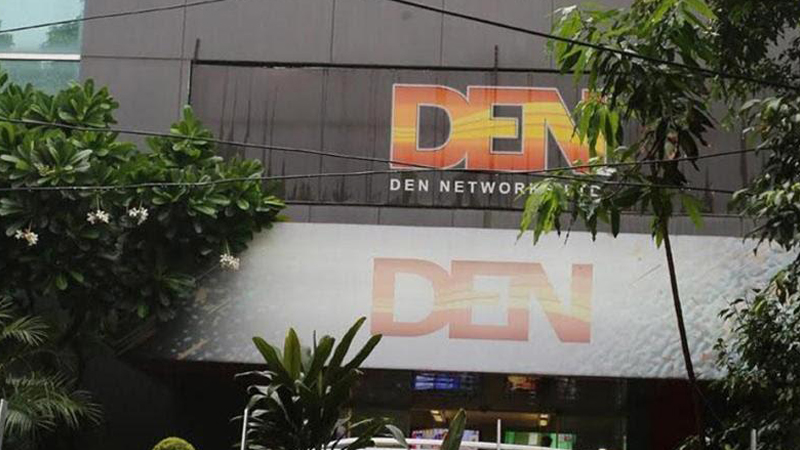
MUMBAI: When margins wobble, liquidity talks and in Q3 FY25-26, cash did most of the talking. Den Networks Limited closed the December quarter with consolidated revenue of Rs.251 crore, marginally higher than the previous quarter but down 4 per cent year-on-year, even as profitability stayed resilient on the back of strong cash reserves and disciplined cost control.
Subscription income softened to Rs.98 crore, slipping 3 per cent sequentially and 14 per cent from last year, while placement and marketing income offered some cheer, rising 15 per cent quarter-on-quarter to Rs.148 crore. Total costs climbed faster than revenue, up 7 per cent QoQ to Rs.238 crore, driven largely by higher content costs and operating expenses. As a result, EBITDA dropped sharply to Rs.13 crore from Rs.19 crore in Q2 and Rs.28 crore a year ago, pulling margins down to 5 per cent.
Yet, the bottom line refused to blink. Profit after tax stood at Rs.40 crore, up 15 per cent sequentially and only marginally lower than last year’s Rs.42 crore. A healthy Rs.57 crore in other income helped cushion operating pressure, keeping profit before tax at Rs.48 crore, broadly stable quarter-on-quarter despite the tougher cost environment.
The real headline-grabber, however, sits on the balance sheet. The company remains debt-free, with cash and cash equivalents swelling to Rs.3,279 crore as of December 31, 2025. Net worth rose to Rs.3,748 crore, while online collections accounted for 97 per cent of total receipts, underscoring strong cash discipline across operations, including subsidiaries.
In short, while Q3 showed signs of operating strain, the financial backbone remains solid. With zero gross debt, steady profits and a formidable cash war chest, the company enters the next quarter with flexibility firmly on its side proving that in uncertain markets, balance sheet strength can be the best growth strategy.






