Cable TV
Cable ops demand variable rate for basic tier

NEW DELHI / MUMBAI: Just ahead of the government-sponsored task force meeting on conditional access slated for 27 March, a seemingly somnambulant and fragmented cable fraternity has decided to unite under the banner of the Cable Operators’ United Front (COUF) and proposed a variable or floating rate for the basic tier of cable service instead of a fixed price as being suggested by the government.
This, the COUF in a memo to the information and broadcasting minister today has pointed out, will lead market forces and competition to push down the price of the free to air channels in the basic tier in a post-CAS regime over a period of time.
“Different conditions prevail in the four metros, therefore a single price structure would not be an appropriate answer to the problem. A flexible pricing would keep the cable operator above the water in a post-CAS regime,” the memo states. “A higher FTA pricing, if fixed, would drop automatically with competition to a level of universal acceptance and viability, not killing healthy competition in the bargain,” the memo adds.
According to calculations done by the finance ministry – something that was also intimated to all the task force members – the costing of 60 FTA channels for a subscriber base of 30,000-odd comes to Rs. 45.90, exclusive of local and entertainment taxes. Even then, if agreed upon, this price is likely to be much below Rs 100.
The Cable Operators United Front (COUF), comprising mostly independent cable operators, has also decided to hold a dharna tomorrow in Delhi to vent their “frustration” in failing to convince the government on a “fair price of the basic tier.”
As reported by indiantelevision.com yesterday, the cable operators have also threatened a black out of cable services in the metros if the government fails to lend a sympathetic ear to their grievances.
According to a senior member of the COUF: “We have been pro-active where CAS is concerned. But now it seems that the broadcasters are hijacking the issue and somehow have managed to convince the government that the parameters used for costing are correct. But these are far removed from reality and we cable operators must unite.”
The broadcasters, of course, are keeping mum on this uproar.
Speaking to indiantelevision.com in Mumbai, Federation of Cable Operators Association president Ravi Singh said the very basis on which the government had made its calculations – a subscriber base of 32,000 – was incorrect. Even in metros like Mumbai, the average local cable operator (LCO) had a subscriber base of around 5,000 and as you go away from the metros, it could only come further down, Singh said. It should be based on these considerations that that a formula is devised, Singh added.
The COUF memo listed 10 assumptions the government has made in its costing that were “unrealistic”:
1. For every 1,000 subscribers only one employee (for service and collection).
2. Single office in 154 sq. km. (Radius is 7 km).
3. Size of network is for 32,000 subscribers.
4. For whole network and office electricity expense is Rs1.40 per sub per month.
5. No pole charges (for tying cable) to state electricity boards.
6. No promotional activities expense.
7. Network is without competition.
8. Telephone and other communications expenses is Rs 0.43 per sub per month.
9. No tea or other staff welfare expenses.
10. No insurance for the staff.
The COUF memo paints the “real picture” thus:
1. Most cable TV operators are small self-employed businessmen.
2. On average LCOs have not more that 500 subscribers.
3. Average cable network spread 4 sq. km (radius 0.8 km).
4. Cable networks face an average three competitors in the area.
5. For every 500 subscribers there are four employees and 1 cable operator.
6. Cable TV offices are not more than 1 km from any subscriber.
7. 7,000 cable ops in four metros employ approximately 35,000.
Will the government relent? We should have some answers on Thursday, the 27th.
Also Read:
Fragmented cable ops threaten blackout


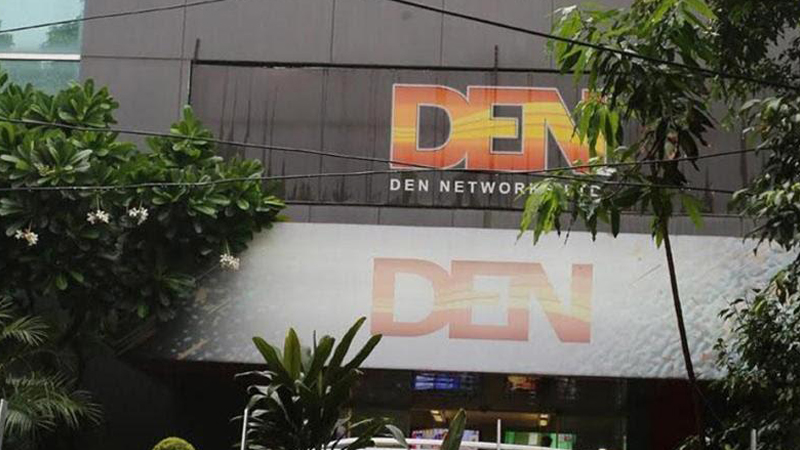
MUMBAI: When margins wobble, liquidity talks and in Q3 FY25-26, cash did most of the talking. Den Networks Limited closed the December quarter with consolidated revenue of Rs.251 crore, marginally higher than the previous quarter but down 4 per cent year-on-year, even as profitability stayed resilient on the back of strong cash reserves and disciplined cost control.
Subscription income softened to Rs.98 crore, slipping 3 per cent sequentially and 14 per cent from last year, while placement and marketing income offered some cheer, rising 15 per cent quarter-on-quarter to Rs.148 crore. Total costs climbed faster than revenue, up 7 per cent QoQ to Rs.238 crore, driven largely by higher content costs and operating expenses. As a result, EBITDA dropped sharply to Rs.13 crore from Rs.19 crore in Q2 and Rs.28 crore a year ago, pulling margins down to 5 per cent.
Yet, the bottom line refused to blink. Profit after tax stood at Rs.40 crore, up 15 per cent sequentially and only marginally lower than last year’s Rs.42 crore. A healthy Rs.57 crore in other income helped cushion operating pressure, keeping profit before tax at Rs.48 crore, broadly stable quarter-on-quarter despite the tougher cost environment.

The real headline-grabber, however, sits on the balance sheet. The company remains debt-free, with cash and cash equivalents swelling to Rs.3,279 crore as of December 31, 2025. Net worth rose to Rs.3,748 crore, while online collections accounted for 97 per cent of total receipts, underscoring strong cash discipline across operations, including subsidiaries.
In short, while Q3 showed signs of operating strain, the financial backbone remains solid. With zero gross debt, steady profits and a formidable cash war chest, the company enters the next quarter with flexibility firmly on its side proving that in uncertain markets, balance sheet strength can be the best growth strategy.






