Cable TV
Cable cos ahead, telcos catching up: US Survey

MUMBAI: In the US, the entertainment environment is rapidly evolving to be one where there will be intense competition among cable and telecom companies to offer triple play – phone, cable TV and Internet services.
American cable ops have fast taken the lead as the bundled service provider. Most operators expect a double-digit topline and cash flow growth, primarily driven by their bundled service offerings.
The phone companies are right on their heels and will soon be evaluating their return on investment for triple and quadruple play bundles. But how will all of this net out?

A significant minority of American consumers are ready to switch to a bundled package offered by a single provider, according to a Ipsos-Insight study that looked at a number of price and service scenarios.
The motivation for consumers
This comes in the form of cheaper bills and the convenience of one consolidated payment per month. The good news for consumers is that the triple play strategy, promoted for many years, is now a reality.
Cable TV companies already offer phone service and Internet service, while phone companies will soon be offering cable TV service, along with their high-speed Internet and phone services.
There’s a lot at stake for the bundling strategies to succeed. The cable TV industry collectively has invested about $85 billion to upgrade networks and to support bundled strategies as well as services such as video-on demand, according to the study.
Not far behind are the telecom giants: SBC, Verizon, and Bell South are pouring $10 billion into fibre optic cable so they can offer TV signals over their phone lines.
Telecom leader SBC plans to roll out its TV service in November of this year and expects to attract between 2 and 3 million households by the end of 2005.
Who will win this high stakes game?
This will depend on the package. According to the Ipsos study, in one scenario where consumers evaluated a bundled Internet, television, and telephone service package at $119 a month, an estimated seven per cent of American households say they will switch to a bundled package offered by a phone company.
Seven per cent say that they will switch to the same package offered by a cable TV company. Satellite companies can expect less then half of that, about three per cent of the market.
Explains Ipsos-Insight senior VP and head cable, media and entertainment practice Lynne Bartos, “Clearly, consumers see the phone and cable companies as equals in this triple play scenario. Not surprising, there’s a segment of the population still unfamiliar with satellite companies’ offerings and may be skeptical about their ability to provide high-speed Internet and phone services.”
Data for the survey was gathered among 601 adults above 18 years, using the Ipsos US Online Panel. The study was conducted between 4-15 February, 2005.
Phone companies look strong in Quadruple Play market
In the quadruple play market which includes wireless phone service, the telcos, however, stand at an advantage. By adding 1,000 wireless minutes for a total bundle price of about $149 a month, the research shows that phone companies can potentially expect to acquire around 16 per cent of the switchers.
This will leave cable TV companies with a five per cent share, and satellite providers with a two per cent share. The vast majority of Americans (76 per cent) will remain with their current, unbundled services.
In the basic triple-play scenario tested with cable TV, Internet and phone packages at parity from various providers, it seems consumers are equally likely to give their business to either service provider depending on the package.
Value added features, like video-on-demand, HDTV capabilities, DVRs etc will play an important role at the point of purchase and are likely to tip the scales.
Wireless phone service favours the phone companies initially and it makes sense since cable operators are not known to provide wireless phone as of yet.
“But we expect to see more deals like the recent one between Time Warner Cable and Sprint, indicating that the cable operators are aggressively pursuing the quadruple play,” Bartos said.




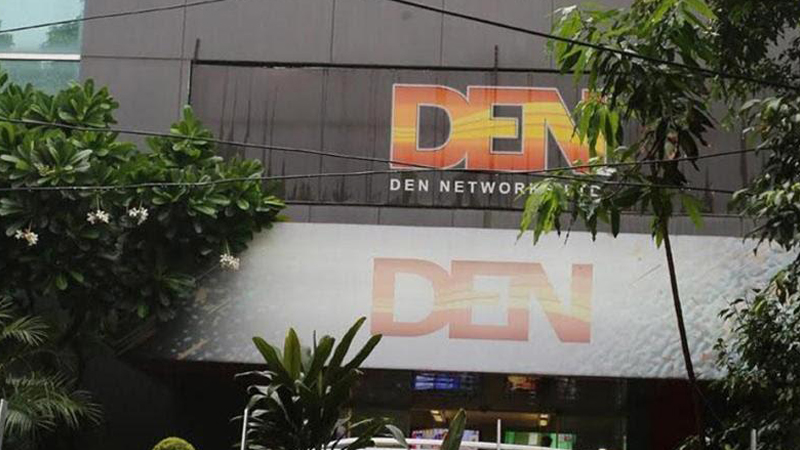
MUMBAI: When margins wobble, liquidity talks and in Q3 FY25-26, cash did most of the talking. Den Networks Limited closed the December quarter with consolidated revenue of Rs.251 crore, marginally higher than the previous quarter but down 4 per cent year-on-year, even as profitability stayed resilient on the back of strong cash reserves and disciplined cost control.
Subscription income softened to Rs.98 crore, slipping 3 per cent sequentially and 14 per cent from last year, while placement and marketing income offered some cheer, rising 15 per cent quarter-on-quarter to Rs.148 crore. Total costs climbed faster than revenue, up 7 per cent QoQ to Rs.238 crore, driven largely by higher content costs and operating expenses. As a result, EBITDA dropped sharply to Rs.13 crore from Rs.19 crore in Q2 and Rs.28 crore a year ago, pulling margins down to 5 per cent.
Yet, the bottom line refused to blink. Profit after tax stood at Rs.40 crore, up 15 per cent sequentially and only marginally lower than last year’s Rs.42 crore. A healthy Rs.57 crore in other income helped cushion operating pressure, keeping profit before tax at Rs.48 crore, broadly stable quarter-on-quarter despite the tougher cost environment.
The real headline-grabber, however, sits on the balance sheet. The company remains debt-free, with cash and cash equivalents swelling to Rs.3,279 crore as of December 31, 2025. Net worth rose to Rs.3,748 crore, while online collections accounted for 97 per cent of total receipts, underscoring strong cash discipline across operations, including subsidiaries.
In short, while Q3 showed signs of operating strain, the financial backbone remains solid. With zero gross debt, steady profits and a formidable cash war chest, the company enters the next quarter with flexibility firmly on its side proving that in uncertain markets, balance sheet strength can be the best growth strategy.








