Hardware
Business digitisation is yet to start in phases I and II: Cisco

KOLKATA: The phases I and II of cable TV digitisation may have been complete technically but a lot needs to be done as far as the back end is concerned, that is the business digitization is yet to start, thinks Cisco India & SAARC regional manager and service provider Sandeep Arora.
Arora thinks that with digitisation in municipal and rural areas also being in demand in phases III and IV across the country, the headend market is redefining itself in India. Fulfilling that would be Cisco, which is planning several innovations to enhance the consumer experience.

“Business and technical digitisation go hand in hand. Revenues for MSOs (multi-system operator) have started flowing in. Profitability and consumer experience are expected to go up in coming days,” remarked Arora while talking to indiantelevision.com.
According to Arora, phases I and II of digitisation of cable TV were implemented in the right frame of mind. “The players adhered to the MIB rules and the phases were well coordinated,” he said.
The US based tech giant set up the hosted headend facility which could be leased by MSOs and local cable operators (LCOs). This will help the company garner revenues from the small LCOs and MSOs that cannot earmark huge investments for installing headends. “We initiated this in phases I and II and its deployment will substantially reduce the capital expenditure of the MSOs and the LCOs,” said Arora.
Interestingly, Cisco garnered a market share of 53-55 per cent in the first two phases where more than 25 million cable TV homes were digitised. “In the next two phases, there is a requirement of 75 million homes to be digitised and if not more we will aim to maintain the same market share of around 55 per cent,” he added.
Some of the clients of Cisco include Hathway, Den, KCBPL-GTPL among others.
Cisco is eager to offer cable TV operators broadband services by upgrading their existing networks. “Broadband is a key priority for us now and it will drive growth,” he said.
The company is offering a technology that will enable cable TV players to start two-way communications required for Internet services.





Hardware
Specs Inc. partners with Qualcomm for next-generation smart glasses
Snap subsidiary to power future Specs with Snapdragon XR platforms.
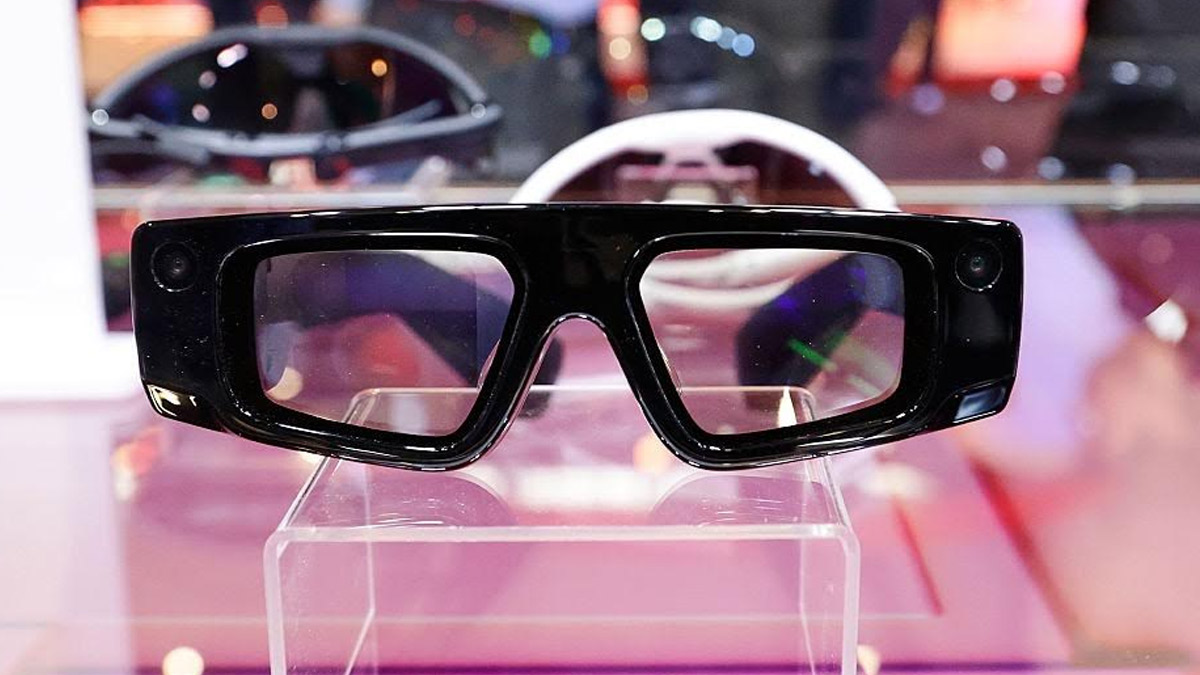
MUMBAI: Snap’s Specs are about to get a serious upgrade and this time, they’re teaming up with Qualcomm to make sure the future looks crystal clear. Specs Inc., a Snap subsidiary, has announced a multi-year strategic agreement with Qualcomm Technologies to power future generations of its advanced smart eyewear with Snapdragon system-on-a-chip (SoC) technology.
This marks the first flagship engagement for Specs Inc., which is preparing to launch its standalone, see-through smart glasses for consumers later this year. The Specs are designed to seamlessly blend digital experiences into the physical world, allowing users to see, hear, and interact with digital content as if it were part of their real surroundings.
By integrating Snapdragon XR platforms, the glasses will benefit from edge AI and high-performance, low-power computing. This combination enables intelligent, context-aware experiences to run directly on the device, delivering faster and more private interactions.
The partnership builds on more than five years of collaboration between Snap and Qualcomm, during which Snapdragon platforms have powered multiple generations of Snap’s Spectacles.
Snap Inc., co-founder and CEO Evan Spiegel said, “We believe the future of computing will be more human and grounded in the real world. Our work with Qualcomm provides a strong foundation for the future of Specs, bringing advanced technology and performance that pushes the boundaries of what’s possible.”
Qualcomm Incorporated president and CEO Cristiano Amon added, “The next era of computing will be defined by devices that understand what you see, hear and say, and respond instantly to the world around you. Our collaboration on Specs will enable power-efficient interactive AR devices that feel natural and intuitive.”
The agreement establishes a scalable foundation for developers and partners building experiences for Specs, supporting a predictable product roadmap and increasingly sophisticated digital interactions over time.
In a world racing toward augmented reality, Specs Inc. and Qualcomm are ensuring that the next pair of smart glasses doesn’t just look good on paper, they perform brilliantly in real life. The future of wearable computing just got a powerful new lens.







