Budget
Budget fine print, bold bets as industry weighs India’s 2026 game plan

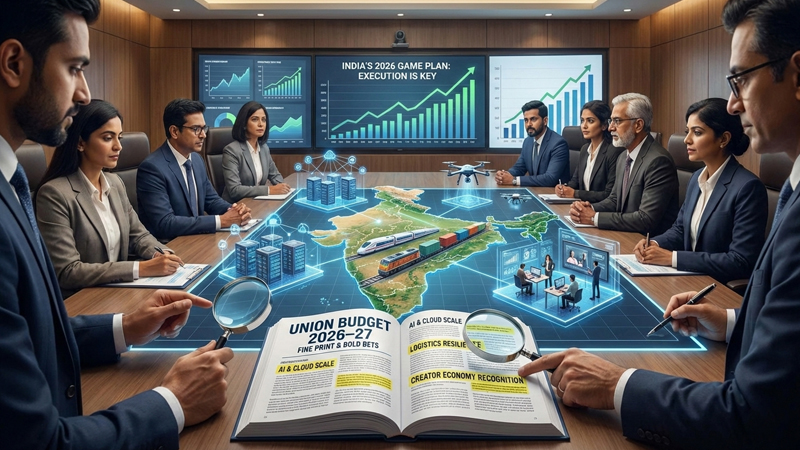
MUMBAI: When the Union Budget drops, the real action often begins after the speech. As policymakers set the tone for India’s economic direction, industry leaders dive into the details, searching for signals that shape investment, innovation and scale. Union Budget 2026–27 has done just that, prompting sharp reactions across technology, infrastructure, logistics and the fast-emerging creator economy.
For AI and cloud infrastructure players, the Budget’s reworking of tax frameworks and long-term incentives stood out as a pivotal shift. Neysa co-founder and CEO Sharad Sanghi said the proposals finally bring predictability to a sector that has long operated amid regulatory ambiguity.
“The Union Budget 2026–27 provides much-needed structural clarity for India’s AI and cloud infrastructure ecosystem. The government’s proposal to club software development, IT-enabled services, knowledge process outsourcing, and contract R&D services relating to software development under a single category of information technology services, with a uniform safe harbour margin of 15.5 per cent and an expanded eligibility threshold from Rs 300 crore to Rs 2,000 crore, significantly improves tax certainty for larger technology and services companies operating at scale. By moving to automated, rule-driven safe harbour approvals and enabling five-year continuity, the regime meaningfully reduces friction and compliance overheads.

Equally consequential is the proposal to offer a tax holiday until 2047 for foreign companies providing cloud services to customers outside India using data centre services based in India, along with a 15 per cent safe harbour on cost for related Indian entities delivering those data centre services. These measures directly strengthen India’s attractiveness as a hub for cloud and AI infrastructure and support the shift towards domestically hosted compute.
For Neysa, which is focused on building cloud-native AI platforms on resilient, India-based infrastructure, these announcements create a predictable and enabling environment to help enterprises move from pilots to large-scale AI deployment. By addressing tax certainty for IT services, incentivising global cloud services anchored on Indian data centres, and encouraging fresh data centre investment together, the Budget lays a strong foundation for India’s next phase of enterprise AI adoption.”
A similar sense of alignment was echoed by Ahead, managing director for India Sumed Marwaha who viewed the Budget as a reinforcement of India’s role as a long-term digital transformation hub.
“The Union Budget 2026–27 rightly doubles down on India’s strengths as a global digital engineering and services hub. Consolidating IT-enabled services, KPO and contract R&D into a single information technology services category with a uniform 15.5 per cent safe harbour margin and an enhanced Rs 2,000 crore threshold brings the policy framework much closer to how large, integrated transformation programmes are actually delivered on the ground. This added clarity and predictability is critical for enterprises committing to multi-year modernisation journeys across cloud, data and applications.
Equally important is the Budget’s emphasis on cloud and data centre infrastructure from the long-duration tax holiday until 2047 for foreign companies providing global cloud services from India-based data centres to the 15 per cent safe harbour on cost for related data centre entities. Together, these measures will catalyse fresh investment into high-performance, secure, and scalable infrastructure, the foundation for cloud-first, AI-ready, and automation-driven environments that modern enterprises now depend on.
For Ahead, which helps organisations modernise core infrastructure, build custom AI-ready platforms across cloud, core, and edge, and simplify operations through automation and observability, this Budget materially strengthens the surrounding ecosystem. It aligns policy, infrastructure, and talent towards a common objective, enabling enterprises to execute digital transformation with greater speed, reliability, and impact, while reinforcing India’s position as a strategic, long-term delivery base for global digital initiatives.”
Beyond the digital economy, logistics and supply chain players saw the Budget as a strong vote for scale, speed and sustainability. Matchlog Solutions founder and Global CEO Dhruv Taneja described it as a decisive moment for India’s freight and cargo ambitions.
“The Union Budget 2026–27 delivers a visionary blueprint for India’s logistics backbone, with public capex rising to Rs 12.2 lakh crore, new freight corridors between Dankuni and Surat, 20 additional national waterways, coastal cargo promotion, and seven high-speed rail corridors all pointing to a clear focus on faster, greener cargo movement and last-mile connectivity. The creation of an Infrastructure Risk Guarantee Fund, dedicated REITs for CPSE real estate recycling, and a Rs 5,000 crore outlay for City Economic Regions in Tier II and III cities further underline the intent to de-risk long-gestation projects and anchor logistics growth where demand is actually emerging.
Equally important are the trust-based customs and warehousing reforms and the proposed container manufacturing scheme, which can strengthen India’s position in global trade flows. The next big unlock now lies in directly incentivising container reuse and reduction of empty runs, backed by data-driven frameworks for measurable emission reduction. Clear signals on technology adoption, reuse-led models, and outcome-based incentives would help scale digital platforms faster and make India’s supply chains not just more efficient, but genuinely sustainable.”
Another notable takeaway is the Budget’s clear bias towards ecosystems rather than silos. From AI platforms anchored on Indian data centres to logistics corridors tied to Tier II and III city growth, and from AVGC labs to creator skilling frameworks, the emphasis is on building interlinked value chains. Industry voices suggest this approach could help India move faster from isolated success stories to repeatable, export-ready models that can compete globally while remaining rooted domestically.
The creative economy, meanwhile, found its moment in the Budget spotlight. With the Orange Economy framework and AVGC initiatives gaining prominence, communication and content leaders welcomed the recognition while cautioning that momentum must extend beyond announcements. Talking Point Communications (U/O IJCP Group) founder Naina Aggarwal Ahuja said the formal acknowledgement of creators is only the first step.
“The Union Budget 2026–27’s recognition of the creator economy through the Orange Economy framework and large-scale AVGC content creator labs is a welcome step in formally acknowledging content creation and digital storytelling as part of India’s skilling and services landscape. What will now be critical is sustained support beyond training, including clearer pathways for creators, platforms and institutions to build credibility, manage public engagement and scale responsibly. As this ecosystem expands, strategic communication will play a key role in shaping trust, visibility and long-term relevance.”
That view was reinforced by Red Comet Films (U/O IJCP Group) founder Ankit Ahuja who stressed the importance of turning policy intent into globally relevant output.
“The Union Budget 2026–27 underlines a clear intent to strengthen India’s content creation and creative ecosystem through focused support for the Orange Economy, AVGC skilling, content creator labs and digital storytelling initiatives. This approach recognises the importance of building creative capacity, nurturing talent and enabling original IP at scale. The opportunity now lies in translating these interventions into sustained collaboration between creators, studios and institutions to develop globally relevant content from India.”
Ultimately, the industry response to Union Budget 2026–27 reflects a shift in tone as much as policy. The language of pilots, proofs of concept and fragmented interventions is giving way to conversations about scale, resilience and long-term ownership. If execution matches intent, leaders believe the Budget could mark a turning point not just in numbers, but in how confidently India positions itself across technology, infrastructure and creative capital in the years ahead.
Taken together, the reactions paint a picture of cautious optimism. Budget 2026–27 may not have answered every question, but it has sent unmistakable signals towards scale in AI and cloud, resilience in logistics, and recognition for creators. For industry, the message is clear: the direction is set. Now, execution will decide how far India’s next growth chapter really travels.





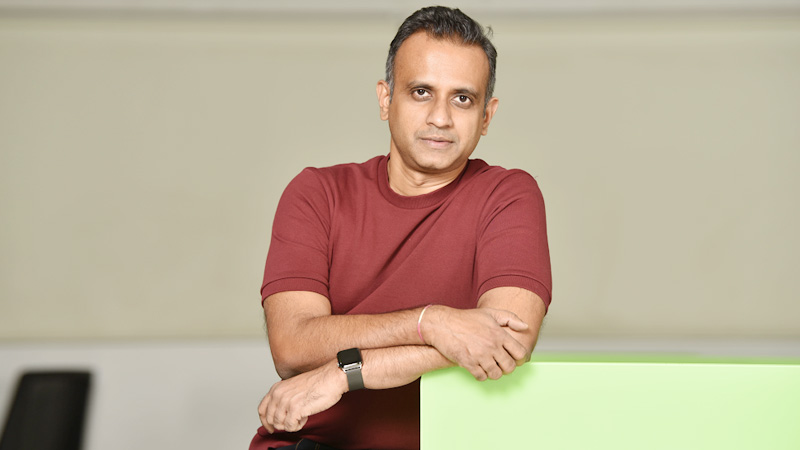

MUMBAI: Anuj Singhal, managing editor at CNBC- AWAAZ and CNBC BAJAR, operates at the sharp end of India’s business news ecosystem. With over two decades in business journalism, he has earned credibility for decoding policy, markets and macro trends for millions of Hindi-speaking investors. Equal parts newsroom leader and market analyst, he shapes editorial direction while anchoring flagship shows that break down the economy, politics and corporate India in real time.
Known for cutting through jargon and hype, Singhal blends data, discipline and clarity — a mix that has made him one of the most trusted voices in Hindi business news.
In this interaction, he discusses the Union Budget, trade deals, newsroom strategy and what truly moves markets and ratings.
• What was the single most market-moving announcement in this Budget, and why?
The most market-moving element was the clear commitment to fiscal consolidation without compromising capex. The glide path on fiscal deficit reassured bond markets and foreign investors, while sustained public investment kept growth expectations intact. That balance removed a big overhang for both equities and debt.
• Do you see this Budget as growth-oriented, fiscally cautious, or politically calibrated?
This Budget is growth-led but fiscally disciplined. It avoids overt populism, stays within macro guardrails, and prioritises medium-term competitiveness over short-term optics. Politically, it is restrained; economically, it is deliberate. The message is clear: stability over spectacle.
• How is CNBC-AWAAZ programming different, especially in decoding trade deal impact?
CNBC-AWAAZ goes beyond headline reaction. We translate policy into portfolio impact — sector by sector, stock by stock.
On trade agreements, our focus is on:
-Earnings visibility
-Export competitiveness
-Currency implications
-Margin sustainability
We don’t treat trade deals as political milestones. We decode them as profit-and-loss events for corporate India and map them to FY earnings trajectories.
• Which sectors look like clear winners and laggards over the next 12–18 months?
The next 12–18 months favour sectors aligned with structural spending and supply-side strengthening.
– Clear beneficiaries:
Capital goods and infrastructure
Manufacturing linked to export chains and PLI ecosystems
Power, defence, and logistics
– Relative laggards:
Consumption segments dependent on immediate demand revival
Businesses facing margin pressure from global volatility or pricing power erosion
This is not a momentum-driven market environment. It is execution-driven. Balance-sheet strength and order visibility will matter more than narrative.
• One headline to sum up this Budget 2026 for India Inc?
“Steady Hands, Long-Term Vision: A Budget That Rewards Discipline Over Drama”.
• What editorial filters do you apply before calling something ‘market-positive’ or ‘negative’?
We apply three structured filters:
– First: Earnings translation — does this materially change earnings visibility or cash flow outlook?
– Second: Time horizon — is the impact immediate, cyclical, or structural?
– Third: Valuation context — good news priced in or not.
If a policy doesn’t move earnings or risk perception, we don’t oversell it.
• How has business news consumption changed around big policy events?**
There has been a clear behavioural shift. They’re less interested in what was said, more in what it means for their money. There’s also a clear shift toward second-screen consumption, with digital platforms complementing live TV. The audience seeks sharper accountability. Viewers no longer accept broad optimism or pessimism — they want frameworks, numbers, and sector mapping.
• CNBC-AWAAZ decisively outperformed on Budget Day. What editorial and distribution choices mattered most?
Three deliberate strategic choices:
– Preparation depth:
We build scenarios months in advance — deficit ranges, sectoral incentives, tax calibrations — so we’re ready with analysis the moment numbers are announced.
– Language of impact:
We translate macro policy into investor-friendly Hindi without diluting complexity. That bridges accessibility and sophistication.
– Integrated distribution:
Television, YouTube, and digital platforms operate as one editorial grid, not parallel silos. This ensures continuity of narrative.We stayed analytical while others stayed reactive.
• How different is your YouTube audience from your TV audience?
The behavioural differences are subtle but important. TV audiences prioritise authority, structured debate, and context. YouTube audiences want speed, clarity, and actionable insights — often sharper, sometimes more opinionated. However, both share one expectation: accuracy. The format evolves; the trust benchmark does not.
• How do you retain viewers after the budget speech ends?
By shifting from announcements to implications.Retention comes from shifting the narrative from announcement to implication. We break down sectoral breakouts, stock-level impact, and what to do next. The speech is just the trigger; analysis is the destination.
• Is Budget Day your biggest traffic day?
It is one of the biggest — but more importantly, it is among the deepest in engagement. Viewers spend longer durations, revisit segments, and seek follow-up programming. That indicates behavioural trust, not just traffic.
• What’s the first thing you personally track on Budget Day — the speech or the markets?
The markets. They’re the fastest truth-teller. The speech explains intent; markets reveal interpretation.
• Your personal Budget-day ritual?
Early morning prep, minimal distractions, and once the speech begins, complete immersion. For me, Budget Day is less about reaction and more about reading between the lines.
• What drove your Budget-day ratings dominance, and how are Budget and trade deals shaping markets now?
Our dominance came from credibility, consistency, and clarity.
As for markets, both the Budget and recent trade deals are reinforcing a narrative of policy stability and global integration, which supports valuations even amid global volatility.
For Singhal, the market is the final judge. Policies can promise and speeches can persuade, but prices reveal what investors truly believe. As India’s investor class grows more informed and more demanding, business journalism is shifting from commentary to calibration. The premium is on clarity, context and credibility. In a landscape flooded with noise, the real edge lies in interpretation. In the end, the markets listen to numbers, not narratives , and Singhal’s craft is helping viewers tell the difference.






