iWorld
Broadpeak to showcase mobile-first CDN Solution at Mobile World Congress 2022

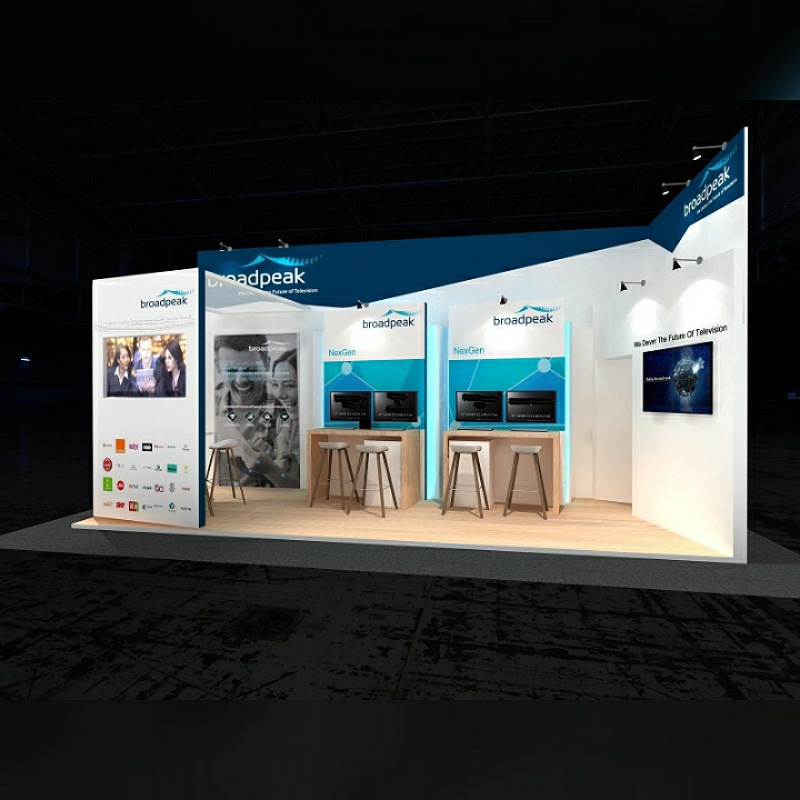
Mumbai: Broadpeak has announced that it will exhibit the latest content delivery network (CDN) innovations with customers and partners, face to face, at Mobile World Congress 2022.
At the show, Broadpeak will highlight its mobile-first CDN solution that optimises video streaming over mobile — in particular, 5G — networks, ensures an exceptional quality of experience (QoE) for subscribers on every screen, and enhances the energy efficiency of streaming, said the c
Company in a statement.

“Video consumption on mobile devices has seen explosive growth over the last few years, and service providers need efficient solutions for delivering video services over mobile networks, including 5G,” said Broadpeak CEO Jacques Le Mancq. “Broadpeak is leading the way to the next generation of video streaming with a powerful, environmentally sustainable CDN solution. We look forward to showcasing our expertise in video streaming over 4G and 5G networks at Mobile World Congress.”
Broadpeak will show advanced functionalities and far-edge cloud capabilities for 5G streaming to help video service providers deliver an outstanding experience to mobile, fixed wireless, and wireline access users, said the statement.
Demonstrations will include:
Network-controlled ABR streaming: Broadpeak’s S4Streaming significantly improves video streaming QoE in mobile networks, with network-controlled adaptive bit rate (ABR) streaming technology that handles bandwidth measurement and video segment selection on the server-side. At Mobile World Congress 2022, Broadpeak will showcase how S4Streaming allows operators to take control over video streaming for various use cases, such as mobile traffic peaks, fixed wireless access, and low-latency content.
Multi-access edge computing (MEC) and deep edge caching: Broadpeak offers far-edge cloud CDN capabilities dedicated to mobile and 5G streaming. At Mobile World Congress, Broadpeak will demo innovative edge caching functionalities, such as 5G and MEC integration, multicast ABR in contribution mode, and edge CDN orchestration (dynamic caching VNF/CNF placement). By streaming video content from the far edge of the mobile and 5G network, service providers can deliver low-latency video streams, reduce congestion, and provide faster startup times, all without rebuffering.
Maximising the Value of 5G Networks
Broadpeak’s mobile-first CDN allows service providers to keep costs under control while also maximising the value of their 5G network. With Broadpeak’s solution, communication service providers can increase the value of their 5G CDN by offering a ‘smart pipe’ to third-party service providers for the delivery of direct-to-consumer content with a premium quality of experience. Broadpeak’s solution leverages state-of-the-art open caching, geo-targeted ad insertion, and multicast ABR technologies on display at Mobile World Congress 2022.
Bringing Energy Efficiency to Streaming
Broadpeak’s advanced CDN enables service providers to build more environmentally sustainable video delivery networks. With Broadpeak’s sustainable approach to video streaming, service providers can drastically reduce power consumption. Broadpeak’s CDN leverages multicast transmission and platform mutualisation technology (multi-purpose and multi-tenancy), virtualisation (dynamic placement), and power-efficient software/hardware integration.
Broadpeak will also be part of:
1. AWS Partner Village, with Broadpeak highlighting how it helps content providers deliver the most engaging streaming experiences on 5G with AWS Wavelength.
2. Intel’s Front Row Experiences, with Broadpeak showing how its advanced CDN can run on a multipurpose telco edge cloud platform.



iWorld
Netflix cuts jobs in product division amid restructuring
Layoffs hit creative studio unit as leadership and strategy shifts unfold.
MUMBAI: The streaming wars may be fought on screen, but the latest plot twist is unfolding behind the scenes. Netflix has reportedly begun laying off several dozen employees from its product division as part of an internal reorganisation, according to a report by Variety. The cuts are believed to have primarily affected the company’s creative studio unit, which works on marketing assets such as in app trailers, promotional visuals and live experience content for the streaming platform.
The company has not disclosed the exact number of employees impacted.
According to the report, the layoffs were not tied to employee performance. Instead, the restructuring eliminated certain roles while other employees were reassigned to different teams within the organisation.
The roles affected are understood to include designers, producers and creative specialists responsible for marketing and brand experience initiatives.
The job cuts come as Netflix adjusts its leadership structure and reshapes its product and creative teams. Last month, Elizabeth Stone was promoted from chief technology officer to chief product and technology officer, giving her oversight of product, engineering and data operations across the company.
Earlier, in December 2025, Netflix also appointed Martin Rose as head of creative for global brand and partnerships, a move seen as part of a broader restructuring of the company’s brand and product functions.
Despite the layoffs, Netflix remains one of the largest employers in the streaming sector. The company is estimated to employ around 16,000 people globally, with roughly 70 percent of its workforce based in the United States and Canada. In 2023, the company reported approximately 13,000 employees, indicating that its headcount had grown significantly before the latest restructuring.
The workforce changes arrive at a time when Netflix is navigating a shifting financial and strategic landscape in the global entertainment industry.
The streaming giant recently secured $2.8 billion in additional cash after receiving a breakup fee from Paramount Skydance following its withdrawal from a deal involving Warner Bros. Discovery.
Speaking to Bloomberg, Netflix co chief executive Ted Sarandos explained that the company had evaluated multiple scenarios during the negotiations but chose not to match the competing offer once it learned that a higher bid had been submitted.
Netflix had capped its offer at $27.75 per share and ultimately stepped back rather than pursue Paramount’s $111 billion acquisition deal, which included a personal guarantee.
Sarandos also cautioned that the financing structure behind the Paramount Skydance transaction could have ripple effects across the entertainment industry.
According to him, the debt heavy deal could trigger significant cost cutting, with David Ellison, chief executive of Paramount Skydance, expected to eliminate about $16 billion in costs and potentially cut thousands of jobs as part of the integration process.
For Netflix, the current restructuring appears to be part of a broader attempt to streamline operations while continuing to invest in product, technology and global content even as the streaming industry enters a new phase of consolidation and financial discipline.