News Broadcasting
Broadcasting is going through a period of change: BBC Trust chairman Lyons


MUMBAI: The media industries in general, and broadcasting in particular, are going through an extraordinary period of change where the EU regulatory framework has served audiences well. But this is a timely moment to ask whether it remains appropriate for the new world of digital convergence and on-demand services, into which everyone is moving at an extreme speed.
This point was rasied by BBC Trust chairman Sir Michael Lyons at the EU conference in Strasbourg. He emphasized upon the fact that the BBC is more than simply a broadcaster.
“It is expected to fulfil public purposes that go well beyond the provision of high quality television and radio programmes and online content,” Lyons said.

“These public purposes are set out in some detail in the new BBC Charter, in effect its constitution, which was put in place 18 months ago. The public purposes range from sustaining citizenship and civil society, through promoting education and learning and stimulating creativity and cultural excellence, to representing the UK, its nations, regions and communities, and bringing the UK to the world and the world to the UK. The BBC is also tasked with delivering to audiences the benefits of emerging communications, technologies and services,” he added.
Lyons explained that the BBC can only deliver these high public purposes if it remains independent.
“The public purpose of ‘sustaining citizenship’, for example, implies the provision of high quality impartial coverage of news and current affairs. This is the essential fuel of an informed democracy; and impartiality in news provision cannot be sustained without full editorial independence. The independence of the BBC is guaranteed by the Charter and this includes independence from government. Of course government has a role, but that role is closely defined. It is to set the Charter (there is a new Charter every 10 years or so) and to set the formula that defines the licence fee for the Charter period,” elaborated Lyons.
However, Lyons believes that oversight of the BBC is carried out not by government, or by Parliament, but by the BBC Trust and hence one of the key roles of the Trust would be to defend the independence of the BBC from undue pressure from any quarter.
In terms of the things that the BBC Trust has been doing, he said that it had challenged the BBC executive to do much more to ensure that BBC responds appropriately to the needs of all audiences in the UK. “We have supported plans to move very significant amounts of production and control of airtime out of London. Our aim is that by the end of the Charter period in 2016 around 50 per cent of BBC production should take place outside London.”
“We have also prompted the Executive to make significant changes in BBC journalism to ensure that our news gives a truer and more accurate picture of life throughout the UK, and fully reflects the fact that powers have been devolved from Westminster to new legislative bodies in Scotland, Wales and Northern Ireland. Taken together, these changes are taking the BBC in a new direction – a direction set by its audiences, and mediated by the Trust as the representative of those audiences,” Lyon stated.
He added that a similar journey had begun in regard to the relationship between the BBC and other organisations active in the UK media market. He also conceded that this relationship would never be a completely easy one.
This is because there will always be areas of direct competition between what the BBC provides and what the market supplies. Convergence and market changes are bringing new areas of competition as both public and private providers seek to make the most of the opportunities created by the digital revolution.
“On this general issue, our fundamental position as trustees, representing the interest of audiences, is this: audiences clearly like wide choice in their media diet and deserve to get the benefits of competition and innovation, so the BBC must not use its market power in a way that restricts audience choice; and we have the power to ensure this happens… the power to approve new BBC services used to lie with government. But under the new charter, it rests with us. This is a significant strengthening of the independence of the BBC.”





News Broadcasting
Kamlesh Singh receives Haldi Ghati Award from MMCF
India Today Group editor honoured for three decades of journalism at Udaipur ceremony.
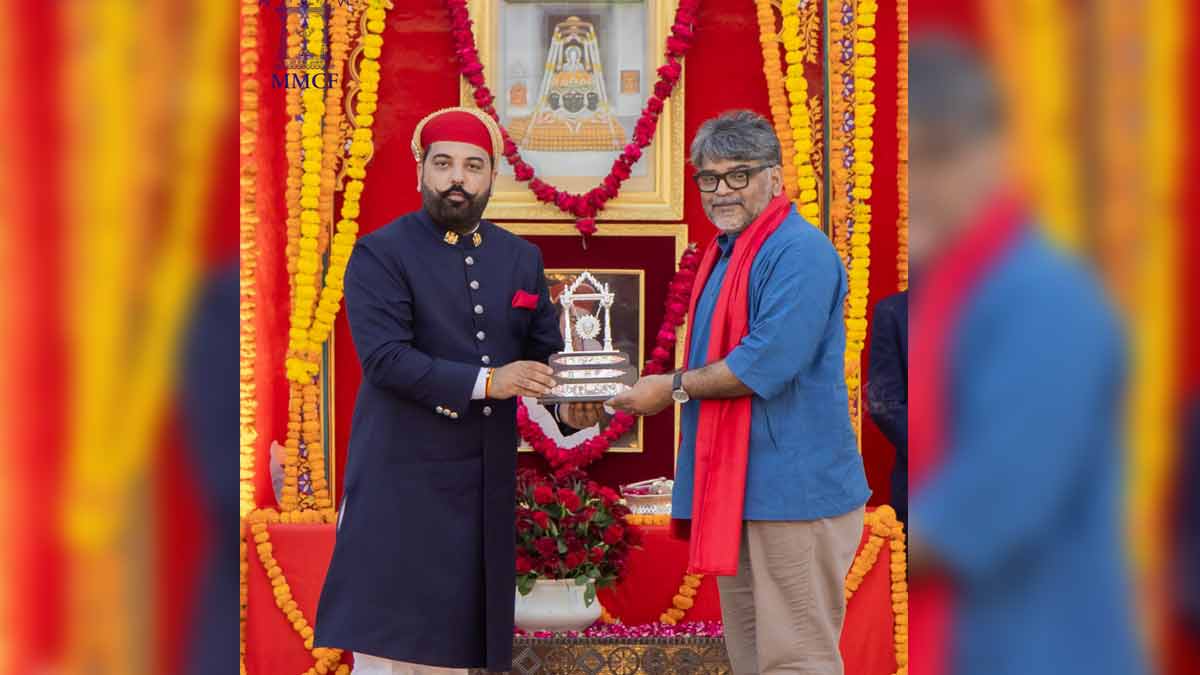
MUMBAI- Kamlesh Singh just turned a lifetime of sharp words into a shiny shield because when journalism wakes up a society, even the Maharana of Mewar wants to pin a medal on it.
The Maharana of Mewar Charitable Foundation (MMCF) conferred its prestigious Haldi Ghati Award on Kamlesh Singh, a senior editor at the India Today Group, during a ceremony in Udaipur on 15 March 2026. The national award, instituted in 1981-82, recognises “work of permanent value that initiates an awakening in society through the medium of journalism.”
Singh, who leads several editorial initiatives including Aaj Tak Radio, the Teen Taal community and The Lallantop, was presented the honour by Lakshyaraj Singh Mewar, Managing Trustee of MMCF. The citation highlighted his three decades of contributions to Indian media, innovations in digital journalism, mentoring young reporters, and his popular podcast persona “Tau” on Teen Taal, which fosters thoughtful public discourse.
The Haldi Ghati Award, named after the historic Battle of Haldighati symbolising valour and resilience, is one of four national awards given annually by MMCF. Past recipients include Tavleen Singh, Piyush Pandey and Raj Chengappa.
Other honourees this year included Padma Vibhushan Pt Hari Prasad Chaurasia, Vedamurti Devvrat Rekhe, Treeman of India Marimuthu Yoganathan, Vir Chakra Capt Rizwan Malik, and US-based researcher Molly Emma Aitken, who received the Colonel James Tod Award for contributions to understanding Mewar’s spirit and values.
In an era where headlines often shout louder than substance, the MMCF quietly reminded everyone that real journalism isn’t about noise, it’s about the quiet, persistent work that stirs society awake, one thoughtful story at a time.







