News Broadcasting
Broadband subscriber market looking up

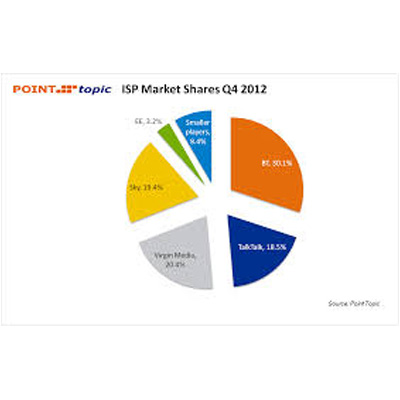
MUMBAI: Seems like a good year in broadband terms. While the number of global broadband subscribers grown 72 per cent in 2002, the republic of Korea, Hong Kong (China) and Canada have topped the list says a report issued by the International Telecommunication Union (ITU).
Fifth in the series of ITU Internet Reports, Birth of Broadband informs that the Republic of Korea leads the way in broadband penetration, with approximately 21 broadband subscribers for every 100 inhabitants. Hong Kong (China) ranks second in the world with nearly 15 broadband subscribers per 100 inhabitants and Canada ranks third with just over 11 broadband subscribers per 100 inhabitants, says a company release. The home users are driving the vast majority of broadband demand in all markets.
According to ITU Head of the Strategy and Policy Unit Dr Tim Kelly, “Broadband is arriving at a time when the revolutionary potential of the Internet has still to be fully tapped. However, while broadband is accelerating the integration of the Internet into our daily lives, it is not a major industry driver in the same way that mobile cellular and the Internet were in the 1990s. It’s an incremental improvement, offering Internet access that is faster, more convenient and cheaper than ever before.”

The release says that the reason for sharp increase in broadband subscribers is the growing demand for faster Internet speeds. The new generation of broadband services competes very effectively with leased lines, which have traditionally served the corporate sector. In fact, in some markets, broadband can be up to 111 times cheaper, per megabyte per second, than today’s private network options.
The cost savings alone suggest a major incentive for business and government users to shift to broadband. With its increased speed and efficiency, broadband also offers an excellent infrastructure for e-government and e-education services, such as online driver’s license renewals, electronic tax filing, and online library and learning resources.
According to Kelly, “Approximately one in every 10 Internet subscribers worldwide, or just over 5 percent of the total installed base of fixed lines worldwide, has a dedicated broadband connection. However, many more people share the benefits of high-speed Internet access through a local area network (LAN) at work or at school. In the Republic of Korea, which is approximately three years ahead of the global average in converting Internet users to broadband, broadband subscribers represent 94 percent of total Internet subscribers. By year-end 2002, broadband services were commercially available in approximately 82 out of 200 economies worldwide.”
In the United States, broadband is likely to reach the 25 percent penetration mark more quickly than either PCs or mobile telephones have in the past. The vast majority of broadband users today are in the developed world. Since the cost of the service becomes cheaper, some developing countries could also be able to use wireless broadband technology to leapfrog ahead of the traditional wireline infrastructure. Instead of waiting for wireline services, which can be costly to deploy, they can potentially use broadband to develop an integrated voice, data and video network.
Looking at the current status, it is likely that over 15 per cent of households worldwide to have a broadband connection by 2008, forecasts technology research firm ABI. According to the reports, the need for secure, speedy, and on-demand video, voice, and data – the “triple play” – has propelled cable MSOs (multiple service operators), telcos, and the CE (consumer electronics) industry to develop and distribute the means to transmit this information to users worldwide.
It is predicted that the highest share will be coming from North America and the second highest share from Western Europe, followed by Asia-Pacific and the rest of the world, says a ABI release. ABI has also found that while cable broadband is leading in the U.S., worldwide DSL (digital subscriber line) market share as of 2002 is around 60 per cent, whereas cable broadband holds about 40 per cent of the market.
While worldwide digital cable households made up less than nine per cent of the cable households in 2002, this share will grow continuously to reach just over 20 per cent by 2008. However, this will represent only seven per cent of all the worldwide households as of 2008. The DBS (digital broadcast satellite) share of worldwide households will be over 12 per cent in the year 2008, says a
Video-over-DSL will be the new kid on the block, with U.S. ILECs (incumbent local exchange carriers) and CLECs (competitive local exchange carriers) charging ahead with aggressive deployments to fend off cable’s triple play offering. Even with higher growth rates, North American household video-over-DSL penetration rates will be trailing those of the Asia-Pacific region by 2 million, in the year 2008.






News Broadcasting
WITT Summit 2026 concludes in New Delhi
Babar Azam’s comical diving attempt goes viral as league introduces anti-dew measures.
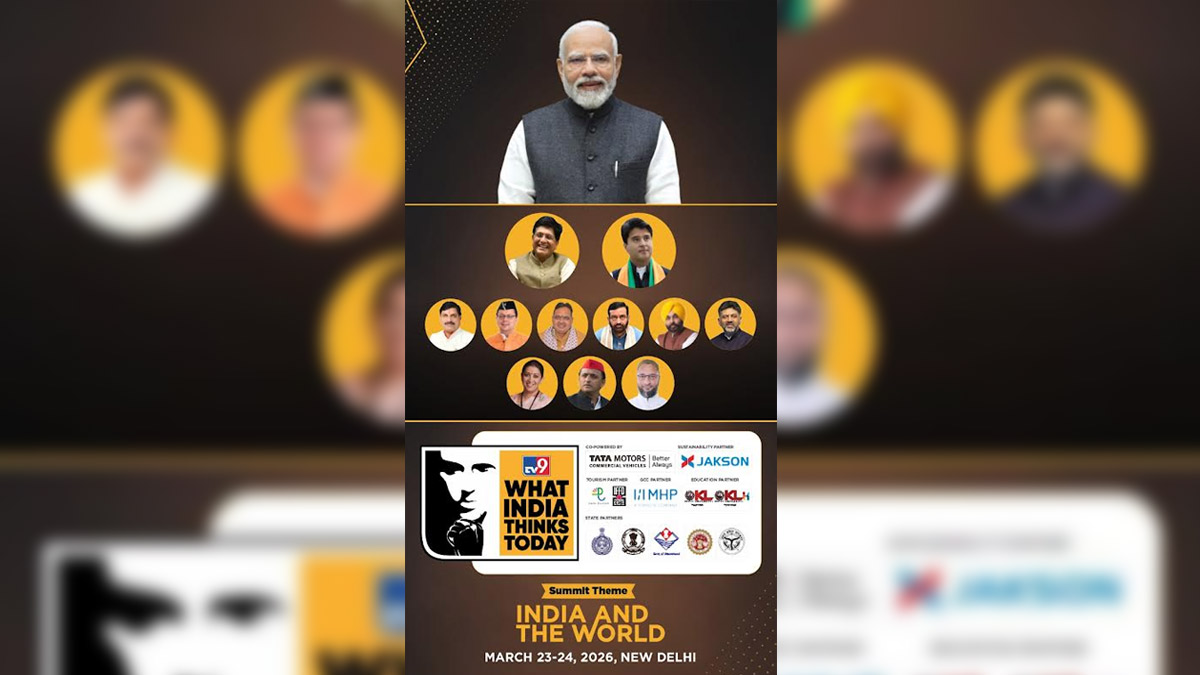
MUMBAI: The WITT Summit just wrapped up with enough big ideas to fill a policy playbook because when India’s leaders, thinkers and icons gather under one roof, even the conversations hit sixes. The eighth edition of TV9 Network’s flagship What India Thinks Today (WITT) Summit 2026 concluded on Saturday after two days of dynamic discussions at its New Delhi venue. India’s largest multi-domain public policy and culture summit brought together political leaders, policymakers, sports icons, artists and technology innovators to examine the forces shaping contemporary India and its global standing.
Prime minister Narendra Modi delivered the keynote address on the theme “India and the World” for the third consecutive year. In a wide-ranging speech, he addressed the ongoing conflict in West Asia, calling for restraint and compassion while highlighting India’s continued development trajectory despite global turmoil.
The summit featured candid conversations with state leaders. Telangana Chief Minister A. Revanth Reddy articulated a people-first governance model and contrasted it with other development approaches. Madhya Pradesh Chief Minister Mohan Yadav declared that Left-wing extremism had been effectively eliminated in his state and highlighted preparations for the upcoming Kumbh Mela. Punjab Chief Minister Bhagwant Mann defended his government’s record, citing the closure of 19 toll plazas and creation of the Sadak Suraksha Force. Karnataka Deputy Chief Minister D.K. Shivakumar expressed confidence in Congress prospects in Assam and addressed recent allegations against him.
On geopolitics and national security, Union Minister Jyotiraditya Scindia outlined India’s ambition to become a builder of trusted digital infrastructure for the world, citing the rapid 5G rollout and village-level 4G connectivity.
Cricket received significant attention. Former India captain Sourav Ganguly praised player freedom and trust as hallmarks of great leadership and named MS Dhoni as the greatest captain due to his World Cup successes. India women’s team bowling coach Aavishkar Salvi credited the BCCI and Women’s Premier League for building a pipeline of world-class talent behind the team’s recent ODI World Cup triumph.
The summit also hosted the inaugural AI² Awards 2026, celebrating the convergence of human creativity and machine intelligence in storytelling and content creation. Poet and kathavachak Kumar Vishwas delivered a nuanced take on India’s concept of Dharma and criticised the recent arrest of an 80-year-old Shankaracharya. Veteran lyricist Sameer Anjaan and storyteller Neelesh Misra reflected on changing music trends and artistic responsibility in the wake of a recent controversy involving Nora Fatehi.
In a country where conversations often run as deep as the Ganges, the WITT Summit proved once again that when leaders, thinkers and storytellers come together, the real winner is public discourse lively, layered and refreshingly unafraid to tackle the big questions shaping India’s tomorrow.








