Cable TV
Broadband plan to clear way for telcos’ entry into cable?


NEW DELHI: A comprehensive broadband policy, which is scheduled to be introduced in the Parliament during this session, but is still undergoing changes, controversially proposes that telecom companies/service providers could use cable networks as their franchisees to provide all types of services.
It is not known whether the department of telecommunication would include this suggestion in the policy paper that is finally tabled in Parliament by IT and telecom minister Dayanidhi Maran.
The policy paper also rejects a suggestion by the telecom and broadcast and cable regulator that the annual licence fee of a KU-band DTH service be clipped by at least two per cent.
Contacted by indiantelevision.com yesterday, Maran, who’s away to Chennai, refused to confirm or deny anything saying, “Once I am in Delhi, we could possibly talk on the issue (broadband policy).”

The particular clause on telecom companies vis-à-vis cable networks has the potential of causing an upheaval in the telecom and cable industry as it might give telecom companies instant access to over 45 million cable homes, while ruling out a vice-versa-type of situation.
Hypothetically speaking, this could mean that if an alliance happens, Reliance’s proposed broadband network can use the infrastructure of a Siti Cable to tap into cable homes. It could also mean that a Bharti or a Hutch (telecom service providers) could tie-up with a Hathway or INCablenet for providing all types of services under an umbrella structure when a unified licensing regime comes about.
The policy paper also rejects an open sky policy for V-Sat (very small aperture terminal) and DTH services, but suggests that a DTH service provider could give Internet services once it has an ISP (Internet service provider) license and provide a two-way path once it obtains a V-Sat license.
Contrary to expectations, no reduction in the spectrum charges have been suggested, but there is a proposal to delicence frequencies between 2.4 and 2.48 Ghz, which could be used for MMDS (multi-point multi-distribution services). Frequencies above 5 Ghz, used for wireless transmission purposes also, could be delicenced at a later stage.
There are some other suggestions too that are likely to benefit V-Sat operators.
The focus of the paper, which is more of a vision statement than a policy guideline, lays emphasis on DSL and says that state-controlled Bharat Sanchar Nigam and Mahanagar Telephone Nigam Ltd would promote DSL in a big way.
What is DSL? When you connect to the Internet, you might connect through a regular modem, through a local-area network connection in your office, through a cable modem or through a digital subscriber line (DSL) connection. DSL is a very high-speed connection that uses the same wires as a regular telephone line.
A common configuration of DSL allows downloads at speeds of up to 1.544 megabits (not megabytes) per second, and uploads at speeds of 128 kilobits per second. This arrangement is called ADSL or asymmetric digital subscriber line.
However, there is unanimity on the broadband subscriber target, which has been pegged at 3 million by 2005, 9 million by 2007 and 20 million by 2010.







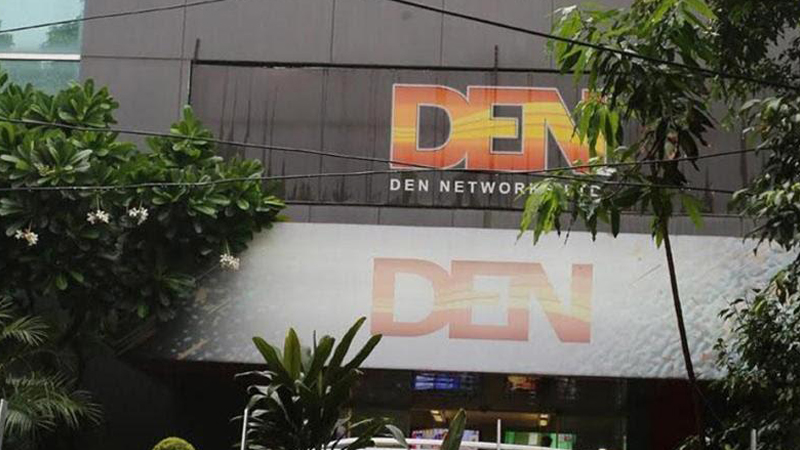
MUMBAI: When margins wobble, liquidity talks and in Q3 FY25-26, cash did most of the talking. Den Networks Limited closed the December quarter with consolidated revenue of Rs.251 crore, marginally higher than the previous quarter but down 4 per cent year-on-year, even as profitability stayed resilient on the back of strong cash reserves and disciplined cost control.
Subscription income softened to Rs.98 crore, slipping 3 per cent sequentially and 14 per cent from last year, while placement and marketing income offered some cheer, rising 15 per cent quarter-on-quarter to Rs.148 crore. Total costs climbed faster than revenue, up 7 per cent QoQ to Rs.238 crore, driven largely by higher content costs and operating expenses. As a result, EBITDA dropped sharply to Rs.13 crore from Rs.19 crore in Q2 and Rs.28 crore a year ago, pulling margins down to 5 per cent.
Yet, the bottom line refused to blink. Profit after tax stood at Rs.40 crore, up 15 per cent sequentially and only marginally lower than last year’s Rs.42 crore. A healthy Rs.57 crore in other income helped cushion operating pressure, keeping profit before tax at Rs.48 crore, broadly stable quarter-on-quarter despite the tougher cost environment.
The real headline-grabber, however, sits on the balance sheet. The company remains debt-free, with cash and cash equivalents swelling to Rs.3,279 crore as of December 31, 2025. Net worth rose to Rs.3,748 crore, while online collections accounted for 97 per cent of total receipts, underscoring strong cash discipline across operations, including subsidiaries.
In short, while Q3 showed signs of operating strain, the financial backbone remains solid. With zero gross debt, steady profits and a formidable cash war chest, the company enters the next quarter with flexibility firmly on its side proving that in uncertain markets, balance sheet strength can be the best growth strategy.






