Hindi
Bollywood comes out in support of the LGBT community


MUMBAI: Everyone was in for a shock yesterday when the Supreme Court ruled that there was no constitutional room for change in Section 377 of the Indian Penal Code that holds same gender sexual relationship an offence. The Bollywood fraternity, which in the age of social media has become really vocal, especially when it comes to supporting the social causes, even this time came out to criticise the SC’s ruling. Many people from the industry started tweeting as soon as the news broke.
Section 377 of IPC makes gay sex an offence punishable with up to life imprisonment, said a bench of justices GS Singhvi and SJ Mukhopadhaya while overruling an earlier verdict by the High Court that had decriminalised same sex relationship.

Filmmaker Karan Johar tweeted: “#Sec377 is not just a violation of human rights but also makes democracy seem like a mirage in our country….”. This was even retweeted by fashion designer Manish Malhotra.
Actor Adil Hussain wrote: “Ramdev and Judiciary have forgotten the Role of Shikhandi and Brihannala in Mahabharata.Wonder what Values they are talking about!! #Sec377.”
Filmmaker Farhan Akhtar, who has been initiating many movements of late online, was upset with the ruling as well, but expressed himself in just one-liner, “The Supreme Court got it wrong today.”
Actor Richa Chadda, who has been known for her fiery and strong characters, tweeted, “The Supreme Court criminalises love, again. Sad day.”
Kabir Bedi wrote: “It’s a sad day when the Supreme Court of India does not uphold the democratic rights of sexual minorities. #Sec377 #LGBT”. He continued, “The State should stay out of the bedrooms of consenting adults. SC upholding regressive law seems bigoted. #Sec377 #LGBT.”
Even actor Anushka Sharma, didn’t hesitate to present her disappointment. She tweeted, “So disappointed with the SC (supreme court) verdict. Freedom is such a deceptive term. Rights are an ambiguous mystery.”
Singer-actor Shruti Haasan wrote, “11.12.13 a day that reminds us how blatant regressing and oppressing someone has become – plan b move bedroom to another planet and time… (It is) frightening how someone else decides how when and who you should love – basically freedom of choice isn’t legal anymore.”







Hindi
Zee5 and Applause Entertainment team up for whodunnit ‘Everybody Loves Sohrab Handa’
Rajat Kapoor directs star-studded murder mystery streaming from 10 April.
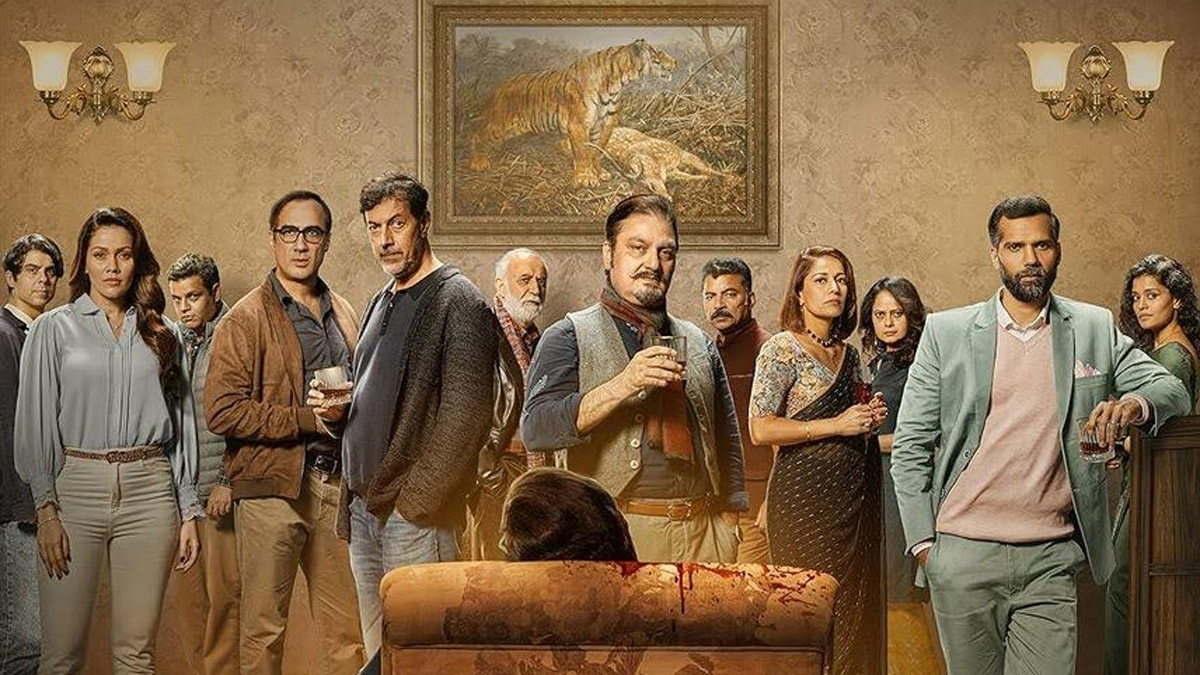
MUMBAI: Zee5 is serving up another killer collaboration and this time, the murder mystery comes with a generous side of dark humour and family dysfunction. The streaming platform has partnered with Applause Entertainment and Mithya Talkies to bring Everybody Loves Sohrab Handa, a fresh, twisted whodunnit written and directed by acclaimed filmmaker and actor Rajat Kapoor. The film will stream exclusively on Hindi Zee5 from 10 April.
The movie reimagines the classic murder mystery genre with a contemporary, darkly comic edge. It revolves around a group of friends and family who smile, drink, and celebrate together until the silence snaps and long-buried secrets spill out. The stellar ensemble cast includes Vinay Pathak, Ranvir Shorey, Waluscha De Sousa, Saurabh Shukla, Chandrachoor Rai, Neil Bhoopalam, Koel Purie, Palomi Ghosh, and Rajat Kapoor himself.
This latest offering continues the successful partnership between Zee5 and Applause Entertainment, which has previously delivered diverse hits such as Mithya, Bloody Brothers, and Jab Khuli Kitaab.
&TV Business Head of hindi Zee5 and chief channel officer Kaveri Das said, “Our collaboration with Applause Entertainment has consistently delivered distinct, high-impact storytelling. Everybody Loves Sohrab Handa is a natural progression, reinforcing our focus on genre-led content with a compelling whodunnit premise and a strong ensemble cast.”
Applause Entertainment business head for movies Sunil Chainani added, “This film adds yet another compelling layer to our slate with Rajat Kapoor’s unmistakable voice.”
Rajat Kapoor shared, “What interested me was not just the mechanics of a whodunnit, but the emotional violence that precedes physical violence. These are people who smile at each other, but there’s so much that is not said.”
The film promises razor-sharp writing, layered performances, and simmering tension, inviting viewers not just to solve the crime but to unravel the complex relationships at its heart.
If you love a good murder mystery served with wit and emotional depth, Everybody Loves Sohrab Handa looks set to be your next addictive watch. Mark your calendars, the whodunnit drops on Hindi Zee5 from 10 April.






