News Broadcasting
Bollywood beyond the Indian shores


MUMBAI: In an endeavor to initiate cross over films and collaborations between the Indian film fraternity and the United Kingdom and Australia, Frames 2004, today had two sessions dedicated to the possibilities and opportunities between the Indian and the UK and Australian film industries to exploit and mutually benefit from each others untapped resources.
UK and India have been synergising for many years now, but the magnitude of business still seems very limited and restricted. In anticipation of a bi-lateral agreement with the UK, the UK Film council (the government’s strategic body for film) discussed integral issues involving raising finance, legal structures, distribution, sales and marketing in the UK market.
The panelists included Ken Hay, CEO, EM Media, Mike Runagall from Pathe Pictures, Colin Brown, CEO Cinesite and Pete Buckingham from the UK Film Council, who showcased their respective studios, post production companies and discussed the formalities and legalities of film making and its distribution in detail.

What do audiences in UK expect in a film?
Firstly, it was news to Indian producers that they must essentially aim at targeting the young and the up market, as they are the sole movie going population. Secondly it was interesting to note that the UK audience also extends great emphasis on music similar to the Indian audience and it features as an important factor in the decision to go and see a film.
Thirdly, it was stated that genre of a movie was one of the critical success factors in the making or marring of a film. UK is also very particular about the casting of a film, which makes known and established actors an essential ingredient in the success of a movie.
Business with Australia on the other hand, already seems to have kick started with the visual effects in Dil Chahta Hai and Janasheen, been provided by Australian counterparts. Apart from business prospects the Australian panel including George Vasildas from In Motion locations, John Winter from Wintertime Films, Steve Cooper from Beeps postproduction and Shireen Ardeshir from IDP education touched upon the education opportunities available in film and TV in Australia, which also offers industry specific courses.
John Winter discussed the various co-productions producers could look at, they being an unofficial production, official production, MOU and a one off MOU.
The session also highlighted the advantages of cross over films, they being:
· More choice for viewers
· Australia making movies that they could not otherwise
· Increase in employment
· Interchange in acting personnel and actors
· Strengthening of diplomatic ties.
Recently, there has been a lot of talk about the digital intermediating process, and that costs in India were much lower in comparison to the latter, and therefore coming to a solution Winter urged the producers to look at a mutually beneficial ratio where the Indian capability and the Australian expertise came together to create an efficient and cost effective means in the industry.
Both UK and Australia have a big market, and the western world is becoming more and more conscious and aware of Asian and Indian Cinema leaving Indian producers a gamut of opportunities to explore and take Indian cinema to a different level.






News Broadcasting
CNN-News18 to host Fury in the Gulf conclave on West Asia crisis
Three-hour summit to unpack geopolitical fallout and impact on India
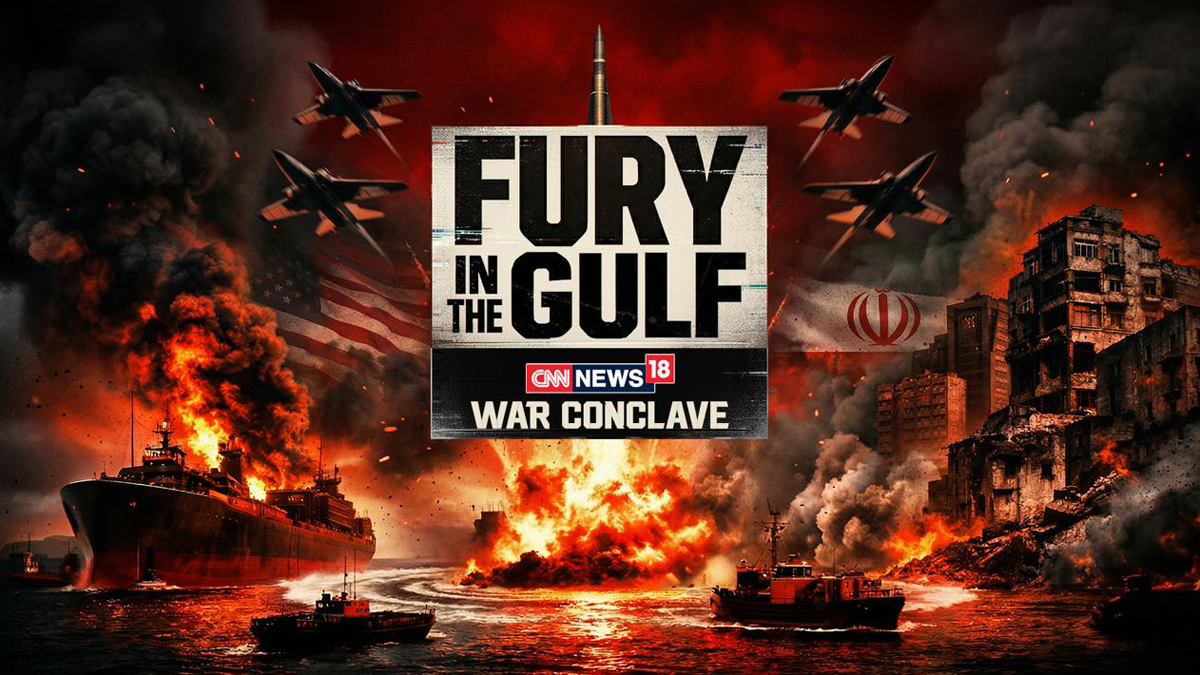
MUMBAI: CNN-News18 is set to host a special three-hour broadcast, Fury in the Gulf – War Conclave, on April 7, aiming to decode the escalating West Asia crisis and its far-reaching implications for India.
Scheduled from 4:00 PM to 7:00 PM, the conclave comes at a time when tensions between Iran and the United States are reshaping global geopolitics and triggering economic uncertainty. With India’s deep energy ties, trade links and large diaspora in the Gulf, the developments carry significant domestic relevance.
Built around the theme ‘Conflict, Consequences, and The Future,’ the programme will feature six curated sessions combining one-on-one interviews and panel discussions. The focus is to cut through the clutter and offer viewers a clearer understanding of the fast-evolving situation.
Key sessions include ‘Diplomacy in Times of War’ featuring Shashi Tharoor, and ‘World After the Iran Conflict’ with voices such as Ram Madhav, Reuven Azar, representatives from the European Union and the Iranian Deputy Envoy. Another session titled ‘Another Dunkirk?’ will bring together K. J. S. Dhillon and Jitin Prasada among others.
CNN-News18 editorial affairs director Rahul Shivshankar said, “In times of war, clarity becomes the most powerful tool. Fury in the Gulf – War Conclave brings together credible voices to address the questions and confusion that arise amid an overwhelming influx of information.”
He added that the initiative is aimed at delivering “facts, perspective, and insight” at a time when misinformation can easily cloud public understanding.
Echoing the sentiment, CNN-News18 CEO– English and business news Smriti Mehra said the conflict marks a defining global moment, with consequences that extend well beyond the region. She noted that the conclave seeks to present the crisis with “depth, nuance and responsibility” so audiences can better grasp its real-world impact.
As geopolitical tensions continue to dominate headlines, the conclave positions itself as an attempt to bring order to the noise, offering viewers a structured, insight-led look at a complex and rapidly shifting global situation.






