Hindi
Bodyguard: A Salman Khan film all the way

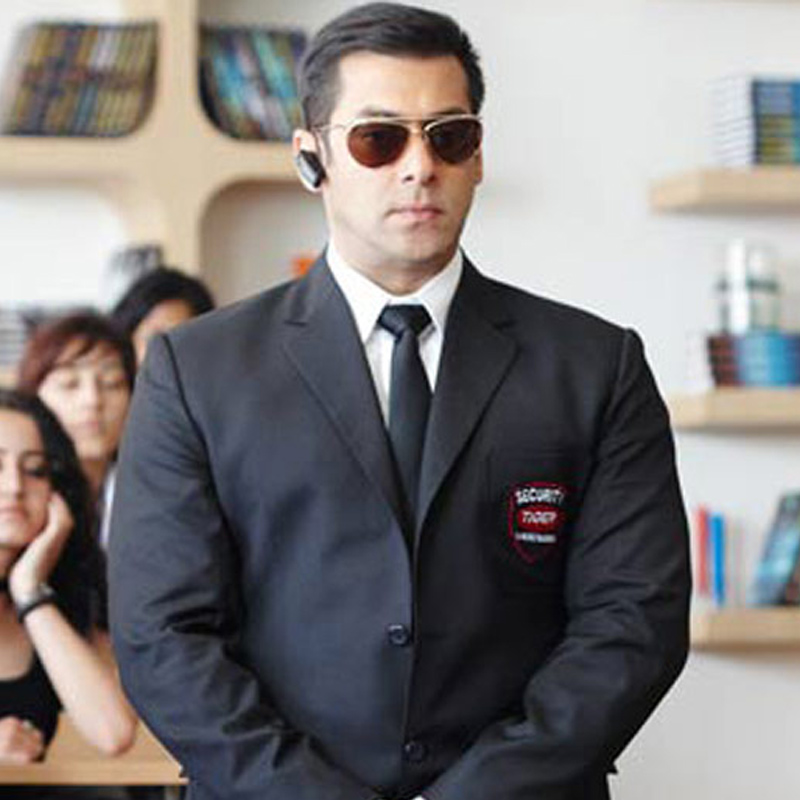
Mumbai : Atul Agnihotri‘s Bodyguard is like a sequel to recent successful Salman Khan movies and, in keeping with the trend of sequels, can be called Super Human 4; the film relies solely on Salman Khan and the action choreographed around him.
 Like all film heroes, he can take on a dozen or more goons and has made a reputation out of it; he can fight like a robot. The film has been adapted from the Tamil film Kaavalan that was also made in other South Indian languages. Like many South Indian films, the story swings between feudal and modern era.
Raj Babbar is some sort of feudal lord whose word is the law and justice in his town. He crosses paths with a flesh trade gang run by Aditya Panscholi, Mahesh Manjrekar, Chetan Hansraj and their goons who sell young girls abroad.Wanting to get even with Babbar, they decide to kidnap his daughter, Kareena Kapoor.
Enter Salman Khan, a bodyguard deployed to protect her while she goes to hostel to finish her studies along with her friend and confidante, Hazel Keech. His boss Sharat Saxena assures Babbar that Salman is worth an army of guards and can take on any number of villains which is amply demonstrated by Salman Khan on the onset when he rescues the girls meant for export at Raj Babbar‘s behest.

Kareena Kapoor has no clue why she needs a bodyguard. The arrangement does not quite go well with her, whose idea of campus life is not one where a bodyguard lingers around all the time, be it in a class room or canteen. She plots to distract Khan by assuming a false name and starting to call him on his cell phone, thus luring him into romance.
That is until an attempt is made to kidnap her from a disco. Seeing Salman Khan‘s courage as he saves her from a horde of attackers, she instantly falls in love with him. That accounts for the romance part of the film as Kareena Kapoor loves Salman Khan, who in turn loves Chhaya, which is the identity Kareena assumed when making the calls.
As Salman Khan vanquishes all the bad guys and thinks that he will go back to his phone lover Chhaya, he is separated from Kareena whose friend Hazel Keech ends up marrying him as Chhaya till she conveniently dies of some ‘bimari‘ leaving behind a stereotypical bespectacled child to bring together the lovers, Salman and Kareena Kapoor, who too thought it was prudent to stay single.
Bodyguard is totally a script of convenience – the kind dished out in the 1950s and ‘60s – where everything falls in place as if on cue. There is nothing original or novel that one has not seen before. The direction is ordinary. Music is generally mediocre; a love story merits a much better score. Dialogue is routine and the comedy lacks humour. Photography is good.
Performance-wise, it is a Salman Khan film all the way as he alternates between spreading his charm and flexing his muscles. Kareena Kapoor is good, doing better in emotional scenes. Hazel Keech makes a single expression last throughout the film. Raj Babbar carries himself well while Rajat Rawail‘s attempts at comedy falls flat. The bad men have little to do except emerge suddenly for a few actions scenes and they are adequate.
The film is a run-of-the-mill story with its saviours being Salman Khan‘s current popularity coupled with Eid and Ganpati holiday release and the ensuing weekend which gives it five days of free run to make the most of its about 2,700 screen release before it runs out of steam.







Hindi
Remembering Gyan Sahay, the lens behind film, television and advertising
From a puppet rabbit selling poppadums to Hindi cinema, he framed it all.
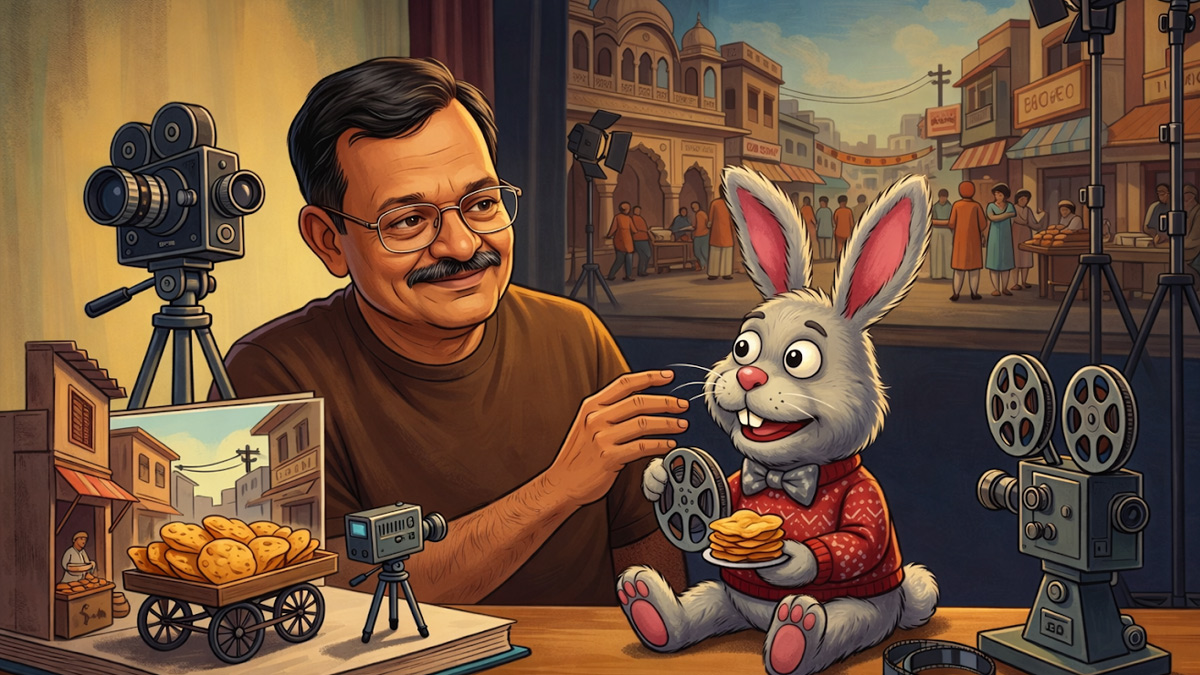
MUMBAI: There are careers, and then there are canvases. Gyan Sahay, the veteran cinematographer, director, and producer who passed away on 10 March 2026 in Mumbai, had one of the latter. Over several decades in the Indian film and television industry, he turned lenses, lights, and the occasional puppet rabbit into something approaching art.
A graduate of the Film and Television Institute of India (FTII) in Pune, Sahay built his reputation as a director of photography across a career that stretched from the early 1970s all the way to the digital age. He was the kind of craftsman who understood that a well-composed shot is not merely a technical achievement but a quiet act of storytelling.
For most Indians of a certain age, however, Sahay will forever be the man behind the rabbit. His direction of the iconic long-running television commercial for Lijjat Papad, featuring its now-legendary puppet bunny, gave the country one of its most cheerfully persistent advertising images. It was the sort of work that sneaks into the national subconscious and takes up permanent residence.
His big-screen credits as cinematographer include Anokhi Pehchan (1972), Pagli (1974), Pas de Deux (1981), and Hum Farishte Nahin (1988). In 1999, he stepped behind a different kind of camera altogether, making his directorial debut with Sar Ankhon Par, a drama that featured Vikas Bhalla and Shruti Ulfat, with a cameo by Shah Rukh Khan for good measure.
On television, Sahay was particularly prized for his command of multi-camera production setups, a skill that made him a go-to technician for large-scale shows and reality programmes. In an industry that has never been especially patient with complexity, he was the calm hand on the rig.
In later life, Sahay turned teacher. He participated regularly in masterclasses and Digi-Talks, often hosted by organisations such as Bharatiya Chitra Sadhna, sharing hard-won wisdom on cinematography, the comedy of timing in a shot, and the sweeping changes brought by the shift from celluloid to digital. He was also said to have been involved in a project concerning a biographical film on Infosys co-founder N.R. Narayana Murthy.
Tributes from the film industry poured in following the news of his passing, with colleagues remembering him as a senior cameraman who served as a rare bridge between two entirely different eras of Indian cinema. That is, perhaps, the finest thing one can say of any craftsman: he kept up, and he brought others along with him.







