News Broadcasting
BIS puts off decision on STBs for DTH


NEW DELHI: If the availability of set-top boxes (STBs) is one of the speed breakers to a smooth passage of implementation of conditional access system in the country, the same issue has become contentious in the case of KU-band direct-to-home television service too.
After a meeting on specifications of STBs for DTH yesterday here at the Bureau of Indian Standards (BIS), it seems BIS would not like to take a definite stand and is likely to put the ball back in the information and broadcasting ministry’s court to take a final shot at the issue.
The task force of the BIS, set up to discuss the specifications of the STBs for DTH, yesterday failed to arrive at any sort of consensus as the Star/Space TV representative maintained that interoperability is not a workable model, while the others, including the Subhash Chandra-promoted ASC Enterprises, opined it is technically possible.

According to sources in the BIS, it has now been decided to collate the feedback on STBs for a month, including on whether interoperability is possible or not, from all stakeholders and pass it on to the ministry for “guidance and advice.”
The dilemma of BIS is clear: it cannot come out in the open and say outright that interoperability or open architecture is not possible. Because it is. What it does is that the costs of STBs go up and, more importantly, there is no guarantee of the boxes being hack-proof.
Yesterday’s meeting was attended, amongst others, by Star India, NDS (a News Corp company that has the technology for DTH and even CAS), Doordarshan, ASC Enterprises, CETMA and Siti Cable.
Earlier this month, BIS had decided to form a task force to come up with recommendations on the specifications of set-top boxes for DTH. Star then also had said that interoperability, as suggested in the government guidelines, is not a workable model.
What is making the work of task force – that has to come up with its recommendations for the main committee of the BIS – difficult is the fact that BIS’ viewpoint was that it has to operate within the broad framework of the policy guidelines which states that for KU-band DTH service, an open architecture has to be followed.
Star’s stand has been that if in open architecture the government insists upon STB, then it would make the STB expensive and difficult for a would-be service provider to subsidise the boxes as exclusivity and captive consumers would not be assured.
Thomson India and CETMA, the apex body of consumer electronics goods manufacturers in India, supported the stand of Star, said to be represented by the Mumbai-based head of the company’s DTH operations in India. The information and broadcasting ministry had referred to the BIS the issue of specifications for STBs for DTH last year.
What does the government mean by an open architecture? In layman’s language, it means that if a consumer buys a STB for a KU-band DTH service in India, then the STB should be capable of working if the smart card of another DTH service provider is inserted in it. This theory is based on the presumption that there would be several DTH service providers in India, though globally this sector works best with monopoly or at best a duopoly.




News Broadcasting
CNN-News18 to host Fury in the Gulf conclave on West Asia crisis
Three-hour summit to unpack geopolitical fallout and impact on India
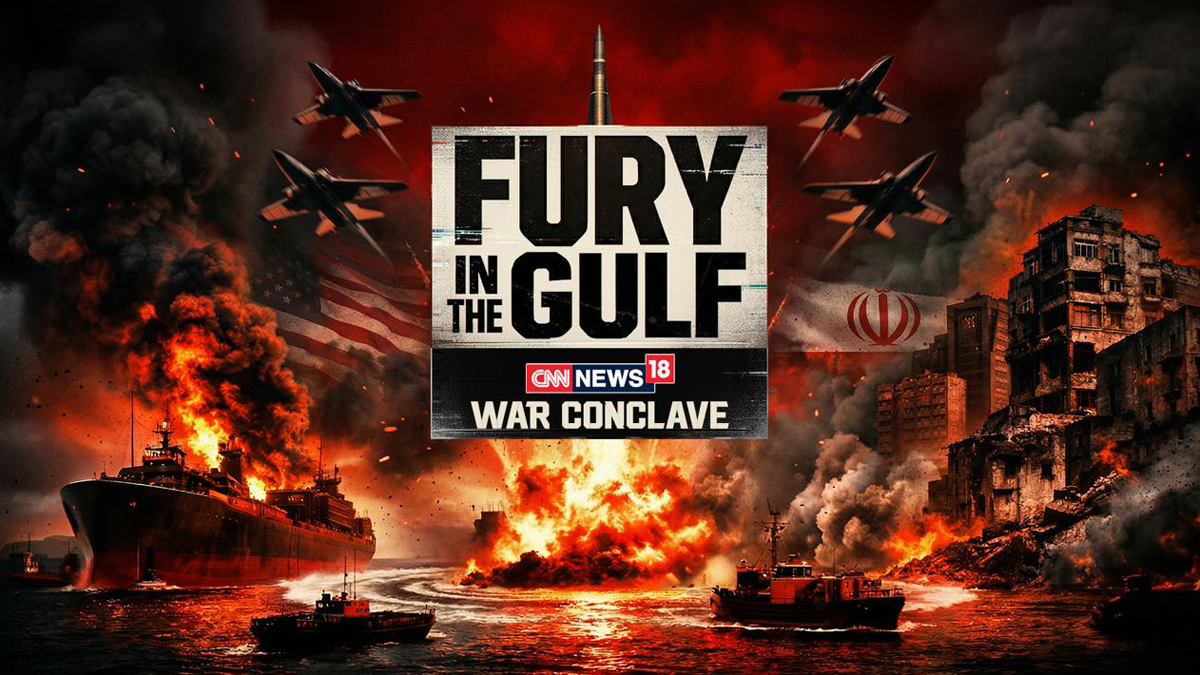
MUMBAI: CNN-News18 is set to host a special three-hour broadcast, Fury in the Gulf – War Conclave, on April 7, aiming to decode the escalating West Asia crisis and its far-reaching implications for India.
Scheduled from 4:00 PM to 7:00 PM, the conclave comes at a time when tensions between Iran and the United States are reshaping global geopolitics and triggering economic uncertainty. With India’s deep energy ties, trade links and large diaspora in the Gulf, the developments carry significant domestic relevance.
Built around the theme ‘Conflict, Consequences, and The Future,’ the programme will feature six curated sessions combining one-on-one interviews and panel discussions. The focus is to cut through the clutter and offer viewers a clearer understanding of the fast-evolving situation.
Key sessions include ‘Diplomacy in Times of War’ featuring Shashi Tharoor, and ‘World After the Iran Conflict’ with voices such as Ram Madhav, Reuven Azar, representatives from the European Union and the Iranian Deputy Envoy. Another session titled ‘Another Dunkirk?’ will bring together K. J. S. Dhillon and Jitin Prasada among others.
CNN-News18 editorial affairs director Rahul Shivshankar said, “In times of war, clarity becomes the most powerful tool. Fury in the Gulf – War Conclave brings together credible voices to address the questions and confusion that arise amid an overwhelming influx of information.”
He added that the initiative is aimed at delivering “facts, perspective, and insight” at a time when misinformation can easily cloud public understanding.
Echoing the sentiment, CNN-News18 CEO– English and business news Smriti Mehra said the conflict marks a defining global moment, with consequences that extend well beyond the region. She noted that the conclave seeks to present the crisis with “depth, nuance and responsibility” so audiences can better grasp its real-world impact.
As geopolitical tensions continue to dominate headlines, the conclave positions itself as an attempt to bring order to the noise, offering viewers a structured, insight-led look at a complex and rapidly shifting global situation.






