I&B Ministry
Big Picture round up: Best time for M&E even as clear policies needed for TV & films


NEW DELHI: This is perhaps the best time for the media and entertainment (M&E) industry as the sector is being seen for the first time as an exporter and major source of foreign investment.
This was the general impression at various sessions of the Big Picture summit organised by the Confederation of Indian Industry (CII), where speakers also said that the promulgation of goods and services tax would be a great help.

However, problems were raised about shortage of screens for the film sector and state governments and the centre were asked to offer whatever help they could to overcome this.
Even as they were assured by Finance Ministry officials that the GST would be an anathema to their woes, the sector – particularly the film sector – appeared skeptic as it had to content with other problems such as piracy, shortage of screens and a lack of good content writers.
In the session on Taxing Times for M&E at which Revenue Special Secretary Rashmi Verma and Member Service Tax and GST V S Krishnan sought to allay fears, Film Federation of India vice president Ravi Kottarakara said the film industry had at one time been the most powerful entertainment medium but had now lost its power despite making more than a thousand films in different languages every year. He said this was because the success rate was just five per cent and the competition from other screens had increased apart from the malaise of piracy and multiple taxation.
The session was moderated by Network 18 advisor to the chairman A P Parigi.
Kottarakara said people tended to forget that 95 per cent of the films failed at the box office and lost money and only remembered films, which had created records. The share of the film industry in M&E has fallen from 60 per cent to 13 per cent, he said.
He also regretted that the film industry was at a crossroads since development in other sectors was at the cost of the film industry and so it was going through one of its worst phases despite going global. In the mind of the government, cinema was akin to sins like lotteries or liquor. Even in Delhi, cinema houses came under the Shops and Establishments Act and not as an art.
Even banks were wary of financing films and the filmmakers had to struggle for finance.
Kottarakara described GST as a double-edged sword and said that assurance was needed that the states would not interfere once the new tax regime came in.
Hinduja Ventures whole time director Ashok Mansukhani said that the media industry exists only on passion. He wondered why service tax was levied on this industry when it was entertaining people and said this appeared unrealistic.
He said that the first multi system operator (MSO) had come in 1965 and taxes came in much later when the government found a new source of earning money.
It was also unrealistic of the government to have digitised 30 million cable television homes in the last two years and was expecting to digitise 70 million homes in less than 15 months. “No other country has ever been able to do this,” Mansukhani said.
Mansukhani wanted GST to be transparent and urged the government to clear transitional problems. “At present there are 24 types of VAT in the country,” he informed.
Ernst and Young partner and markets leader Farokh Balsara called for a speedier decision on greater foreign direct investment (FDI).
Zee Network’s legal expert Avnindra Mohan wanted to know if television was considered a media or a goods industry, considering the way it was treated. “The television industry needs equity and fairness, clarity, and a help in development. But all these are missing,” he lamented.
As an example, Mohan said 50 per cent went into taxes in the direct to home (DTH) industry, 40 per cent into licence fee and only 10 per cent came to the operator.
In comparison, the session on Increasing Exports was more positive as most speakers felt that this was the best time for the industry as the government was looking towards it as an exporter and foreign export earner.
Viacom 18 executive vice president Ferzad Palia said Indian television serials had ample scope to travel overseas but were not available in as many as 140 countries.
Motion Pictures Distribution MD Uday Singh was of the opinion that something had to be done about the low screen density in the country. However, he noted the growth in mobiles and said OTT will spur this growth.
Wizcraft founder Sabbas Joseph said despite his experience of the International Indian Film Academy (IIFA) Awards, he had realised there were some success stories of Indian artistes overseas but no picture of a unified M&E industry. “There is a need for deep introspection and the dependence on the government is a mistake,” he voiced.
In a third session on regional cinema conducted by Delhi film critic Shubhra Gupta, the filmmakers were unanimous that regional cinema contained the heart and soul of the country’s culture but that Doordarshan and other channels failed to encourage this.
Ashoke Vishwanathan of Kolkata said cinema had gone global but had not reached other parts of the country. He wanted an educated National Film Policy. He was seconded by Kannada filmmaker P Seshadhri who said filmmakers had to act as entrepreneurs since there were few distributors for takers of serious regional cinema.
Assam State Film Finance and Development Corporation chairperson Bobbeeta Sharma said the state government was now helping the industry in the state. She wondered why Doordarshan was not lending a helping hand.
Drishyam Films CEO Shiladitya Bora related how the attempt was to depend less on the large screen and so made films that appealed to all kinds of audiences.





I&B Ministry
Digital radio, D2M tech set to reshape broadcasting and public messaging
Govt pushes next-gen delivery while TRAI tightens grip on spam ecosystem
NEW DELHI: India’s broadcasting and telecom landscape is undergoing a quiet but significant upgrade, with digital radio and Direct-to-Mobile (D2M) technologies emerging as powerful tools for mass communication, while regulators step up efforts to tackle spam calls.
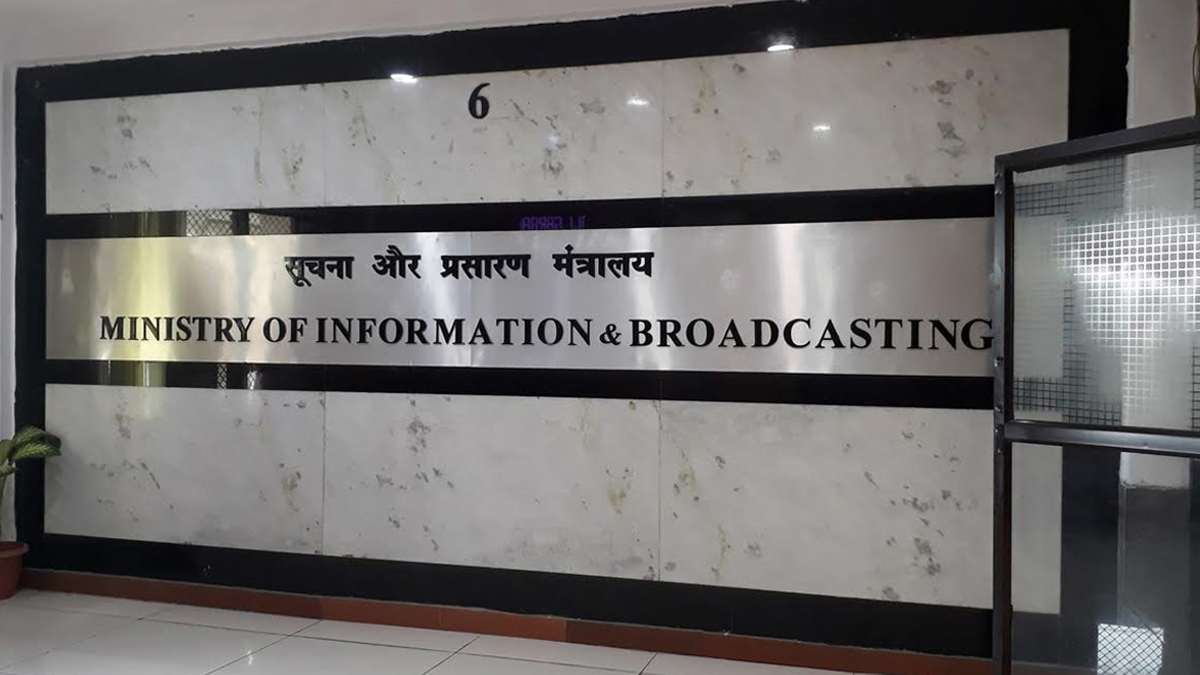
According to the Ministry of Information and Broadcasting, digital radio and D2M are poised to transform how content reaches audiences by making more efficient use of spectrum. In simple terms, multiple channels can now be delivered over a single frequency, opening the door to a wider range of free-to-air content.
D2M technology takes this a step further by enabling video, audio and data to be broadcast directly to mobile handsets without relying on SIM cards or mobile data. The result is a resilient and cost-effective data pipe that can deliver everything from entertainment and education to critical emergency alerts, even in low-connectivity scenarios.
At the same time, the Telecom Regulatory Authority of India is tightening its grip on unsolicited commercial communication, better known as spam calls. The regulator has deployed a distributed ledger technology platform to bring transparency and accountability into the system.
Through this blockchain-based setup, consumers can register their preferences on receiving promotional messages, while businesses and telemarketers must also sign up and operate within defined rules. The platform also includes a complaint mechanism that allows users to report spam, with complaints shared across telecom operators for coordinated action.
The government’s broader push is being supported by infrastructure upgrades under the Broadcasting Infrastructure and Network Development scheme. Implemented through Prasar Bharati, the initiative focuses on modernising networks such as Akashvani and Doordarshan, including digitisation and adoption of next-generation broadcast equipment.
In a written reply in the Lok Sabha, Ministry of Information and Broadcasting minister of state for information and broadcasting L. Murugan said these steps are part of a larger effort to promote emerging technologies and strengthen the country’s broadcasting backbone. The response came to a query raised by member of Parliament Rao Rajendra Singh.
Together, these developments point to a dual-track strategy: expanding access to reliable, low-cost content while cleaning up the communication ecosystem. As digital pipes get smarter and spam filters sharper, India’s airwaves may soon feel a lot less noisy and far more useful.






