GECs
Big Magic: Carving a niche for itself


MUMBAI: From comical line up to festive specials and blockbuster films, it is a channel which tags itself as the one stop destination for humour. Big Magic, initially launched in Uttar Pradesh in 2011 but spread its wings as it gained popularity in the Hindi speaking belt, boasts of creating clutter breaking and fresh content for the viewers in the humour space.
In the general entertainment channel (GEC) space, it might be a new entrant but has been able to make inroads through its popular shows like Har Mushkil ka Hal and Akbar Birbal. So much so, that in week 45 of TAM TV ratings, the channel recorded a growth of 22 per cent.

So what has helped the channel achieve these heights? It is its wide variety of three hours of original programming. From India’s first historical comedy Akbar Birbal to Uff! Yeh Naadaniyaan, from Ajab Gajab Ghar Jamai to Mahi Sagar and Raavi, it fulfils the entertainment needs of the entire family.
And to further strengthen its primetime band, the channel is set to launch Bal Gopal Kare Dhamaal, pegged on the unique equation between a common man and God in modern settings. It is slated to go on-air from 22 December, five days a week at 8.30 pm.
The new show aims at re-creating the Arjun and Krishna equation from the Mahabharat. Says the channel’s creative director Uditanshu Mehta, “The HSM is skewed towards religion, devotion and festivities and with this show, we will cover all these, along with a dash of humour in it. It will offer audiences a truly engaging watch.”
Mehta reveals that the channel does an extensive research on a regular basis as it is very critical in every business. Two months ago, the channel head met to discuss the research insights on what the audience is thinking. The research is either done by the channel itself or by the creative agency, Grey Worldwide India, and the media agency MEC.
“Faith is a sure shot way of attracting audiences like festivals are. We research through CHV’s, focused group discussions and extensive market visits to understand the pulse of the audience and their entertainment preferences,” elaborates Mehta.
With Baal Gopal… the channel feels its entire primetime band will be complete. Mehta states that the story is based in Allahabad and teaches life’s simple lessons like karma. The show will be marketed through a 360 degree multi-media engagement plan, which will cover television, print, radio, cinemas, retail touch-points, outdoor and digital. Also extensive on-ground connect in the HSM will be made. “We will focus spends in our core markets of UP, MP, Rajasthan and Punjab,” says Mehta.
Mehta feels that comedy as a genre has really picked up in the recent past because of various innovations across channels. “Overall contribution to GRP’s is coming from genres beyond soaps and reality. Comedy is an opportunity, which sees lesser clutter and hence an opportunity in this segment is challenging. For us, we want to offer audiences a destination for rejuvenation,” he says.
In recent months, the channel has fortified its position across the HSM spreading laughter to over 85 million Indian households. It delivers a 10 per cent unduplicated incremental reach across the market, when compared to the top six Hindi GECs.
Moreover, the channel has demonstrated a 122 per cent viewership growth over the past six months. The channel’s Time Spent per Viewing (TSV) averages at around 70 minutes. Mehta says, “We want to take this up gradually. We are growing block by block and looking at increasing our original content too.”
He recalls the moment when the channel went to comedy from generic in April, this year. The challenge according to Mehta was to turn the existing shows also into comedy. The other challenge was putting up shows and making sure that they are successful.
It is slowly concentrating and building its weekend slot. With ‘Shahi Shanivar’ of Akbar Birbal specials every Saturday from 9pm to 10 pm, plus one-hour special on Mahisagar and one-hour story-of-the-week on Raavi, it aims to achieve it soon.
The channel plans to add original hours of programming in the coming year. At present, the prime time starts at 7 pm and ends at 10 pm and it plans to extend it beyond 10 pm. It already has two-three shows in the ideation stage. Along with growth in terms of viewership, Mehta reveals that the channel has made great progress on the distribution front. “Initially, there were a couple of distributors, who were not carrying the channel. But now it’s sorted and we should be on Tata Sky, soon.”
It is available across all major distribution platforms including Reliance Digital, Videocon d2h, Airtel Digital TV, DEN, Hathway, Siti Cable and InCable. To ensure wider reach into the HSM, it is also available on DD Freedish.
He believes digitisation has clearly made distribution democratised and while placement is still expensive, distribution is not. “If the content is differentiated then placement is not a key challenge. In fact, we have had a reduction in our carriage fees dramatically over the years,” he reveals.





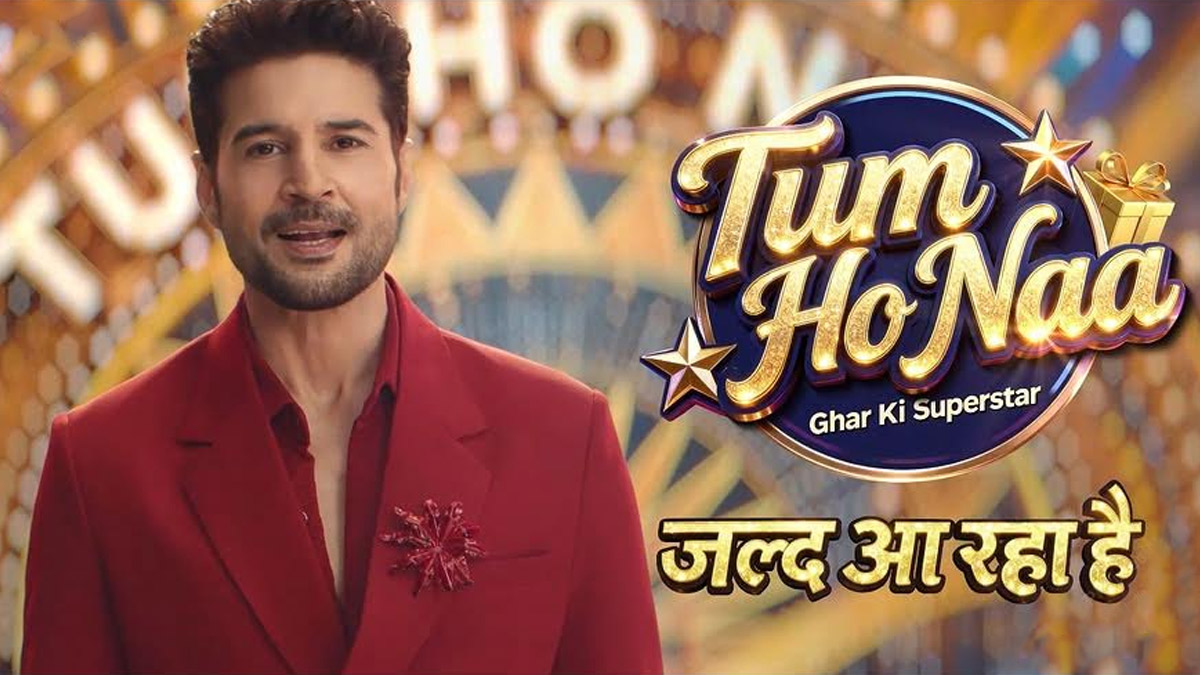
MUMBAI: Lights, camera… connection because this time, the game isn’t just about winning, it’s about who’s with you. Sony Pictures Networks India is gearing up to launch a new reality game show, Tum Ho Naa, expanding its unscripted slate with a format that promises both emotion and engagement.
The show will premiere soon on Sony Entertainment Television and stream on Sony LIV, with Rajeev Khandelwal stepping in as host. Known for his measured screen presence and selective choices, Khandelwal’s return to television adds a layer of familiarity and credibility to the upcoming format.
While specific details of the gameplay remain under wraps, the positioning suggests a reality format that leans as much on emotional resonance as it does on competition, an increasingly popular blend in Indian television, where audiences are gravitating towards content that offers both stakes and storytelling.
Khandelwal, reflecting on his return, noted that his choices have often been guided by instinct rather than convention, describing Tum Ho Naa as a project that feels “close to the heart”. His association also signals Sony’s continued focus on anchoring new formats with recognisable faces who bring both relatability and depth.
The launch comes at a time when broadcasters are doubling down on original non-fiction formats to drive appointment viewing, even as digital platforms expand parallel reach. By placing the show across both linear television and OTT, Sony appears to be aiming for a dual-audience strategy capturing traditional viewers while engaging digital-first consumers.
As the countdown to premiere begins, Tum Ho Naa positions itself not just as another game show, but as a reminder that sometimes, the biggest prize on screen isn’t the jackpot, it’s the journey shared along the way.






