News Broadcasting
Bharti floats subsidiary company for DTH

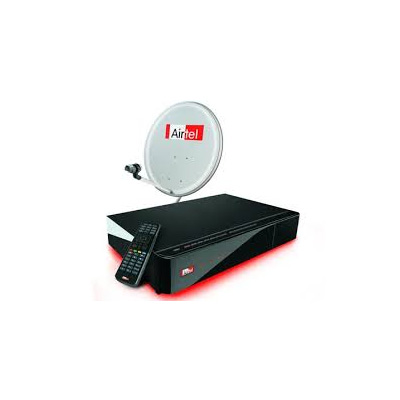
MUMBAI: Bharti Airtel Limited has floated a wholly owned subsidiary, Bharti Telemedia, for its direct-to-home (DTH) services.
The plan is to launch DTH this calendar year, but this will depend on whether the telecom major manages to get transponder space from the Indian Space Research Organisation (Isro).
Indiantelevision.com was the first to report that Bharti would be entering into the DTH business, joining Anil Ambani’s Reliance, Kalanithi Maran’s Sun Direct and the existing players Dish TV, Tata Sky and DD Direct Plus.

Bharti also hopes to launch its IPTV services in the first quarter of the next fiscal, a source in the company says. UTStarcom is the digital service vendor for Bharti’s IPTV including the headend and the digital set-top boxes (STBs).
“There are issues we still have to sort out on technology, cost and reach. IPTV could have limitations in India at this stage. DTH can give us a wider market,” says the source.
Bharti had started test runs for IPTV with UTStarcom but later invited other vendors as well. Subsequently, it has been using UTStarcom for its IPTV build up.
The telecom major has also announced the acquisition of a submarine network cable system from Network i2i, which is jointly owned by Singtel and a Bharti group company, for an overall consideration of $110 million. This will be subject to obtaining the requisite approvals.
Bharti Airtel is structured into three strategic business units – mobile, broadband & telephone (B&T) and Enterprise services. The mobile business provides mobile and fixed wireless services using GSM technology across 23 telecom circles. The B&T unit provides broadband and telephone services in 94 cities while the Enterprise services provide end-to-end telecom solutions to corporate customers and national and international long distance services to carriers.
Bharti has an aggregate of 33.71 million subscribers (as of December-end 2006), consisting of 31.97 million mobile customers.







News Broadcasting
News18 India launches Command Centre war explainer with Arya
New show shifts from debates to decoding global conflicts and impacts
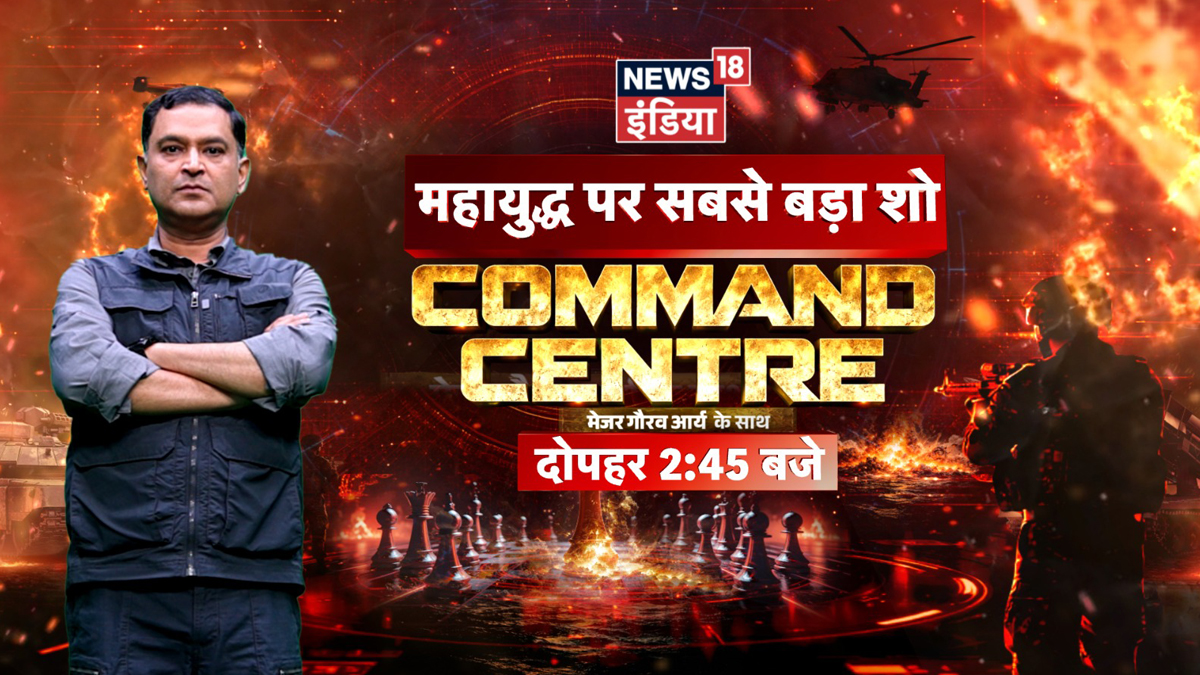
MUMBAI: News18 India has rolled out a new war-focused programme, Command Centre, featuring Gaurav Arya, as it looks to offer viewers a sharper, more grounded take on global conflicts amid rising tensions in West Asia.
Positioned as an “insider war room”, the show moves away from conventional panel debates and instead focuses on explaining military developments, decoding strategy and connecting global events to their everyday impact, from fuel prices to economic shifts.
The format leans heavily on visuals and data. The studio has been designed like a command hub, complete with large LED war maps, real-time graphics and an alert system to track developments as they unfold.
At the centre of it all is Arya, who brings his military background to simplify complex war strategies for viewers. His signature line, “Seedhi baat samjhiye”, anchors the show’s promise of clarity over noise.
News18 India managing editor Jyoti Kamal said, “Command Centre, featuring Major Gaurav Arya is designed to deliver accurate insights and a clear perspective on how evolving conflicts impact everyday life, from household budgets to national security. With expert voices analysing every development in real time, the show goes beyond headlines to decode what’s happening now, what it means, and what could come next.”
Echoing the intent, Gaurav Arya added, “In times of war, confusion is the biggest threat. With News18 India’s Command Centre, we are bringing viewers inside the war room, decoding strategies, tracking every escalation, and explaining, in the simplest terms, what it means for India and for every household. Seedhi baat samjhiye, this is where you understand not just what is happening, but what happens next.”
The weekday show will air in the afternoon slot and will also feature Gaurav Shukla, adding to its editorial depth.
With its mix of analysis, visuals and a clear focus on impact, the show reflects a broader shift in news consumption. Viewers are no longer just watching events unfold, they are looking to understand what those events mean for them.






