Hindi
Bhaag Milkha Bhaag holds its own with no major competition


MUMBAI: There were seven Hindi films slated for release last Friday out of which four, Bajatey Raho, Issaq, Nasha and Luv U Soniyo made it to the theatres but have received poor responses.
Bajatey Raho, a film with better known faces, was expected to do well. But, the comedy film failed to provide entertainment. The film opened to a weak response and ended its first weekend with figures of Rs 4.25 crore.

Issaq, a Shakespearean love tragedy from UP, did not work either. Except presenting a talented actor to the industry in Amyra Dastur, the film proved utterly forgettable. The film collected Rs 3.1 crore for its opening weekend.
Nasha starring Poonam Pandey, despite nudity and titillation, remained behind other releases in weekend figures. The film collected Rs 2.5 crore over its first weekend.
Luv U Soniyo had poor patronage, resulting in ‘No audience No show’, at most places.
Ramaiya Vastavaiya has not worked for the debutant Girish Kumar. The film was too clichéd very similar to medley of old films which had worked commercially. The film collected Rs 20.3 crore at the end of its first week.
D-Day, despite all the praises and positive word of mouth reports, has not been able to convert all that into cash. The film opened to indifferent response and continued to remain so all its first week to close the week with Rs 14.5 crore.
Ship Of Theseus managed to collect about Rs 50 lakh along with much acclaim during its first week.
Bhaag Milkha Bhaag is holding well and has had a lucrative second week even as other new releases could not find favour with the public. The film has collected Rs 25.65 crore for its week two taking its two week total to Rs 78.15 crore.




Hindi
Zee5 and Applause Entertainment team up for whodunnit ‘Everybody Loves Sohrab Handa’
Rajat Kapoor directs star-studded murder mystery streaming from 10 April.
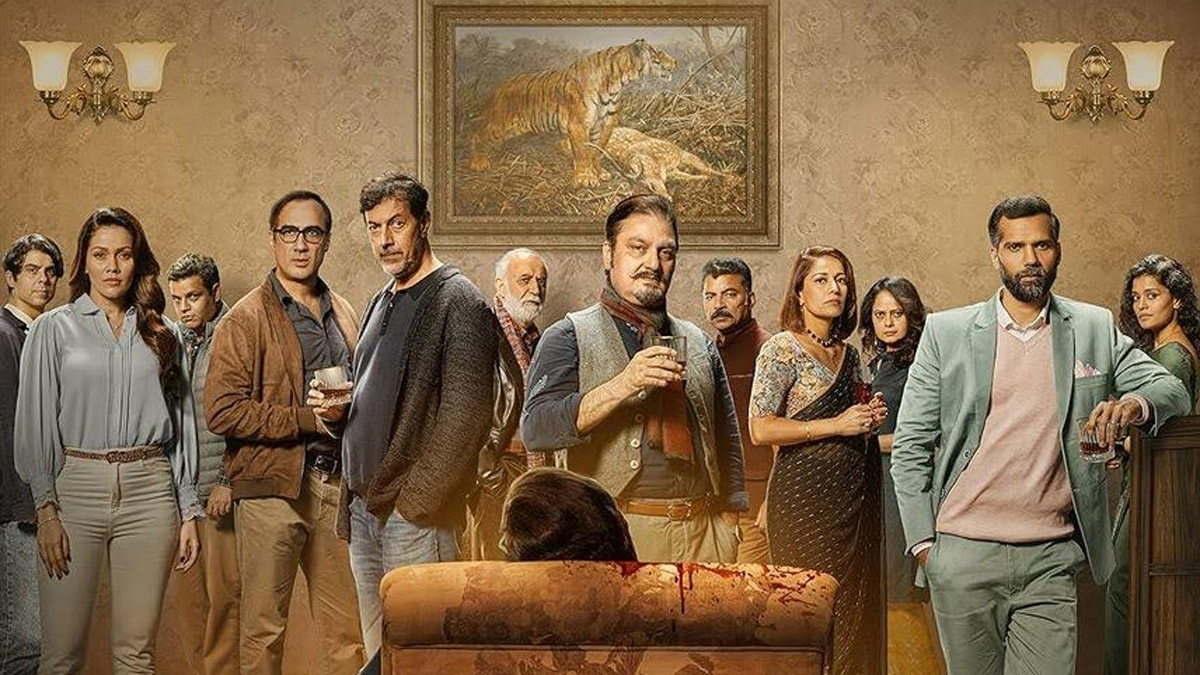
MUMBAI: Zee5 is serving up another killer collaboration and this time, the murder mystery comes with a generous side of dark humour and family dysfunction. The streaming platform has partnered with Applause Entertainment and Mithya Talkies to bring Everybody Loves Sohrab Handa, a fresh, twisted whodunnit written and directed by acclaimed filmmaker and actor Rajat Kapoor. The film will stream exclusively on Hindi Zee5 from 10 April.
The movie reimagines the classic murder mystery genre with a contemporary, darkly comic edge. It revolves around a group of friends and family who smile, drink, and celebrate together until the silence snaps and long-buried secrets spill out. The stellar ensemble cast includes Vinay Pathak, Ranvir Shorey, Waluscha De Sousa, Saurabh Shukla, Chandrachoor Rai, Neil Bhoopalam, Koel Purie, Palomi Ghosh, and Rajat Kapoor himself.
This latest offering continues the successful partnership between Zee5 and Applause Entertainment, which has previously delivered diverse hits such as Mithya, Bloody Brothers, and Jab Khuli Kitaab.
&TV Business Head of hindi Zee5 and chief channel officer Kaveri Das said, “Our collaboration with Applause Entertainment has consistently delivered distinct, high-impact storytelling. Everybody Loves Sohrab Handa is a natural progression, reinforcing our focus on genre-led content with a compelling whodunnit premise and a strong ensemble cast.”
Applause Entertainment business head for movies Sunil Chainani added, “This film adds yet another compelling layer to our slate with Rajat Kapoor’s unmistakable voice.”
Rajat Kapoor shared, “What interested me was not just the mechanics of a whodunnit, but the emotional violence that precedes physical violence. These are people who smile at each other, but there’s so much that is not said.”
The film promises razor-sharp writing, layered performances, and simmering tension, inviting viewers not just to solve the crime but to unravel the complex relationships at its heart.
If you love a good murder mystery served with wit and emotional depth, Everybody Loves Sohrab Handa looks set to be your next addictive watch. Mark your calendars, the whodunnit drops on Hindi Zee5 from 10 April.







