Gaming
BGMI digs deep with Stepwell as 4.0 update blends culture and combat

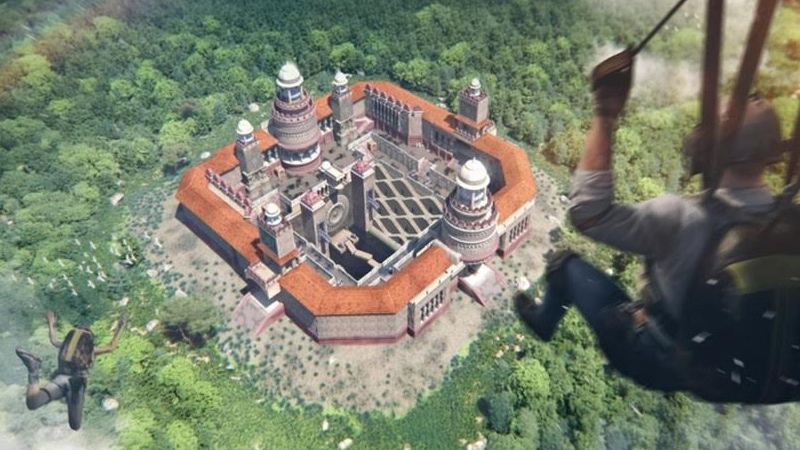
MUMBAI: Cricket may be India’s favourite sport, but when it comes to battlegrounds, millions are logging in with their squads this time, to fight it out in a Stepwell. Krafton India has rolled out the BGMI 4.0 Update, and its showstopper is Stepwell, a brand-new location on the Erangel map that’s conceived, designed and created entirely in India. This is a first for Battlegrounds Mobile India (BGMI), with the design borrowing inspiration from the subcontinent’s architectural heritage while reshaping tactical play.
Unlike the flat plains and predictable ridges of Erangel, the Stepwell is a maze of tiered vertical combat, twisting corridors, sniper-friendly sightlines and ambush corners. High ground advantage collides with claustrophobic traps, forcing squads into close coordination and precision movement. From 18–24 October, the site even turns festive, letting players set off Diwali fireworks mid-match, fusing celebration with combat.
“This isn’t just a new location, it’s a statement,” said Krafton Inc VP and head of India Publishing Minu Lee. “Stepwell sets a new benchmark for blending cultural inspiration with world-class gameplay.”

But Stepwell is only one pillar of BGMI’s latest overhaul. The 4.0 Update also introduces:
. Ghost Gameplay: Players summon spectral allies with active skills like Floating Balloon and Guardian Shield, while passive boosts like Heal, Armorer and Ghost Helm allow even eliminated teammates to remain useful through Spectral Revival mechanics.
. Unfail (4v1 Mode): A bold asymmetrical format where one stealth-powered hunter takes on four survivors racing to escape.
. Spooky Soiree Seasonal Mode: Complete with Wraithmoor Mansion (a haunted estate of gardens and magic mirrors), The Performing Dead concerts that double as enemy alerts, and interactive ghosts hidden in crates.
. Magic Broom Vehicle: A flying broom for two, complete with dash and sweeping attack options.
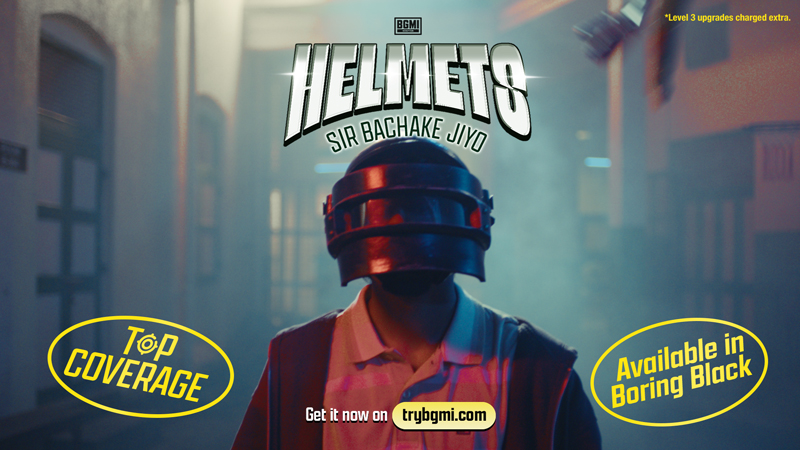
Alongside, players get new firepower with the Mortar weapon, refreshed Training Camp systems, and rewards at the Diwali Exchange Center (3–23 October). The much-loved Weekend Grind log-in rewards also return, promising purple-tier prizes.
The update is backed by hard numbers too: according to industry research, comms professionals use an average of 11 tools daily with 68 per cent citing workflow fragmentation as their biggest barrier BGMI is answering a similar call for consolidation by weaving seasonal events, survival modes and India-first design into one package. Early testers have reported richer tactical variety and sharper squad play.
BGMI has long been more than just a battle royale; it has become a cultural playground. With Stepwell as its India-first landmark, ghostly revivals, and Diwali fireworks lighting up firefights, the 4.0 update proves that battlegrounds can be both a warzone and a festival ground.
For fans, the message is clear: the battleground just got deeper, darker and more desi.

Gaming
India’s broadcasters say no to Fifa World Cup 2026
Fifa has slashed its asking price by 65 per cent but India’s broadcasters are still not buying

MUMBAI: The world’s biggest sporting event cannot find a single taker in the world’s most sports-mad nation. Fifa’s television rights for the 2026 World Cup remain unsold in India, and the clock is ticking loudly.
To shift the property, world football’s governing body has already swallowed hard and cut its asking price from $100m to $35m, bundling in the 2030 edition as a sweetener. It has not worked. Indian broadcasters have looked at the offer, done the sums and quietly walked away.
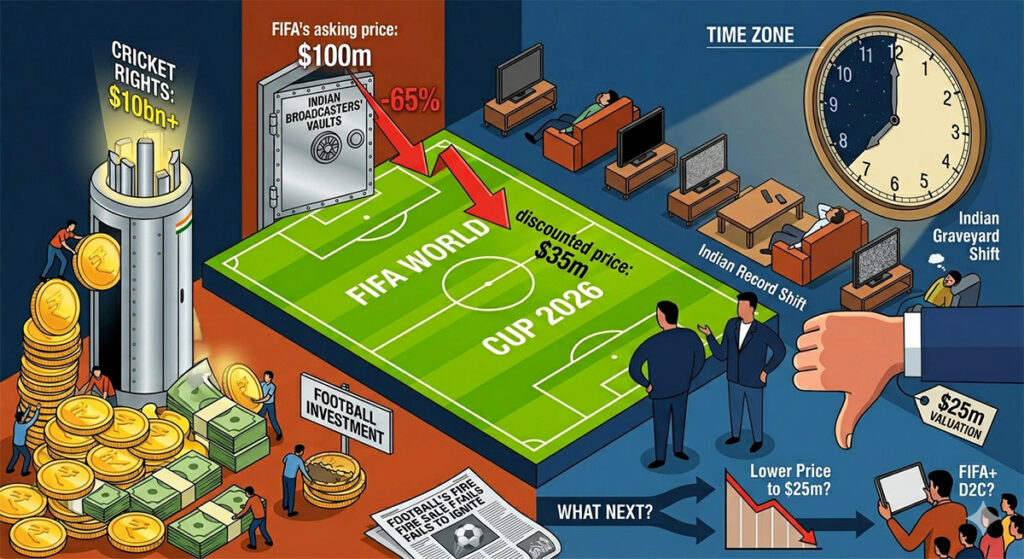
The reasons are brutally simple. The 2026 tournament, co-hosted by the United States, Canada and Mexico, kicks off in a time zone that turns India’s primetime into a graveyard shift. Most matches will air between midnight and 7am IST, a scheduling catastrophe for advertisers chasing mass reach. The 2022 Qatar edition was a gift by comparison, with matches dropping neatly into Indian evenings. North America offers no such luxury.
The market itself has also changed beyond recognition. The merger of Star India and Viacom18 into JioStar has gutted the competitive tension that once sent sports rights prices soaring. Where rival bidders once slugged it out, there is now a single dominant buyer, and it is in no hurry. JioStar has valued the rights at roughly $25m, a full $10m below Fifa’s already-discounted floor price. That gap has so far proved unbridgeable.
Broadcasters are also nursing a ferocious cricket hangover. Between 2022 and 2023, Indian media houses committed well over $10bn to cricket rights alone, covering IPL, ICC events and BCCI domestic fixtures combined. After a binge of that scale, appetite for a football package that delivers a fraction of the ratings, in the dead of night, is close to zero.
The economics of football broadcasting make the maths even harder. Cricket, with its natural breaks every few overs, is an advertiser’s paradise. Football offers a 15-minute halftime and precious little else. Recovering a nine-figure rights fee from a single half-hour ad window is a stretch at the best of times. These are not the best of times: the Indian government’s tightening grip on real-money gaming and gambling advertising has vaporised a category that once underwrote the economics of big sporting events.
Nor is the World Cup an anomaly. Indian Super League valuations have cratered. English Premier League rights have softened across successive cycles. The cooling of football as a broadcast commodity in India is structural, not cyclical.
With the tournament opening on 11th June, Fifa is running out of road. It may yet blink and meet JioStar at $25m. Or it may go direct, streaming the entire tournament on its own platform, Fifa+, or cutting a digital deal with YouTube, and hoping that a generation of Indian football fans finds its way there without a broadcaster to guide them.
Either way, the beautiful game’s Indian chapter is looking decidedly ugly.







