Hindi
Besharam: Wasting Ranbir Kapoor… and family

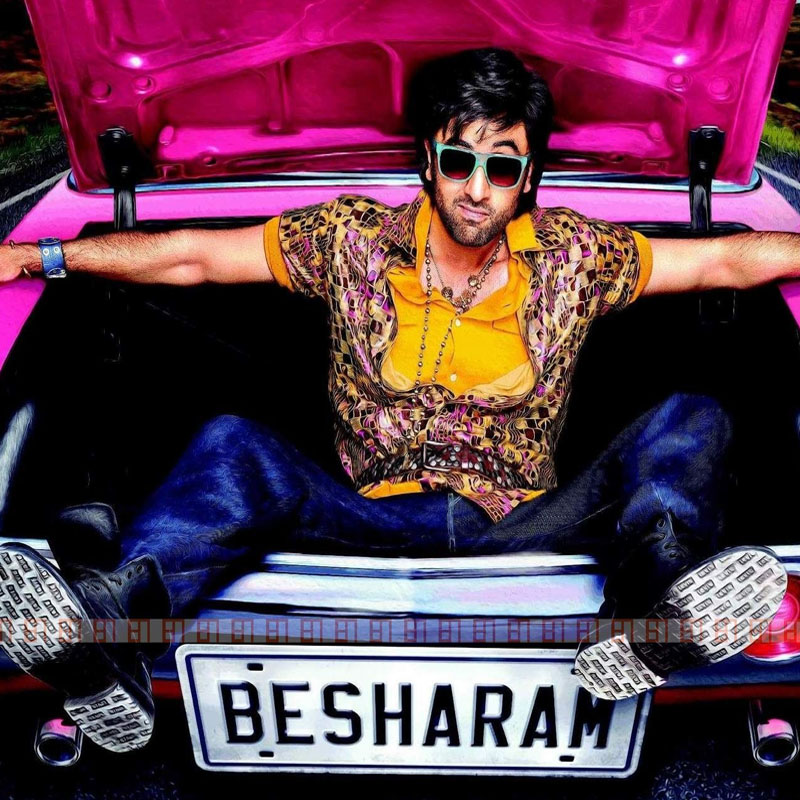
MUMBAI: Totally bankrupt of imagination or ideas, Besharam takes refuge in past formulas. The film has a dream cast and all the resources necessary at the makers’ disposal except, of course, talent on the part of the writers as well as the director. The film takes one back to certain forgettable films Shammi Kapoor did during 1960 which had titles which promised mediocre fare to start with: Janwar, Laat Saheb, Bluff Master, Budtameez etc. The hero in such a film had no character, no family background to boast of, lived a totally wayward life and yet dreamt of romancing a rich and khaandani ‘iklauti waris’ belle. So the story, if one may call it that, is sourced from that era and with a hangover from the director’s recent film Dabangg, the hero, Ranbir Kapoor, is expected to deliver a Shammi Kapoor-like vehicle in Salman Khan style!
 |
|
Producer: Sanjeev Gupta, Himanshu Kishan Mehra.
Director: Abhinav Singh Kashyap. Cast: Ranbir Kapoor, Rishi Kapoor, Neetu Singh, Pallavi Sharda, Javed Jaffrey, Himani Shivpuri. |
Ranbir Kapoor is a car thief and the justification is that he is an orphan brought up in an orphanage and such a lad (at least in the films) is never expected to grow into a normal, law abiding citizen. So he steals cars in Delhi and sells them to a Sikh wheeler dealer in Chandigarh who, in turn, has a ready buyer for all such cars in Javed Jaffrey. Jaffrey is a bad man who needs a new car every day because he is into the hawala business; he collects crores in India and delivers the same in Switzerland after duly deducting his cut. Now, the hawala business is much older than cars and all it needs is a telephone and resources on both side, but never mind!
Ranbir may be the best in his business but the first car he is shown stealing is such a shoddy job he has half the police force, lead by Rishi Kapoor and Neetu Singh, chasing him. At least that provides the film with its one customary chase sequence (with a futile attempt to make it funny). And since it is a Delhi film, there has to be one colourful shaadi sequence which can also bring the hero and the girl in contact. So Ranbir meets Pallavi Sharda landing up at a wedding in her brand new red Mercedes and, since she does not fall for Ranbir trying to act fresh, he decides to join the wedding celebrations as well and dance into her heart. But as soon as the naach-ganaa is over she gives Ranbir the cold shoulder again. Dejected he decides to take a car instead since he failed to take the girl with him.
Ranbir soon learns that the Mercedes he stole belongs to Pallavi, the very girl he is trying to woo, with a lot of encouragement from her mother, Himani Shivpuri. Now he embarks on a mission to get her car back, the fact that he has sold it to the maniacal killer Jaffrey notwithstanding. It is the least he can do for the girl he loves. Of course, Pallavi has to accompany him to Chandigarh so that she discovers the nobler side of him and the process of love can become a two-sided affair. It is time for action, this time of the jumping-from-rooftops kind. The car is recovered; the girl has fallen in love with the boy more than he ever loved her. And, just when they return to Delhi and think all is well, Jaffrey happens to miss a few crore hawala money stashed in the boot of the car. Jaffrey descends on Delhi with his army of goons armed with rocket launchers, machine guns and handguns.

The climax has to be a crowded affair, so gathered on screen are all the kids from the orphanage (which has only male occupants, it seems), Rishi Kapoor and Neetu Singh, who were forgotten after the initial chase and bunch of policemen.
While the lack of creativity is glaringly obvious in scripting and direction, even when it comes to being crude, it is poor in taste and unnecessary! Who needs a watchman in the background in a scene picking his nose very consciously till he is told ‘Cut, very good’ or Rishi Kapoor sitting on the toilet and passing loud farts? It is unnecessary. The making is very crude. Choreography is all crowds and no grace. Dialogue needed some sharp one-liners. Musically, only one song is hummable though on familiar lines and that is Dilka jo haal hai… Performance wise, Ranbir is good in patches; he tries to be too loud which is unlike him (and, isn’t that a wig he is sporting!?). Rishi Kapoor is good. Neetu Singh is okay. Pallavi Sharda does not quite charm the viewer.
Besharam may have no worries commercially having recovered most of its investment even before its theatrical release backed by a national holiday (2nd October, Gandhi Jayanti) multiple screen release strategy, but the film does not do credit to its hero, Ranbir, or to Rishi and Neetu’s stature.







Hindi
Zee5 and Applause Entertainment team up for whodunnit ‘Everybody Loves Sohrab Handa’
Rajat Kapoor directs star-studded murder mystery streaming from 10 April.
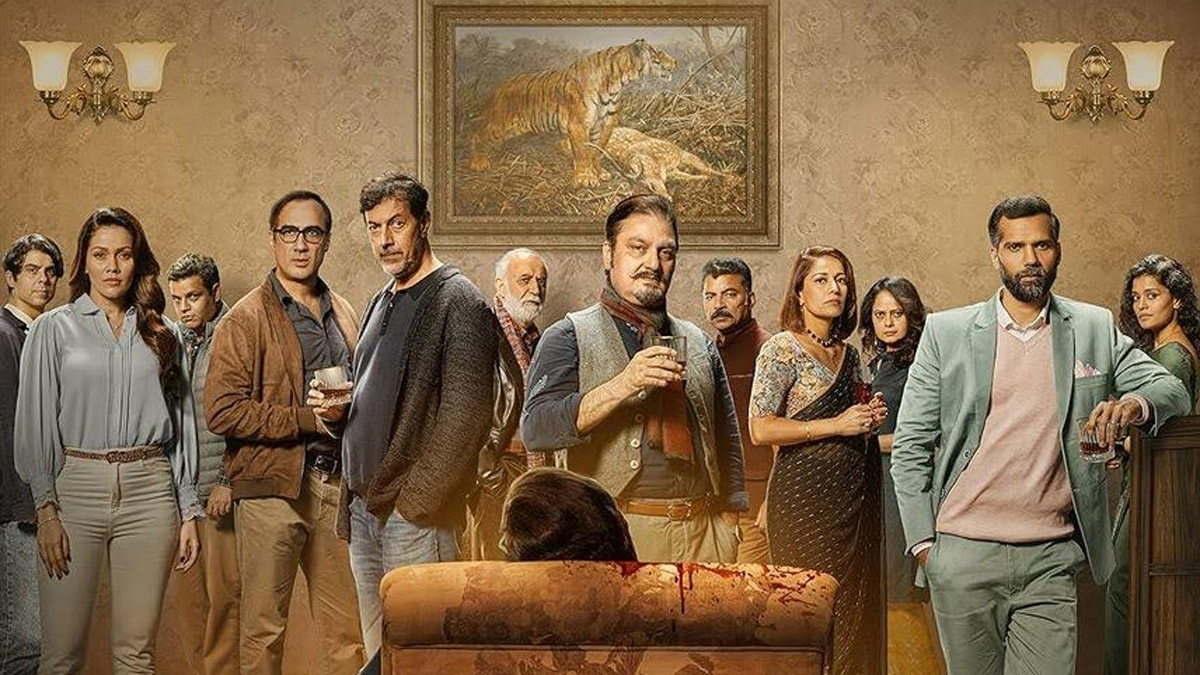
MUMBAI: Zee5 is serving up another killer collaboration and this time, the murder mystery comes with a generous side of dark humour and family dysfunction. The streaming platform has partnered with Applause Entertainment and Mithya Talkies to bring Everybody Loves Sohrab Handa, a fresh, twisted whodunnit written and directed by acclaimed filmmaker and actor Rajat Kapoor. The film will stream exclusively on Hindi Zee5 from 10 April.
The movie reimagines the classic murder mystery genre with a contemporary, darkly comic edge. It revolves around a group of friends and family who smile, drink, and celebrate together until the silence snaps and long-buried secrets spill out. The stellar ensemble cast includes Vinay Pathak, Ranvir Shorey, Waluscha De Sousa, Saurabh Shukla, Chandrachoor Rai, Neil Bhoopalam, Koel Purie, Palomi Ghosh, and Rajat Kapoor himself.
This latest offering continues the successful partnership between Zee5 and Applause Entertainment, which has previously delivered diverse hits such as Mithya, Bloody Brothers, and Jab Khuli Kitaab.
&TV Business Head of hindi Zee5 and chief channel officer Kaveri Das said, “Our collaboration with Applause Entertainment has consistently delivered distinct, high-impact storytelling. Everybody Loves Sohrab Handa is a natural progression, reinforcing our focus on genre-led content with a compelling whodunnit premise and a strong ensemble cast.”
Applause Entertainment business head for movies Sunil Chainani added, “This film adds yet another compelling layer to our slate with Rajat Kapoor’s unmistakable voice.”
Rajat Kapoor shared, “What interested me was not just the mechanics of a whodunnit, but the emotional violence that precedes physical violence. These are people who smile at each other, but there’s so much that is not said.”
The film promises razor-sharp writing, layered performances, and simmering tension, inviting viewers not just to solve the crime but to unravel the complex relationships at its heart.
If you love a good murder mystery served with wit and emotional depth, Everybody Loves Sohrab Handa looks set to be your next addictive watch. Mark your calendars, the whodunnit drops on Hindi Zee5 from 10 April.






