GECs
BCCC issues two advisories for TV channels

MUMBAI: A fortnight back, Indiantelevision.com had written that the Broadcasting Content Complaints Council (BCCC), a complaint redressal arm of the Indian Broadcasting Foundation (IBF), was going to come out with two more advisories for the broadcasting fraternity.
The 13 member board, headed by Justice (Retd) Mukul Mudgal, at its 33rd meeting, has approved the issuance of the two advisories for the benefit of television channels.

The two advisories are:
1. Advisory on Portrayal of Persons with Disabilities in TV Programmes;
2. Advisory on Depiction and Use of National Flag, National Emblem, National Anthem and Map of India in TV Programmes.
For the first advisory on portrayal of persons with disabilities, the BCCC which had received several complaints earlier feels that adequate protection is necessary to avoid content which may be distasteful, harmful and offensive to persons with disabilities.
The Persons with Disabilities (Equal Opportunities, Protection of Rights and Full Participation) Act, 1995, lays down the law to safeguard the rights and facilities of persons with disabilities. “And keeping this in mind, the Council believes that humour should not be created through any undesirable depiction of persons with disabilities and no derisive and disparaging reference should be made to their disability,” said the BCCC through a statement.
The Council has advised all IBF member channels to exercise caution and be sensitive in the portrayal of persons with disabilities, to be conscious of their dignity, and to adopt a mature and responsible tone. At the same time, the Council has also advised the channels to look at the inclusion and mainstreaming of persons with disabilities in TV programmes.
As for the depiction and use of National Flag, National Emblem, National Anthem and Map of India, the BCCC has advised all its IBF member channels to refrain from airing any content that may amount to misuse or wrong depiction of all of these.
The Prevention of Insults to National Honour Act, 1971, and the Prevention of Insults to National Honour (Amendment) Act, 2005, lay down guidelines for the usage, depiction and portrayal of National Flag, National Emblem and National Anthem. “And hence, if any depiction/usage of the above becomes necessary as part of a programmes storyline, the channel should take necessary precautions so as to abide by the law of the land,” said the advisory.
The advisories come into effective immediately as all channels have been informed.
On what will be the penalty, if channels, failed to follow the new guidelines BCCC secretary general Ashish Sinha told indiantelevision.com, “The gravity of it will depend on the kind of violation. As per our guidelines everything is graded. However, this time around it can even go beyond us as if not followed, the channels will be breaking the law of the land because they will be disobeying the laws laid by the Parliament.”






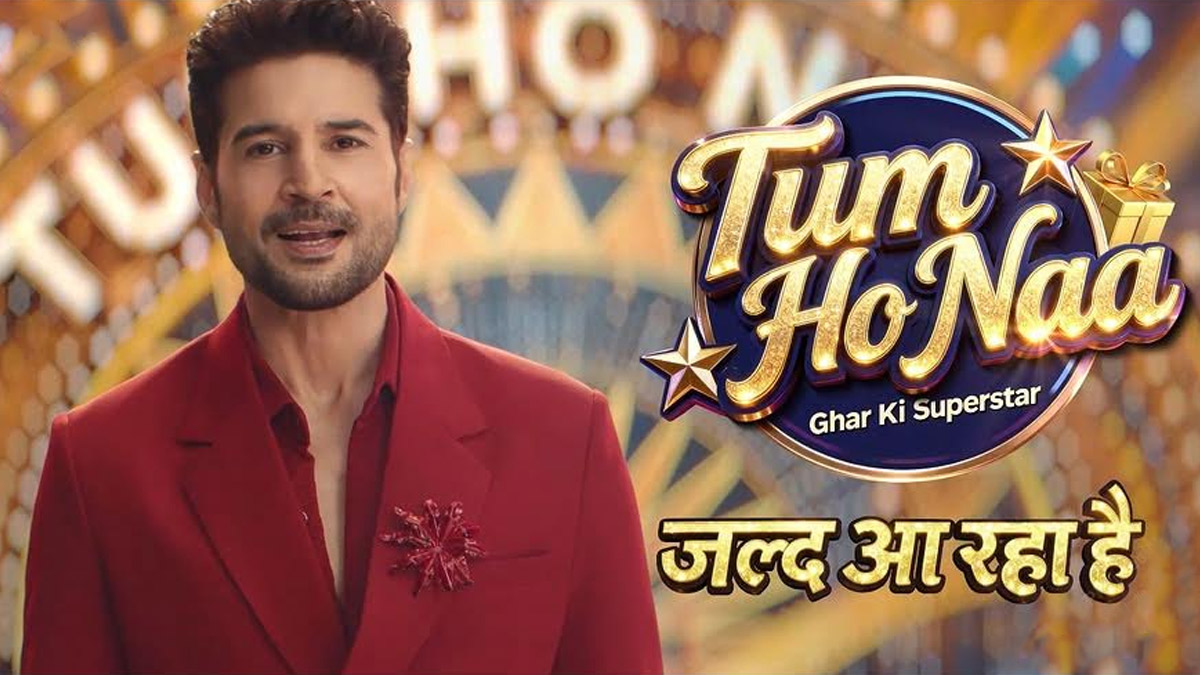
MUMBAI: Lights, camera… connection because this time, the game isn’t just about winning, it’s about who’s with you. Sony Pictures Networks India is gearing up to launch a new reality game show, Tum Ho Naa, expanding its unscripted slate with a format that promises both emotion and engagement.
The show will premiere soon on Sony Entertainment Television and stream on Sony LIV, with Rajeev Khandelwal stepping in as host. Known for his measured screen presence and selective choices, Khandelwal’s return to television adds a layer of familiarity and credibility to the upcoming format.
While specific details of the gameplay remain under wraps, the positioning suggests a reality format that leans as much on emotional resonance as it does on competition, an increasingly popular blend in Indian television, where audiences are gravitating towards content that offers both stakes and storytelling.
Khandelwal, reflecting on his return, noted that his choices have often been guided by instinct rather than convention, describing Tum Ho Naa as a project that feels “close to the heart”. His association also signals Sony’s continued focus on anchoring new formats with recognisable faces who bring both relatability and depth.
The launch comes at a time when broadcasters are doubling down on original non-fiction formats to drive appointment viewing, even as digital platforms expand parallel reach. By placing the show across both linear television and OTT, Sony appears to be aiming for a dual-audience strategy capturing traditional viewers while engaging digital-first consumers.
As the countdown to premiere begins, Tum Ho Naa positions itself not just as another game show, but as a reminder that sometimes, the biggest prize on screen isn’t the jackpot, it’s the journey shared along the way.






