News Broadcasting
BBC’s top brass walk the plank over botched Trump edit

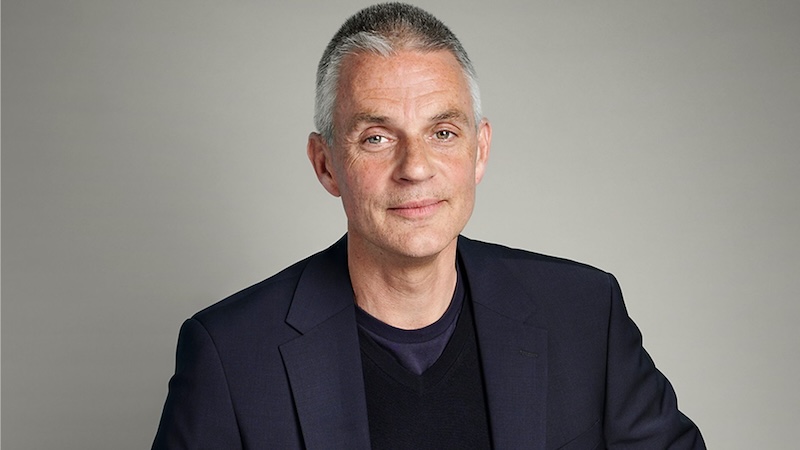
TOKYO: The BBC lost both its director-general and head of news on Sunday in an extraordinary double resignation that followed a week of withering accusations the broadcaster had doctored footage of Donald Trump to suggest he explicitly encouraged the January 6th 2021 Capitol riot.
Tim Davie, who led the corporation for five years, and Deborah Turness, chief executive of news for the past three years, fell on their swords after a leaked internal memo revealed that a Panorama documentary broadcast a week before last year’s American election had spliced together two sections of Trump’s speech from that day—delivered more than 50 minutes apart.
The edit made it appear Trump told supporters: “We’re going to walk down to the Capitol and I’ll be there with you. And we fight. We fight like hell.” What he actually said was: “We’re going to walk down to the Capitol, and we’re going to cheer on our brave senators and congressmen and women.” The “fight like hell” line came from a separate section about election integrity. Trump used the word “fight” 20 times in the speech.

Davie insisted his departure was “entirely my decision”, telling staff: “Overall the BBC is delivering well, but there have been some mistakes made and as director-general I have to take ultimate responsibility.” He added that the “current debate around BBC News” had contributed to his decision, and said he wanted to give a successor time to shape charter plans before the 2027 renewal.
Turness was more direct. “The ongoing controversy around the Panorama on President Trump has reached a stage where it is causing damage to the BBC—an institution that I love,” she wrote. “As the chief executive of BBC News and Current Affairs, the buck stops with me.”

The leaked memo, compiled by Michael Prescott, a former independent adviser to the BBC’s editorial standards committee who quit in June, claimed the broadcaster’s “distortion of the day’s events” would leave viewers asking: “Why should the BBC be trusted, and where will this all end?” According to the Telegraph, which broke the story, managers “refused to accept there had been a breach of standards” when the issue was raised.
The document also flagged “systemic problems” of anti-Israel bias in BBC Arabic’s Gaza coverage and alleged that coverage of groups campaigning for single-sex spaces had been suppressed by staff hostile to the transgender debate.
Trump, naturally, gloated. He called Davie and Turness “very dishonest people” and accused them of trying to influence an American presidential election. “On top of everything else, they are from a Foreign Country, one that many consider our Number One Ally. What a terrible thing for Democracy!” his social media post read. Press secretary Karoline Leavitt had earlier branded the BBC “100 per cent fake news” and a “propaganda machine.”
British culture minister Lisa Nandy called the allegations “incredibly serious”, saying there was “systemic bias in the way that difficult issues are reported at the BBC”. She thanked Davie for leading the broadcaster through “a period of significant change”. Sources said the BBC board was stunned by his decision. He will stay on for several months whilst a replacement is found.
The departures cap a bruising period for the broadcaster, which has lurched from scandal to scandal. It suspended star sports presenter Gary Lineker for criticising government immigration policy, prompting a brief walkout by sports staff. It was condemned for broadcasting punk-rap duo Bob Vylan chanting against the Israeli military at Glastonbury. It pulled a Gaza documentary because it featured the son of a Hamas deputy minister. Last week it upheld 20 impartiality complaints after presenter Martine Croxall altered a script about “pregnant people” live on air.
The BBC, funded by a compulsory licence fee that every television-watching household must pay, has long been pilloried by both left and right. Critics on the right see it as a hotbed of liberal bias; critics on the left accuse it of kowtowing to the establishment. Nigel Farage, leader of the hard-right Reform UK party, which is surging in opinion polls, welcomed Davie’s departure. “This is the BBC’s last chance,” he said on X. “If they don’t get this right there will be vast numbers of people refusing to pay the licence fee.”
The BBC board, led by chairman Samir Shah, now faces the task of finding the corporation’s 18th director-general in its 103-year history. Names rumoured as contenders include Charlotte Moore, the recently departed chief content officer who oversaw hits like The Traitors and Happy Valley; Jay Hunt, one of Britain’s most experienced television executives; and James Harding, who ran BBC news from 2013 to 2018.
With charter renewal looming in 2027, streaming competitors circling, and trust eroding, whoever takes the job inherits a poisoned chalice. Davie, nicknamed “Teflon Tim” for his ability to survive past scandals, discovered even he had his limits. Whether his sacrifice buys the BBC breathing room or merely delays a reckoning remains to be seen.
(Pix courtesy BBC corporate web site)





News Broadcasting
Network18 channels lead YouTube news viewership in March 2026
CNN-News18, News18 India and CNBC channels top categories with record views

MUMBAI: When the world hit refresh on breaking news, Network18’s channels were already streaming ahead. As geopolitical tensions and war-driven headlines fuelled a surge in global news consumption, the network’s digital playbook delivered big clocking record Youtube viewership across English, Hindi and business news categories in March 2026.
At the forefront was CNN-News18, which emerged as the clear leader in the English news segment with 130 million live and video-on-demand views. The channel edged past competitors such as Times of India (126.5 million), Times Now (101.1 million), India Today (88.2 million) and NDTV (77.5 million), according to Databeings data for March.
In the Hindi news arena, News18 India delivered a commanding performance, racking up a staggering 3,297 million views on YouTube. The channel comfortably outpaced NDTV India, which recorded 3,119 million views, underlining its deep reach and consistent engagement with mass audiences, as per Playboard data.
The network’s dominance wasn’t confined to general news. In the Hindi business segment, CNBC Awaaz topped the charts with 92 million views, narrowly ahead of Zee Business (90 million) and well ahead of ET Now Swadesh (57 million). Meanwhile, its English counterpart CNBC-TV18 posted a strong 58 million views, reinforcing the network’s cross-category strength.
The spike in viewership reflects a broader shift in audience behaviour, with viewers increasingly turning to digital platforms particularly Youtube for real-time updates and in-depth coverage during high-intensity news cycles. For Network18, the numbers signal more than just scale; they underline the effectiveness of a multi-platform strategy that blends speed, credibility and continuous coverage.
In a month where the news never paused, it seems viewers chose to stay tuned where the stream never stopped.






