Cable TV
BBC’s re-tendering process for its outsourced financial services enters next phase


MUMBAI: UK pubcaster the BBC has launched the next phase in the re-tendering process for its outsourced financial services. The process began in December 2005 with the publication of a notice in the Official Journal of the European Union (OJEU).
It has attracted a wide interest from service providers. Seven organisations are being taken through to the next round, all of whom have demonstrated a strong desire and credibility to be potential suppliers for the BBC’s outsourced financial services.
The successful companies are ACS, Capita, EDS, Genpact, IBM, Progeon and Xansa. BBC’s director of finance Zarin Patel said, “I am delighted that we have had such a positive response from bidders. We can now go through to the next stage of the evaluation process with confidence that we have a strong field to choose from.”

The seven bidders will proceed to the next stage of the process, and a short list will be published later this year. Final negotiations will then take place, and it is expected that the final winner will be announced in autumn 2006. The new contract is due to start in July 2007.
The re-tendering of the financial outsourcing deal is expected to deliver significant savings to the BBC as part of a strategy to put extra resources into programmes and transform the organisation into a simpler and more creative digital broadcaster. No BBC staff posts are currently within the defined services being procured.
The financial services being re-tendered were originally outsourced in 1997 to Medas as part of a ten year contract which will end in June 2007. Services currently provided by Medas include payments to external suppliers, artists, contributors, staff payroll, expenses processes and the management and maintenance of related financial systems.







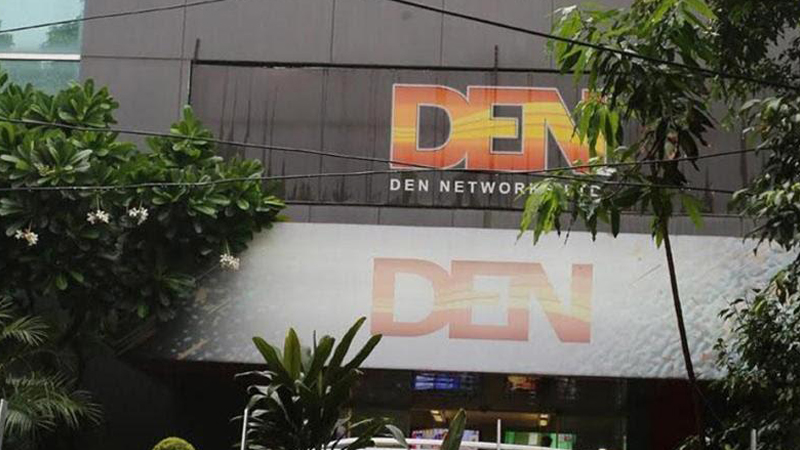
MUMBAI: When margins wobble, liquidity talks and in Q3 FY25-26, cash did most of the talking. Den Networks Limited closed the December quarter with consolidated revenue of Rs.251 crore, marginally higher than the previous quarter but down 4 per cent year-on-year, even as profitability stayed resilient on the back of strong cash reserves and disciplined cost control.
Subscription income softened to Rs.98 crore, slipping 3 per cent sequentially and 14 per cent from last year, while placement and marketing income offered some cheer, rising 15 per cent quarter-on-quarter to Rs.148 crore. Total costs climbed faster than revenue, up 7 per cent QoQ to Rs.238 crore, driven largely by higher content costs and operating expenses. As a result, EBITDA dropped sharply to Rs.13 crore from Rs.19 crore in Q2 and Rs.28 crore a year ago, pulling margins down to 5 per cent.
Yet, the bottom line refused to blink. Profit after tax stood at Rs.40 crore, up 15 per cent sequentially and only marginally lower than last year’s Rs.42 crore. A healthy Rs.57 crore in other income helped cushion operating pressure, keeping profit before tax at Rs.48 crore, broadly stable quarter-on-quarter despite the tougher cost environment.
The real headline-grabber, however, sits on the balance sheet. The company remains debt-free, with cash and cash equivalents swelling to Rs.3,279 crore as of December 31, 2025. Net worth rose to Rs.3,748 crore, while online collections accounted for 97 per cent of total receipts, underscoring strong cash discipline across operations, including subsidiaries.
In short, while Q3 showed signs of operating strain, the financial backbone remains solid. With zero gross debt, steady profits and a formidable cash war chest, the company enters the next quarter with flexibility firmly on its side proving that in uncertain markets, balance sheet strength can be the best growth strategy.








