News Broadcasting
BBC’s meeting with UK unions fails to provide a resolution


MUMBAI: A few days ago BBC DG Mark Thompson met representatives of the BBC’s recognised Trade Unions (BECTU, NUJ, Amicus) to discuss the BBC’s plans for change. The purpose of the meeting was to explain in more detail the BBC’s plans and for Thompson to listen to the union’s concerns and ideas, exploring ways to achieve the best outcome for staff and the BBC.
The BBC regretted that the union representatives chose not to continue with what it believes could have been a constructive and meaningful dialogue. The BBC states that it believes that its employees want early clarity on what the change plans mean for them.
As had been reported earlier by indiantelevision.com the BBC has announced two rounds of job cuts in the UK which will amount to annual costs savings of £355 million. British unions are not surprisingly unhappy over the move. Union leaders representing thousands of BBC staff had given the corporation an ultimatum of withdrawing plans to axe almost 4,000 jobs or face strikes.

At the recent meeting the BBC outlined the difficult challenges the BBC faces and the Corporation’s strategy for meeting these challenges. The BBC explained that the three year plan of efficiencies, savings and different ways of working would mean that the corporation could put an extra £355 million a year into programmes from 2008.
Thompson added that at the same time, it would achieve its goal of transforming into a state of the art digital broadcaster, with a bold new programme and content strategy based around excellence. The BBC also explained to the Unions why it couldn’t meet what it considered to be unrealistic demands from the unions but told them that it nevertheless wished to continue to discuss the detailed plans within each BBC division.
The BBC stressed to union representatives that it has every intention of working with the unions to address staff concerns, whilst needing to make changes to meet its audience’s changing needs and demands and to achieve greater value for money for licence fee payers. At the meeting both the BBC and the unions recognised that this was a difficult and anxious time for staff, and that it was very mindful of the human consequences of the changes it proposed. The BBC made it clear that it would do everything it could to mitigate the effects on staff of the job losses, but this could only be achieved by continuing dialogue and consultation with the unions.
The corporation reiterated that because it was proposing a three year change plan, it anticipated that a large proportion of the job losses would be achieved though staff turnover and voluntary redundancy. However, the BBC was not able to rule out compulsory redundancies.





News Broadcasting
CNN-News18 to host Fury in the Gulf conclave on West Asia crisis
Three-hour summit to unpack geopolitical fallout and impact on India
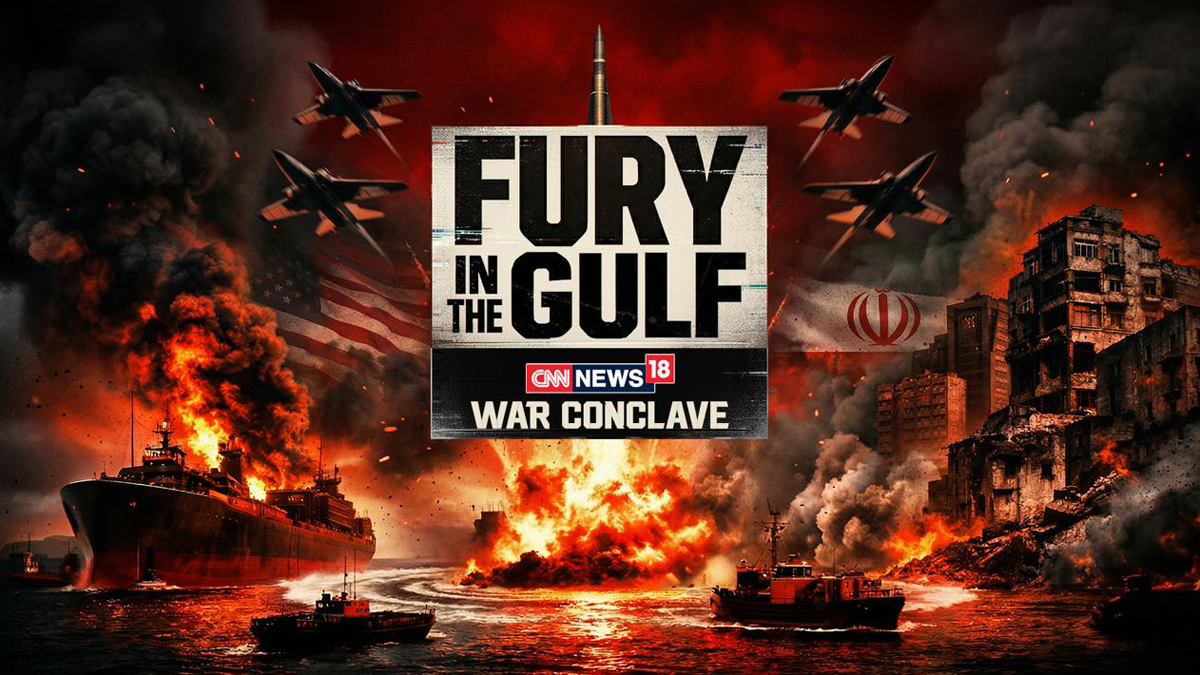
MUMBAI: CNN-News18 is set to host a special three-hour broadcast, Fury in the Gulf – War Conclave, on April 7, aiming to decode the escalating West Asia crisis and its far-reaching implications for India.
Scheduled from 4:00 PM to 7:00 PM, the conclave comes at a time when tensions between Iran and the United States are reshaping global geopolitics and triggering economic uncertainty. With India’s deep energy ties, trade links and large diaspora in the Gulf, the developments carry significant domestic relevance.
Built around the theme ‘Conflict, Consequences, and The Future,’ the programme will feature six curated sessions combining one-on-one interviews and panel discussions. The focus is to cut through the clutter and offer viewers a clearer understanding of the fast-evolving situation.
Key sessions include ‘Diplomacy in Times of War’ featuring Shashi Tharoor, and ‘World After the Iran Conflict’ with voices such as Ram Madhav, Reuven Azar, representatives from the European Union and the Iranian Deputy Envoy. Another session titled ‘Another Dunkirk?’ will bring together K. J. S. Dhillon and Jitin Prasada among others.
CNN-News18 editorial affairs director Rahul Shivshankar said, “In times of war, clarity becomes the most powerful tool. Fury in the Gulf – War Conclave brings together credible voices to address the questions and confusion that arise amid an overwhelming influx of information.”
He added that the initiative is aimed at delivering “facts, perspective, and insight” at a time when misinformation can easily cloud public understanding.
Echoing the sentiment, CNN-News18 CEO– English and business news Smriti Mehra said the conflict marks a defining global moment, with consequences that extend well beyond the region. She noted that the conclave seeks to present the crisis with “depth, nuance and responsibility” so audiences can better grasp its real-world impact.
As geopolitical tensions continue to dominate headlines, the conclave positions itself as an attempt to bring order to the noise, offering viewers a structured, insight-led look at a complex and rapidly shifting global situation.






