News Broadcasting
BBC’s ‘Business Bizarre’ to commence new series with Indian focus

MUMBAI: From 6 July, BBC World starts a new series of its popular programme Business Bizarre, profiling some unusual businesses in India. They run the gamut from Amul to Amar Chitra Katha. The 13-part series, sponsored by Chevrolet , can be seen every Sunday at 11 am with a repeat at 10 pm
In the first of seven new episodes, the story of the widely popular Amar Chitra Katha comics takes centrestage. The Amar Chitra Katha saga began in 1967 when Anant Pai realised that Indian children were growing up without any ties to their roots.
After knocking on several doors, Pai finally found a publisher in India Book House. Amar Chitra Katha was born with sales of less than 60,000 copies in the initial years. By the late 1970s, the comics were published in English as well as in several Indian languages, and were selling nearly 3.5 million copies annually. With plans to make interactive CDs, read-along books, stories in the audio cassette form and more, Amar Chitra Katha is now looking to explore newer avenues.
Talking about the new series, the executive producer of the programme Kadhambari Chintamani says, “Working on this series has been an exciting journey of discovery as we unravelled the success stories of some interesting business ideas. The series brings out some intriguing facts about how these ideas made it big from scratch and will surely offer viewers valuable insights.”
BBC World’s commissioning editor Narendhra Morar adds, “The enthusiasm with which the last series of Business Bizarre was received encouraged us to commission seven new episodes. These programmes too explore some fascinatingly unusual and intrinsically Indian businesses and we hope they will appeal to our discerning viewers.”
Among the other businesses to be profiled in this series are Salim Kagzi, the largest manufacturer of handmade paper from India; SEWA (Self-Employed Women’s Association), organisation of poor, self-employed women workers who earn a living through their own labour or small businesses; and The Honeybee Network, an innovative business that taps the rural ingenuity and reaches out across countries and continents to help innovators share knowledge and expertise.
Amul, the big white of the Indian Dairy Revolution, will also be featured in this series, as will Himalaya Drug Company, which has managed to combine centuries-old Ayurveda with the rigour of modern clinical research to form the world’s largest database of 500 medicinal herbs. Another episode will showcase Nalli, the market leader in silk sarees, which began as a small retail store in Chennai and has today emerged as the largest silk saree brand in the country with a turnover of over Rs 2200 million.
The legendary dabbawallas of Mumbai who recently lectured management personnel about their business structure will also feature..Business Bizarre is produced by INTV for BBC World.






News Broadcasting
News18 India launches Command Centre war explainer with Arya
New show shifts from debates to decoding global conflicts and impacts
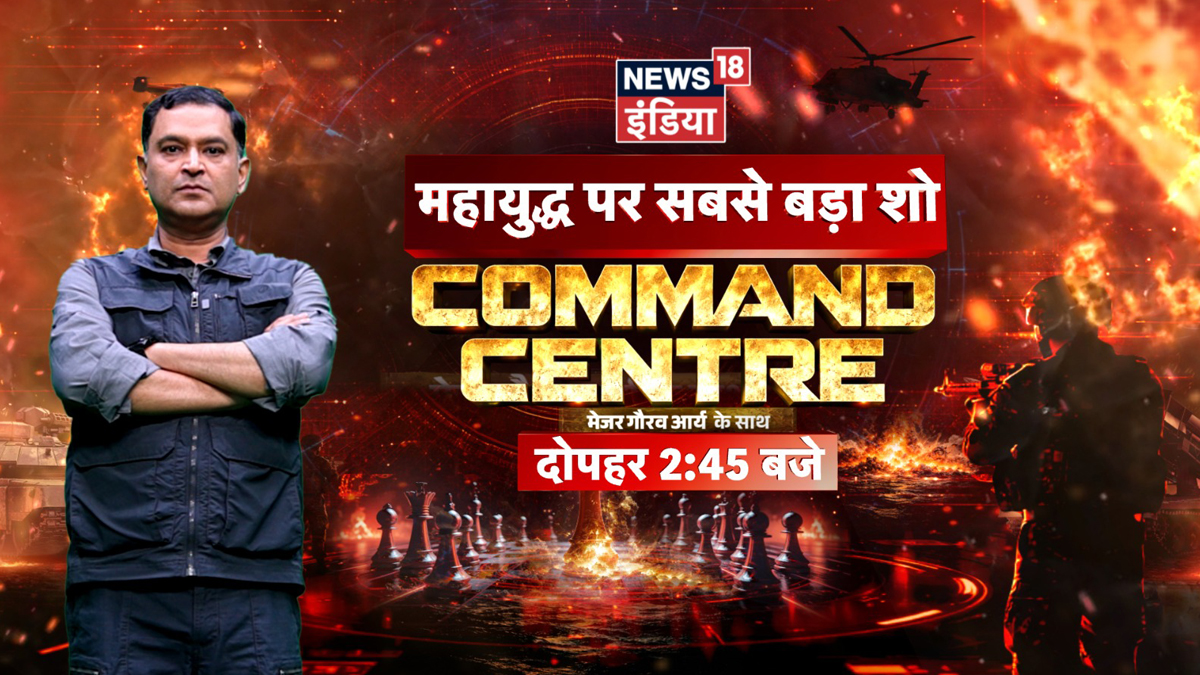
MUMBAI: News18 India has rolled out a new war-focused programme, Command Centre, featuring Gaurav Arya, as it looks to offer viewers a sharper, more grounded take on global conflicts amid rising tensions in West Asia.
Positioned as an “insider war room”, the show moves away from conventional panel debates and instead focuses on explaining military developments, decoding strategy and connecting global events to their everyday impact, from fuel prices to economic shifts.
The format leans heavily on visuals and data. The studio has been designed like a command hub, complete with large LED war maps, real-time graphics and an alert system to track developments as they unfold.

At the centre of it all is Arya, who brings his military background to simplify complex war strategies for viewers. His signature line, “Seedhi baat samjhiye”, anchors the show’s promise of clarity over noise.
News18 India managing editor Jyoti Kamal said, “Command Centre, featuring Major Gaurav Arya is designed to deliver accurate insights and a clear perspective on how evolving conflicts impact everyday life, from household budgets to national security. With expert voices analysing every development in real time, the show goes beyond headlines to decode what’s happening now, what it means, and what could come next.”
Echoing the intent, Gaurav Arya added, “In times of war, confusion is the biggest threat. With News18 India’s Command Centre, we are bringing viewers inside the war room, decoding strategies, tracking every escalation, and explaining, in the simplest terms, what it means for India and for every household. Seedhi baat samjhiye, this is where you understand not just what is happening, but what happens next.”
The weekday show will air in the afternoon slot and will also feature Gaurav Shukla, adding to its editorial depth.
With its mix of analysis, visuals and a clear focus on impact, the show reflects a broader shift in news consumption. Viewers are no longer just watching events unfold, they are looking to understand what those events mean for them.







