News Broadcasting
BBC World to extensively cover Johannesburg ‘green’ summit


LONDON: BBC World has announced that it will dedicate a large portion of its schedule this month and early September to special programming and news reports related to The World Summit on Sustainable Development in Johannesburg.
For BBC World News David Loyn, Hilary Anderson and Nik Gowing will be among the team reporting live from Johannesburg from 26 August. For World Business Report, Mike Sergeant and Richard Scott will be turning the spotlight on the business issues.

In addition to BBC World’s daily news coverage during the World Summit, the channel has commissioned a series of news features and programmes. News presenter Nisha Pillai will be co-hosting a two-part debate, Earth Summit: The Debate filmed at the UNESCO heritage site, ‘The Cradle of Humankind’ outside Johannesburg. Together with Bill Moyers of PBS America, Pillai will lead the discussion between a panel of world leaders and campaigners from all sides of the debate.
Regular BBC World programme, Earth Report, is also featuring a series of specials dedicated to the summit. The Children of Rio will look at the lives of some children all over the world ten years on from the last Summit in Brazil and I Wish offers a unique look at what 21 people from a cross section of global society wish the World Summit would achieve.
The popular interview show, HARDtalk with Tim Sebastian, will run a special week of interviews starting on 26 August with Claudia Sheinbaum, the Mexico City Environment Minister. The monthly magazine show, Africa Direct, will offer a local African environmental perspective when it airs 28 August.
The three-part documentary series, State of the Planet presented by David Attenborough attempts to answer some of the big questions about our planet, assessing the gravity of the environmental crisis and asking what lies ahead at this point in human history. Developing World is a magazine series which takes viewers from Armenia to Zanzibar, Nepal to Peru showing what is possible when people work together, while Life is a five-part award-winning series looking at how the newly globalised world economy is affecting ordinary people across the planet.
News bulletins in August and September will include specially commissioned reports from BBC correspondents around the world highlighting the tension between small projects and government-level statements of intent which have been the product of world summits. Tim Hirsch will be looking at Green capitalism in Brazil and some Micro initiatives using solar power in South Africa.
Jonathan Head follows the course of a river to Bangkok looking at various pollution problems and ending in an environmental project which offers a solution. Ian Bruce follows a scheme in Brazil which gathers local people together to decide how government money should be spent in their area. He also looks at a trade union in Colombia which dared to challenge the powers that be and reports the story of a boy from rural India who will be one of the youngest delegates at the World Summit. Mike Donkin reports on one of the last hunter-gatherer tribes in the Amazon which is under threat, despite international agreements to protect them and their environment. Finally, Shirin Wheeler looks at clean power in Iceland as it becomes a global guinea pig by aiming to be the first fully-fledged hydrogen-powered, eco-friendly economy in the world.
World Summit – Johannesburg 2002 Times in GMT
Earth Summit: The Debate
PART 1
31 August 2:10 pm, 9:10 pm
1 September 9:10 am, 5:10 pm
PART 2
7 September 2:10pm, 9:10 pm
8 September 9:10 am, 5:10 pm
State of the Planet, 3 programmes (NOT AVAILABLE IN PAS 2 REGION)
17, 24 August 2:10 pm, 9:10 pm
18,25 August 9:10 am, 5:10 pm
In addition ‘I Wish’ vignettes will air throughout the schedule in August and September. In the lead up to the earth summit in Johannesburg, 21 individuals from a cross-section of global society were given a unique platform to send their messages to the world leaders and decision-makers attending the summit.





News Broadcasting
CNN-News18 to host Fury in the Gulf conclave on West Asia crisis
Three-hour summit to unpack geopolitical fallout and impact on India
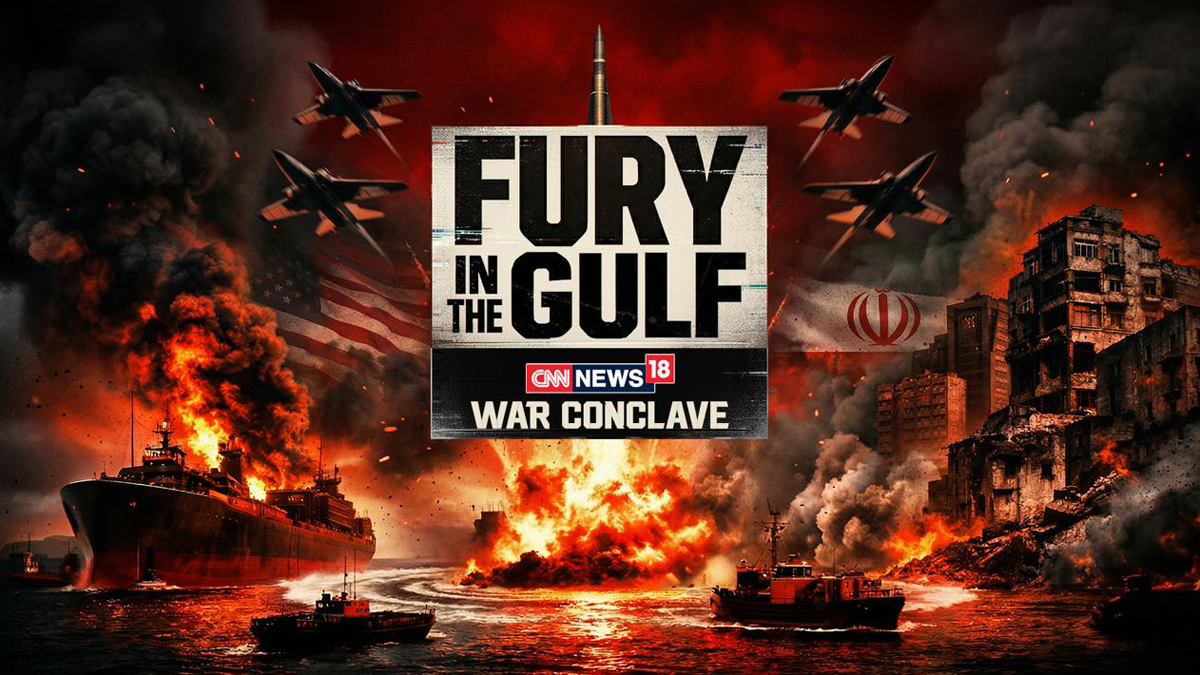
MUMBAI: CNN-News18 is set to host a special three-hour broadcast, Fury in the Gulf – War Conclave, on April 7, aiming to decode the escalating West Asia crisis and its far-reaching implications for India.
Scheduled from 4:00 PM to 7:00 PM, the conclave comes at a time when tensions between Iran and the United States are reshaping global geopolitics and triggering economic uncertainty. With India’s deep energy ties, trade links and large diaspora in the Gulf, the developments carry significant domestic relevance.
Built around the theme ‘Conflict, Consequences, and The Future,’ the programme will feature six curated sessions combining one-on-one interviews and panel discussions. The focus is to cut through the clutter and offer viewers a clearer understanding of the fast-evolving situation.
Key sessions include ‘Diplomacy in Times of War’ featuring Shashi Tharoor, and ‘World After the Iran Conflict’ with voices such as Ram Madhav, Reuven Azar, representatives from the European Union and the Iranian Deputy Envoy. Another session titled ‘Another Dunkirk?’ will bring together K. J. S. Dhillon and Jitin Prasada among others.
CNN-News18 editorial affairs director Rahul Shivshankar said, “In times of war, clarity becomes the most powerful tool. Fury in the Gulf – War Conclave brings together credible voices to address the questions and confusion that arise amid an overwhelming influx of information.”
He added that the initiative is aimed at delivering “facts, perspective, and insight” at a time when misinformation can easily cloud public understanding.
Echoing the sentiment, CNN-News18 CEO– English and business news Smriti Mehra said the conflict marks a defining global moment, with consequences that extend well beyond the region. She noted that the conclave seeks to present the crisis with “depth, nuance and responsibility” so audiences can better grasp its real-world impact.
As geopolitical tensions continue to dominate headlines, the conclave positions itself as an attempt to bring order to the noise, offering viewers a structured, insight-led look at a complex and rapidly shifting global situation.






