Cable TV
BBC World Service to launch a television channel for Iran

MUMBAI: BBC World Service will launch a television news and information service in the Farsi (Persian) language for Iran, it was announced today. The service will complement the BBC’s existing Persian radio and online services for Iran. The service is expected to launch early in 2008 and will be based in London.
It will initially broadcast for eight hours a day, seven days a week. It will be freely available to anyone with a satellite dish or cable connection in the region. This follows BBC proposals for the service drawn up by senior BBC management.
These were approved by the BBC Governors and submitted to the Foreign and Commonwealth Office (FCO) for their consent as the BBC is obliged to do under the agreement with the FCO.

The operating cost of £15m a year will be funded by the UK Government. This funding will be in addition to BBC World Service’s existing grant-in-aid funding from the UK Government and will have no impact on the current BBC World Service portfolio of services.
BBC World Service director Nigel Chapman said: “The BBC’s Persian radio and online services are well-respected by Iranians, especially by opinion formers. In Iran we are regarded as the most trusted and objective of all international broadcasters for the way we provide impartial news and information about the wider world and the crucial part Iran is playing on the regional and global stage.
“But television is increasingly dominating the way that millions of Iranian people receive their news. Therefore the BBC proposed to the Foreign Office that we launch a television service in Farsi to complement our existing independent news and information services for Iran on radio and online. Like all BBC services, the new television service will be editorially independent of the UK Government. I am delighted the BBC Farsi television service proposal has been given the go-ahead.
The BBC’s Farsi television service will draw upon the BBC’s un-matched newsgathering resources. Broadcast at primetime in Iran, it will showcase accurate, impartial, balanced news and analysis from a global perspective.
It will also show investigative current affairs programmes, alongside quality BBC factual, cultural and educational documentaries. The channel will cover international and major regional issues.
It will also carry multi-media discussion programmes and debates in conjunction with the BBC’s well-established and trusted Farsi radio and online services.
The new BBC Farsi television service will:
Be completely editorially independent in line with BBC’s long-held reputation for impartial, trustworthy news reporting and analysis
Meet the strong demand for a BBC Farsi television service expressed in recent surveys where 73% of Iranians with satellite access say they will definitely or are fairly likely to watch a BBC Farsi television service
Make the BBC the only tri-media international news provider offering Farsi language news and current affairs on television, radio and online
Draw on 66 years of BBC experience covering the region in Farsi – supported by the world’s most extensive newsgathering operation: 250 news correspondents reporting from 50 bureaux allowing a global rather than purely regional perspective.


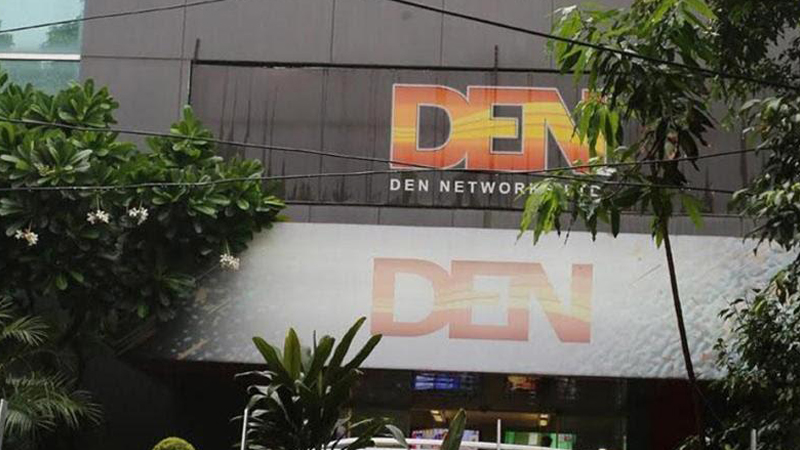
MUMBAI: When margins wobble, liquidity talks and in Q3 FY25-26, cash did most of the talking. Den Networks Limited closed the December quarter with consolidated revenue of Rs.251 crore, marginally higher than the previous quarter but down 4 per cent year-on-year, even as profitability stayed resilient on the back of strong cash reserves and disciplined cost control.
Subscription income softened to Rs.98 crore, slipping 3 per cent sequentially and 14 per cent from last year, while placement and marketing income offered some cheer, rising 15 per cent quarter-on-quarter to Rs.148 crore. Total costs climbed faster than revenue, up 7 per cent QoQ to Rs.238 crore, driven largely by higher content costs and operating expenses. As a result, EBITDA dropped sharply to Rs.13 crore from Rs.19 crore in Q2 and Rs.28 crore a year ago, pulling margins down to 5 per cent.
Yet, the bottom line refused to blink. Profit after tax stood at Rs.40 crore, up 15 per cent sequentially and only marginally lower than last year’s Rs.42 crore. A healthy Rs.57 crore in other income helped cushion operating pressure, keeping profit before tax at Rs.48 crore, broadly stable quarter-on-quarter despite the tougher cost environment.
The real headline-grabber, however, sits on the balance sheet. The company remains debt-free, with cash and cash equivalents swelling to Rs.3,279 crore as of December 31, 2025. Net worth rose to Rs.3,748 crore, while online collections accounted for 97 per cent of total receipts, underscoring strong cash discipline across operations, including subsidiaries.
In short, while Q3 showed signs of operating strain, the financial backbone remains solid. With zero gross debt, steady profits and a formidable cash war chest, the company enters the next quarter with flexibility firmly on its side proving that in uncertain markets, balance sheet strength can be the best growth strategy.







